- You are here:
-
Home

-
GE Home
-
Content (Main)
- Informational
Faculty of Management and Economics
The Faculty of Management and Economics (FME) is an academic unit of Visayas State University dedicated to advancing education, research, and community engagement in the fields of management, economics, agribusiness, entrepreneurship, tourism, and hospitality.
Established through Board of Regents (BOR) Resolution No. 75, s. 2009 and officially launched in March 2010, the Faculty began as the College of Management and Economics (CME). In 2024, it was renamed the Faculty of Management and Economics (FME) through BOR Resolution No. 13, s. 2024, reflecting its continuing growth and evolving role within the University.
Today, FME oversees five undergraduate degree programs:
- BS Agribusiness
- BS Economics
- BS Entrepreneurship
- BS Hospitality Management
- BS Tourism Management
Supporting the Faculty's research and development initiatives is the Visayas Socio-Economic Research and Data Analytics Center (ViSERDAC), which strengthens research, data analytics, and evidence-based initiatives addressing economic, business, and development concerns.
FME is committed to developing globally competitive, socially responsible, and future-ready graduates who can make meaningful contributions to organizations, industries, communities, and the broader economy.
Vision, Mission, and Goals
- Government-funded programs that promote access to affordable higher education including:
- Universal Access to Quality Tertiary Education Act (RA 10931).
- Tulong Dunong Program (TDP)
- DOST-SEI Scholarships
- Scholarship Program for Coconut Farmers and their Families (CoScho)
- University Scholarships and Grants – Merit-based, academic, athletic, cultural, and other forms of assistance offered by the University.
- Private and Institutional Scholarships – Scholarships sponsored by foundations, corporations, professional organizations, alumni, and other partner institutions.
Going Global
Among FME's international linkages and collaborative engagements are:
- University of Passau, Germany – Research collaboration in bioeconomy, circular economy, technology adoption, and sustainable agriculture. The partnership includes joint research, fieldwork, publications, guest lectures, research seminars, conferences, and academic exchanges.
- Louisiana State University / LSU AgCenter, USA – Collaboration in agricultural economics, agribusiness, climate-resilient agriculture, and farmer decision-making. Faculty engagements have included scientific exchange, research mentorship, joint research, and knowledge exchange on conservation and climate-adaptation practices.
- Australian Centre for International Agricultural Research (ACIAR), Australia – A major research and development partner supporting FME participation in projects on agribusiness, inclusive value chains, market development, farmer capacity building, food systems, and rural livelihoods.
- WorldFish – Collaboration in multidisciplinary research and development initiatives involving rural livelihoods, agricultural and aquatic systems, stakeholder engagement, and community development, linking research institutions, government agencies, communities, and industry stakeholders.
- SEARCA and the Southeast Asian University Consortium – Provides opportunities for regional academic networking, faculty and student mobility, research collaboration, graduate education, conferences, and capacity-building activities among leading agricultural universities in Southeast Asia.
- Universitas Negeri Malang, Indonesia – Academic engagements involving faculty exchanges, lectures, research discussions, and knowledge sharing, including activities related to inclusive economic growth, economics, management, and regional development.
- Khon Kaen University, Thailand – Academic and research interaction involving agriculture, rural development, climate resilience, and knowledge exchange, providing opportunities for faculty engagement, lectures, conferences, and regional collaboration.
- International University of Japan – Academic linkage and graduate-study opportunities in economics, development, and management, including scholarship opportunities that have enabled VSU Economics graduates to pursue advanced studies in Japan.
- Kyoto University, Japan – Academic and research engagements that contribute to international knowledge exchange, research exposure, professional development, and institutional networking with Japanese scholars and academic institutions.
- Mendel University in Brno, Czech Republic – Academic and research connections in areas related to economics, management, agriculture, sustainability, and rural development, including opportunities for scholarly exchange and collaborative activities.
- Erasmus Mundus / European Union – Provides international academic mobility and scholarship opportunities, allowing qualified students and graduates to pursue advanced study and training in European universities and strengthening FME's exposure to international higher education and research networks.
- Deutsche Gesellschaft für Internationale Zusammenarbeit (GIZ), Germany – Collaboration and development engagement supporting capacity building, sustainable development, enterprise and rural development, and institutional strengthening.
Contact
Faculty of Management and Economics
Visayas State University
Visca, Baybay City, Leyte
Philippines 6521
Phone: 053-565-0600 local 1108
Email: This email address is being protected from spambots. You need JavaScript enabled to view it.
Faculty of Forestry and Environmental Science
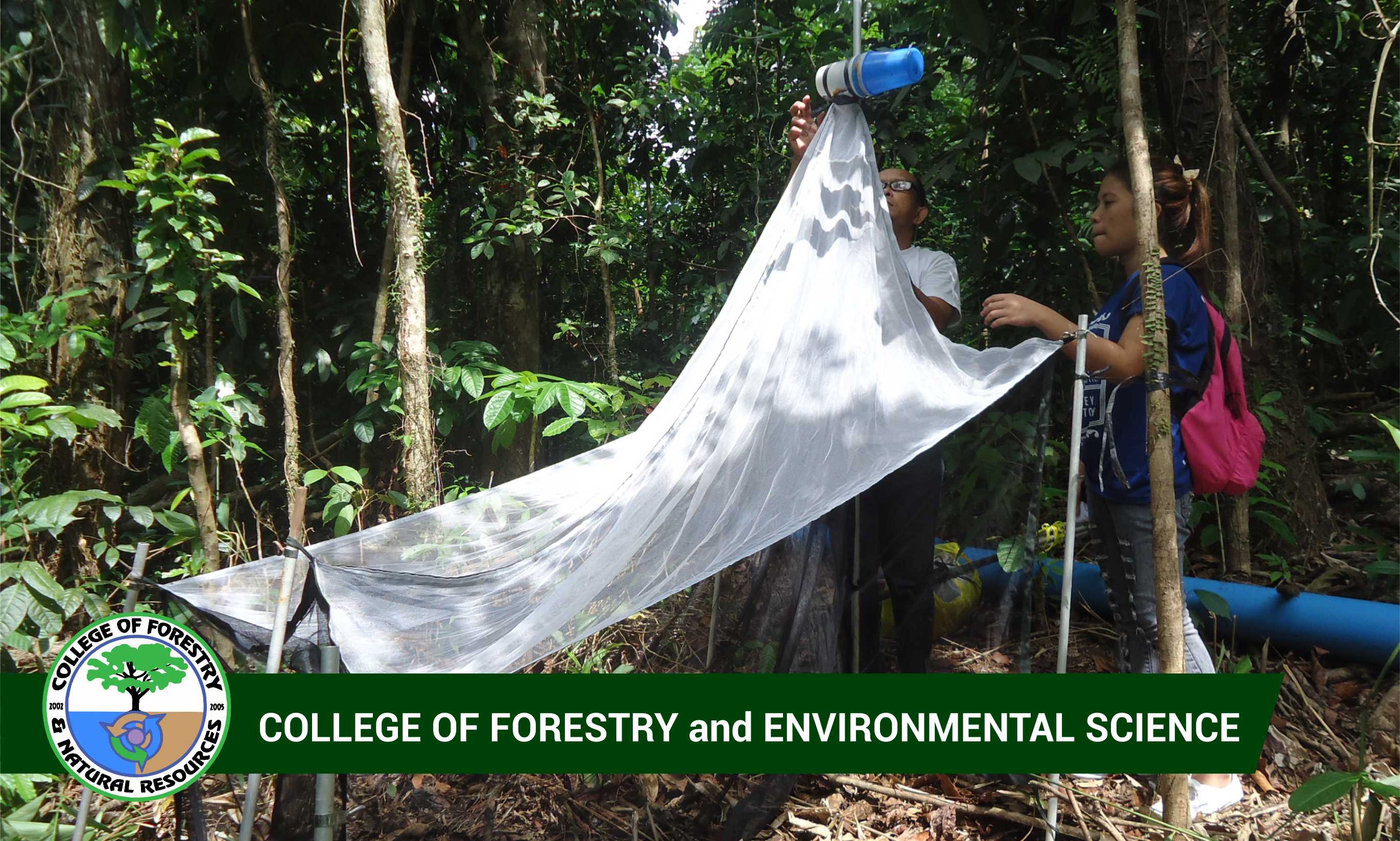
The Faculty of Forestry and Environmental Science has consistently produced graduates that are in demand in government and non-government agencies. Owing to their consistent high performance in licensure examinations, the College was recognized by the Commission on Higher Education as Center of Excellence in Forestry Education.
Vision, Mission and Goals
Degree Offerings
Master of Science:
Research Thrusts
- Vegetation Science
- Agroforestry
- Farm & Community Forestry
- Socio-economic Forestry
- Silviculture
- Watershed Management
- Tree Domestication & Local Knowledge
- Parks & Wildlife
- Rainforestation
Extension Activities
- Community-Based Watershed Management Program for LGUs
- LGU/GA/NGO/PO-Partnership
- Agroforestry/Tree Rainforestation Demo Farm Development
- Trainings/Workshops
- Farm/Community Visitation and Consultation
- on-Farm Participatory Research/Extension
- Tree seedling production & dispersal
- Linkaging/Networking
Facilities
CFNR HERBARIUM: Houses a collection of specimens of locally identified timber and lesser-known tree species (thru the ViSCA-Darwin Project)
CFNR WOOD LIBRARY: Houses a collection of wood samples of indigenous and exotic tree species for instruction
CFNR ARBORETUM: Contains a collection of identified native timber and lesser-known tree species
FOREST NURSERY: producing selected indigenous and exotic tree species to support agencies involved in reforestation and restoration of the environment
Faculties in the Main Campus
|
|
Faculty of Agriculture and Food Science
|
|
|
|
|
|
|
|
|
Faculty of Computing
|
|
|
Faculty of Forestry and Environmental Science
|
|
|
Faculty of Management and Economics
|
|
|
|
|
|
Faculty of Veterinary Medicine
|
|
|
Faculty of Humanities and Social Sciences
|
 |
Faculty of Natural and Mathematical Sciences
|







College of Engineering and Technology
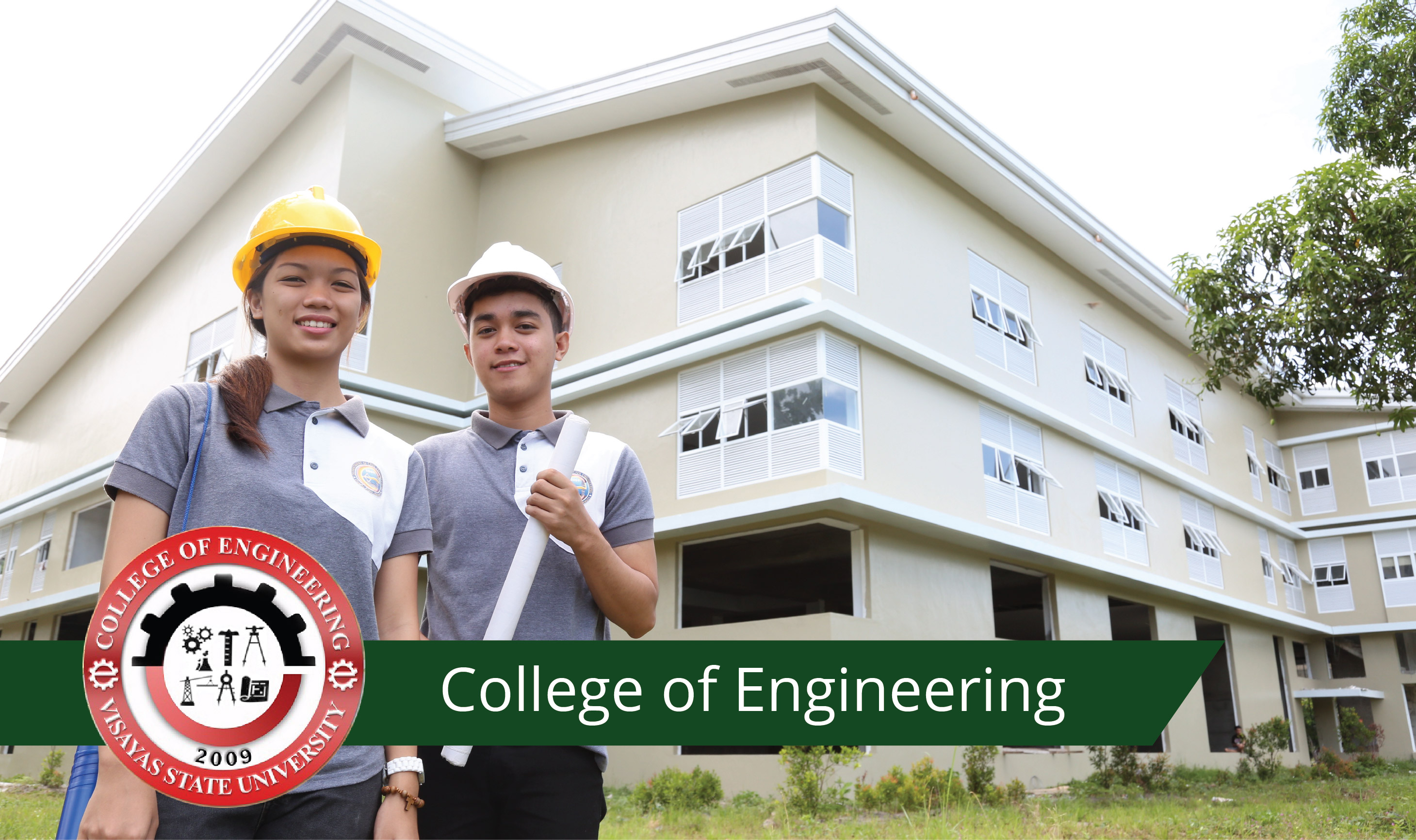
The Faculty of Engineering (FE) of Visayas State University traces its roots to the establishment of the Department of Agricultural Engineering and Applied Mathematics (DAEAM) in 1975. Over the succeeding five decades, the unit evolved alongside the University’s expanding mandate in science, technology, and engineering education. It became the College of Engineering and Agri-Industries (CEAI) in 2001, the College of Engineering (COE) in 2009, and the College of Engineering and Technology (CET) in 2018. In line with VSU’s institutional transformation toward becoming a global green university, CET was subsequently reorganized as the Faculty of Engineering. In 2025, the Faculty celebrated its 50th anniversary under the theme “Celebrating 50 Years of Learning, Growth, and Impact: Gearing Towards Sustainable Innovations.” Today, the Faculty of Engineering is one of VSU’s leading academic units in engineering education, research, innovation, and community engagement. Its programs have produced graduates who have distinguished themselves in professional licensure examinations, industry, academe, government, and research. The Faculty has likewise strengthened its commitment to quality assurance and international standards, with its engineering curricula developed in accordance with the requirements associated with the Washington Accord. Recent achievements include outstanding performances in the Agricultural and Biosystems, Civil, Geodetic, and Mechanical Engineering licensure examinations and the attainment of Certificates of Program Compliance for all its programs. The Faculty’s development agenda emphasizes high-quality outcomes-based engineering education, interdisciplinary research and innovation, sustainable technologies, and solutions responsive to regional, national, and global challenges.
Vision, Mission, and Goals
Departments
Under VSU’s current organizational structure, the Faculty of Engineering comprises the following academic departments:
1. Department of Agricultural and Biosystems Engineering (VSU Main Campus)
2. Department of Civil Engineering (VSU Main Campus)
3. Department of Geodetic Engineering (VSU Main Campus)
4. Department of Mechanical Engineering (VSU Main Campus)
5. Department of Civil Engineering (VSUI Campus)
6. Department of Mechanical Engineering (VSUI Campus)
7. Department of Industrial Engineering (VSUI Campus)
8. Department of Meteorology
Research and Development Agenda
-
Energy Park
Research in the field of renewable energy and organic-based agri ventures have been central to the college’s agenda. Owing to the growing knowledge in this area, the college is establishing an Energy Park that showcases applications of renewable technologies for educational, training, and eco-tourism purposes.
-
Skills Training Program
The college offers a skills training program in shielded metal arc welding and electrical installation and maintenance. Trainees who have successfully accomplished the training will receive a National Certificate that qualifies them to work in companies here and abroad.
-
Development of engineering- and technology-based educational materials for secondary and college students.
Faculty of Teacher Education
The Faculty of Teacher Education is paving the ground to become the center of excellence in teacher education. Recently, it qualified for a Level IV Reaccreditation in Bachelor of Elementary Education, Bachelor of Secondary Education, and Master of Education from the Accrediting Agency of Chartered Colleges and Universities in the Philippines, Inc. (AACCUP). With our competent faculty and quality student development programs, graduates are equipped with the competence in teaching, as well as in implementing research and extension initiatives.
Degree Offerings
Master of Education (MEd) with majors in:
Research and Development Agenda
The Faculty of Teacher Education's research activities are focused in the following areas:
1. Teaching and Learning Approaches/Strategies
2. Curriculum Development and Evaluation
3. Basic and Higher Education Monitoring and Evaluation
4. Instructional Materials and Education Models Development
5. Strengthening School Community Engagement and Community Resilience
6. Institutional and Policy Development Studies
7. Health, Fitness, Sports and Physical Education
8. Culture and Arts Education
9. Filipino and English Language Studies
10. Social and Cultural Dimensions of Education
11. Gender and Development-Related Studies
12. Literature Review Studies
13. Teachers' and Students' Well-being