Admission and Retention Policy for the Doctor of Veterinary Medicine Program
(BOR Resolution No. 117, s. 2024)
Introduction
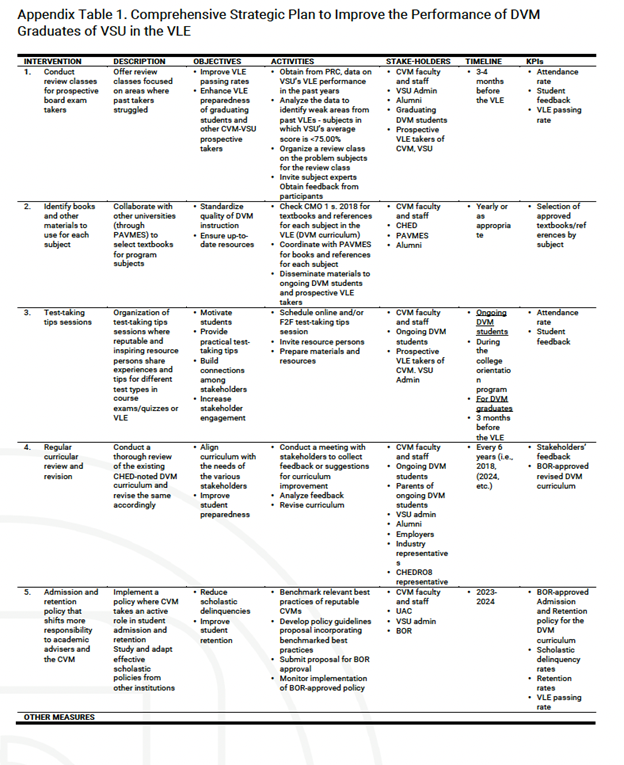
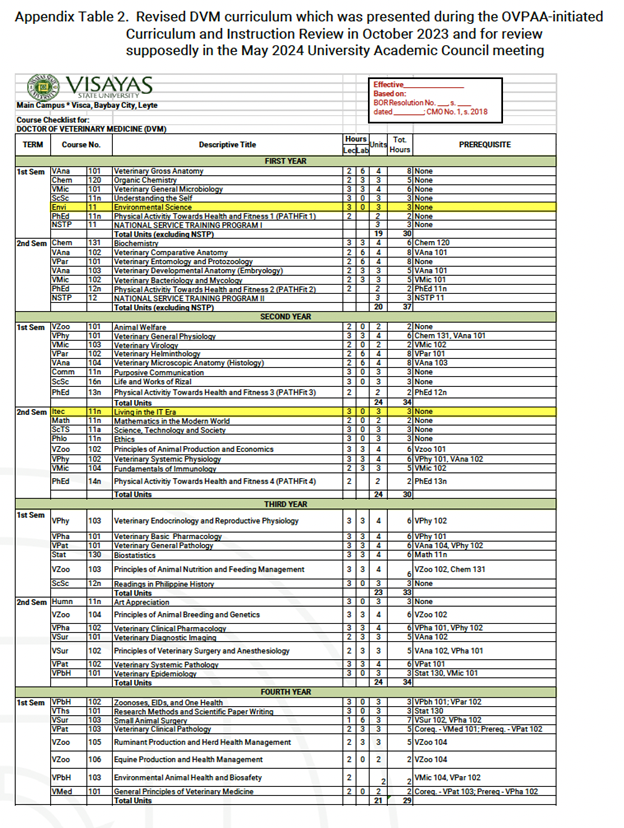
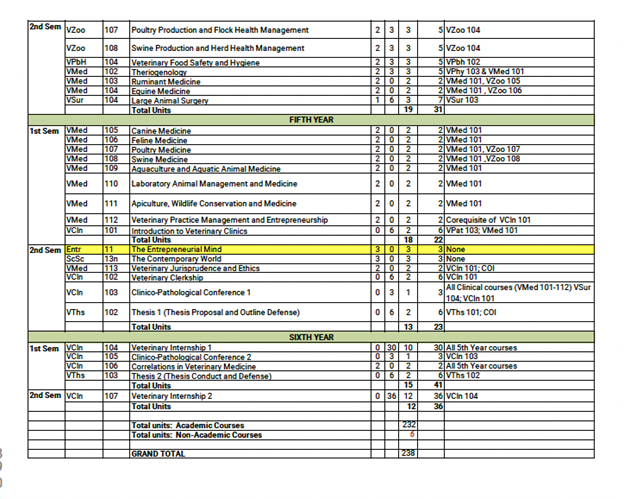
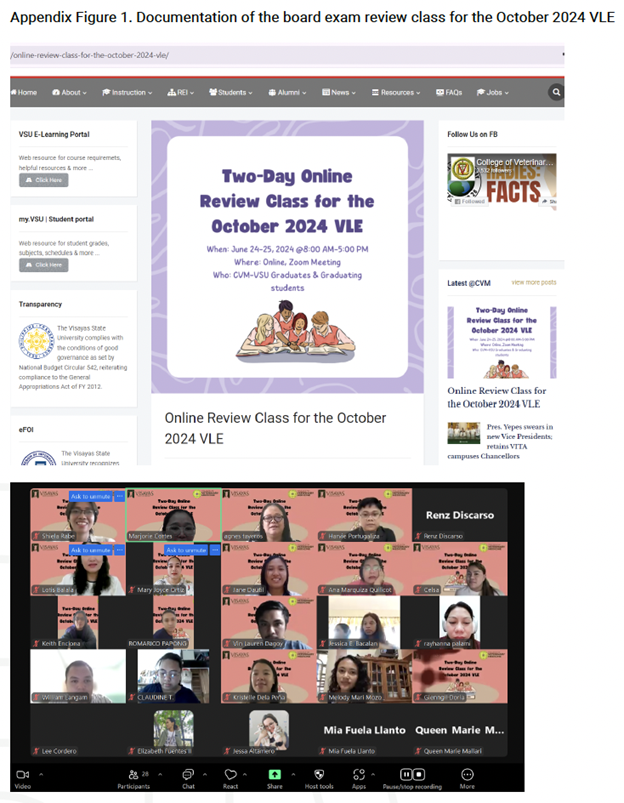
In an outcomes-based education (OBE), the quality of graduates is often measured by their success in licensure examinations. Although the CVM-VSU has generally exceeded the national passing percentage in the Veterinary Licensure Exam (VLE), it recognizes the need for sustainable measures to further and continuously improve its performance. This proposal is an integral component of CVM-VSU’s comprehensive strategic plan to improve the performance of its graduates in the VLE (Appendix Table 1), which includes revising the DVM curriculum (Appendix Table 2), pre-board test13 taking tips session (Appendix Fig. 1) and conducting in-house review classes (Appendix Fig. 2), among others. Admission and retention criteria are key predictors of success in licensure examinations for many degree programs (Sawey-Ognayon & Afalla, 2022; Dagdag 2018; Declerq & Verboven, 2018). In a developing country providing free access to higher education like the Philippines (i.e., through Republic Act No. 10931), this proposal intends to foster a culture of accountability and, mitigate the observed complacency associated with free tuition and miscellaneous fees, at least among DVM students. Corollary to this, the proposal thus aligns with section 6 of RA 10931, which stipulates that students are ineligible for free tertiary education if they fail to complete their bachelor's degree or comparable undergraduate degree within a year after the prescribed period.
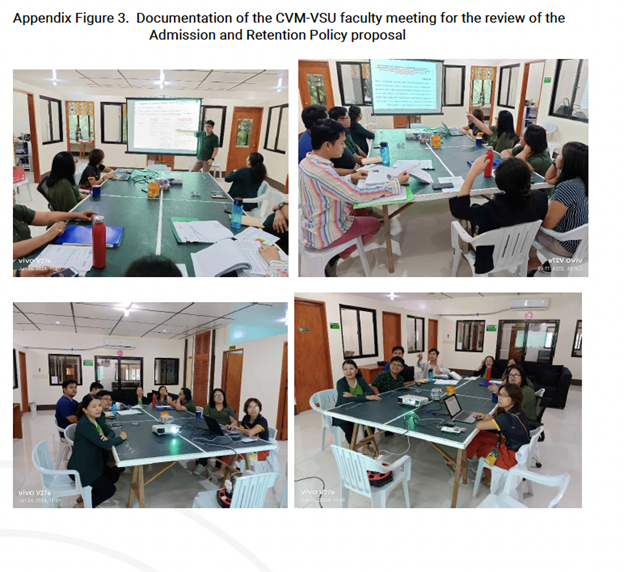
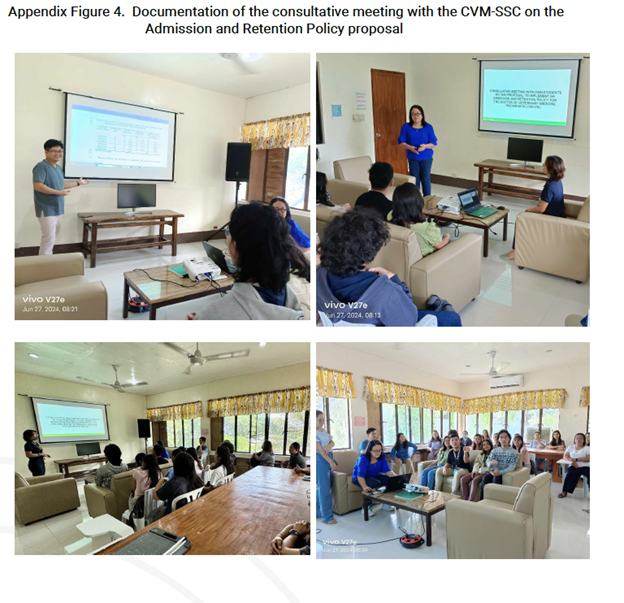
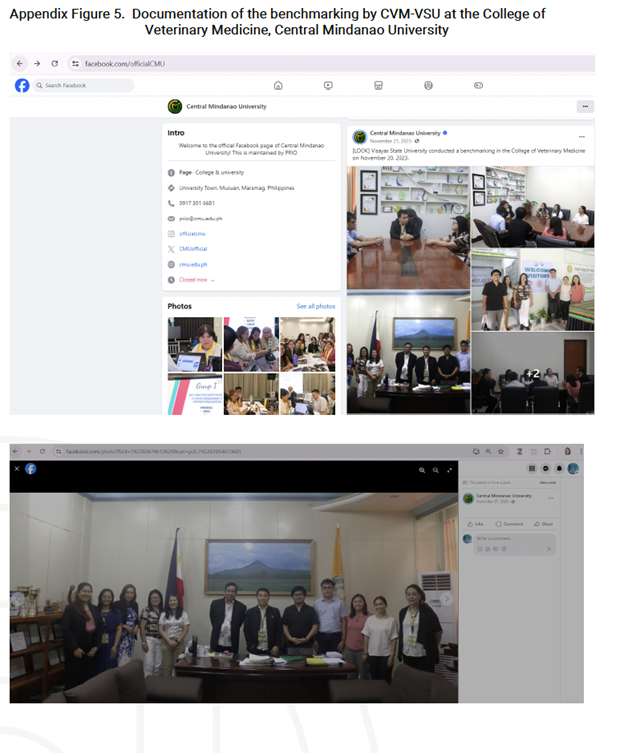
This proposal establishes guidelines for decision-making primarily at VSU-CVM regarding admission and retention to improve the performance of Doctor of Veterinary Medicine (DVM) graduates in the VLE. It has taken into account student feedback (Appendix Fig. 3), relevant VSU policies (i.e., Chapter 51 of the VSU code; PM-VPA-06),information obtained through CVM-VSU’s benchmarking activities 29 in reputable CVMs of other state universities (Appendix Figs. 4) or from their official website, and evidence-based retention measures.
A key feature of this proposal relates to its implementation, primarily assigned to the CVM-VSU. This approach is proposed to enhance the policy’s effectiveness, particularly regarding the timeliness of interventions (see Table 2) aimed at increasing retention rates. Finally, this proposal incorporates CVM-VSU faculty (Appendix Fig. 3) and DVM student feedback (Appendix Fig. 4), relevant VSU policies (e.g., Chapter 51 of the VSU Code; PM-VPA-06), data from CVM-VSU’s benchmarking activities with reputable veterinary colleges at other state universities (Appendix Fig. 5), and evidence-based retention measures.
Rationale of the Admission Policy being Proposed
The admission policy being proposed is specifically tailored for various entrants into the DVM program, including first-time first-year students, shifters, degree holders, and transferees.
For first-time first-year students or those who after finishing senior high school move straight to the DVM program without enrollment in any college course, one criterion on top of VSU’s existing requirements is preference for graduates of the STEM strand. Veterinary medicine is fundamentally a biomedical field, and students with a background in biology courses are more likely to succeed not only in their first year but throughout the entire veterinary medicine undergraduate program (Muzyamba et al., 2012; Hudson et al., 2020).
Regarding shifters, this proposal aims to establish guidelines for students from other degree programs who fail to qualify for the DVM program based on the quota set by the CVM but are subsequently admitted into the program through the shifting process of the university. Setting guidelines for their admission is aimed to ensure that they are more likely to succeed.
For degree holder entrants with varying academic backgrounds, 56 establishing criteria for their admission will help ensure that they are adequately prepared for the program and are likely to succeed academically.
Finally, admission guidelines for transferees are crucial for the CVM-VSU, especially as their number has been increasing over the years. Benchmarking activities have revealed that the General Weighted Average (GWA) for retention in the DVM program at other universities is set at 2.50, based on a 50% passing rate. In contrast, CVM-VSU maintains a higher passing rate of 70%, which underscores the need for more stringent admission policies to maintain academic standards. Without an admission policy for transferees, our college has become a fallback option for students dismissed from other institutions. These students, having completed their general education and many professional veterinary courses, typically pass the College Admission Test (CAT), which is the only requirement for their admission into VSU and the CVM. This situation could displace more qualified first-time first-year students due to the limited slots. Once admitted, their enrollment involves validation and accreditation of their completed professional DVM courses, which merely checks for compliance with the number of units, allowing them to start their DVM journey in the 3rd, 4th, or 5th year, depending on the year level completed in their previous school.
Without stringent admission policies, there is a risk of accepting students who were deemed unfit for the DVM program elsewhere, which could exacerbate the existing problem of scholastic delinquency and affect the performance of the University in the VLE.
Proposed Admission Policies
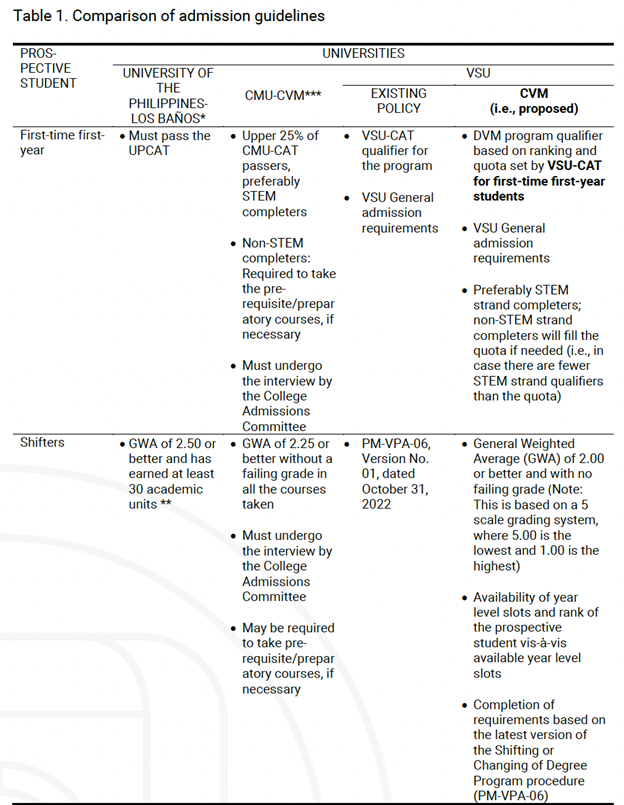
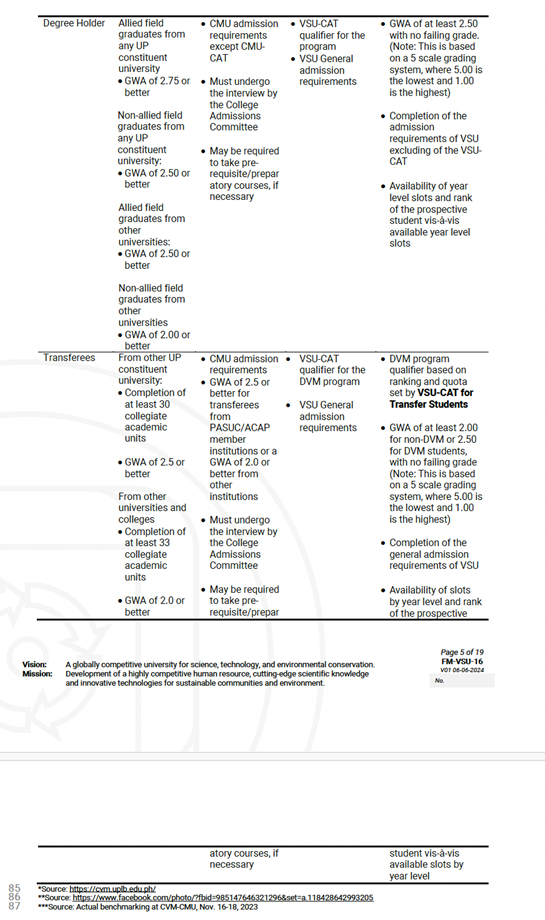
Table 1 presents the proposed admission guidelines for prospective students of the degree program, along with a comparison of the existing university guidelines and those of other universities.
Rationale for the Retention Policy being Proposed
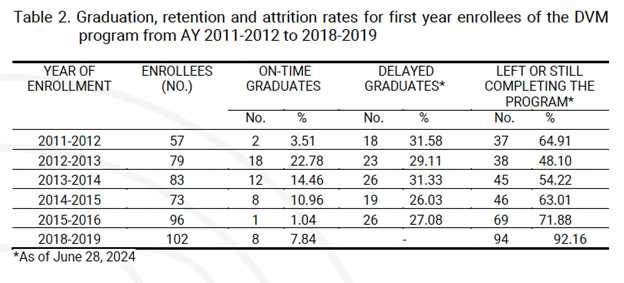
The DVM program is a six-year degree program. It is considered as a high-intensity degree program and requires substantial time commitment. In addition, even with free tuition, the program still demands considerable financial investment from students. These aspects inherent to the program may contribute to the prevalent issue of scholastic delinquency among DVM students. Since AY 2011-2012 to AY 2018-2019, on-time graduation rate and completion rate, both indicators of scholastic delinquency are generally low (Table 2).
Several factors are believed to exacerbate the issue of scholastic delinquency. Firstly, there is an apparent lack of awareness among students regarding the implications of scholastic delinquency for various stakeholders. The free tuition and miscellaneous fees law has led to an observed laxity or lack of accountability among DVM students at least, concerning their academic responsibilities, 107 with some students expressing a willingness to retake courses as early as after failing the first long exam.
This could explain the low completion and on-time graduation rates and leads to increasing numbers of overstaying students. This, coupled with the increasing total number of students enrolling in the program is important if coupled with a high faculty turnover, resulting in heavier teaching loads which could affect the quality of education. Secondly, the apparent discontinuance of the implementation of the university's scholastic delinquency policies (Chapter 51 of the VSU code) allows students who fail up to 75% or even 100% of their subjects in the previous semester to continue their studies in the DVM curriculum. The current implementation responsibilities for these policies are also cumbersome and untimely, reducing their overall effectiveness.
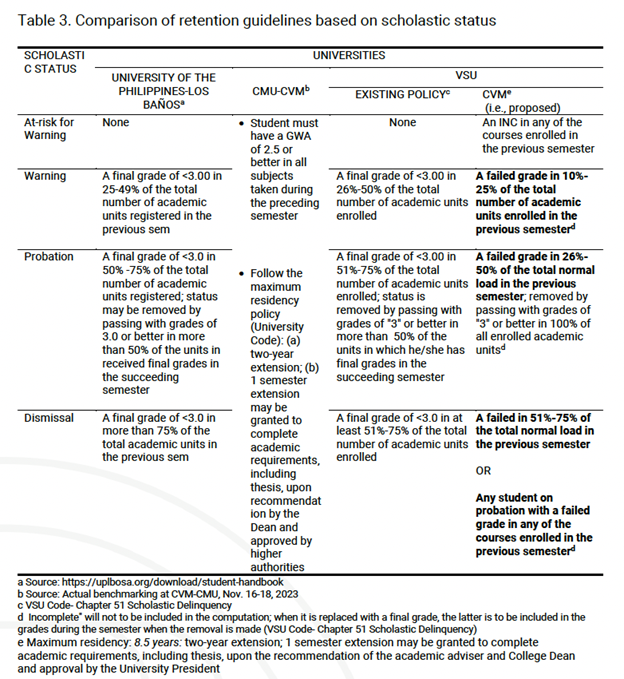
Table 3 presents the proposed retention policies of the CVM-VSU, along with a comparison of the existing university guidelines and those of other universities. In this proposal, the criteria were tailored after VSU's existing policies (i.e., Chapter 51 of the VSU code), and the responsibility of implementation is primarily assigned to CVM faculty members, who serve as academic advisers and thus are more familiar with the student's scholastic performance particularly, their academic advisees.
Maximum Residency
The proposed retention policy includes a period of residency of up to eight (8) years, plus one (1) additional semester to fulfill all their academic requirements, including the completion of thesis. This extension depends upon the evaluation and subsequent recommendation by the student's academic adviser and thesis adviser, with final approval by the CVM Dean. For shifters, the time spent completing general education courses is included in the residency calculation. However, any period covered by an approved leave of absence (LOA) is excluded from this total.
Student Support
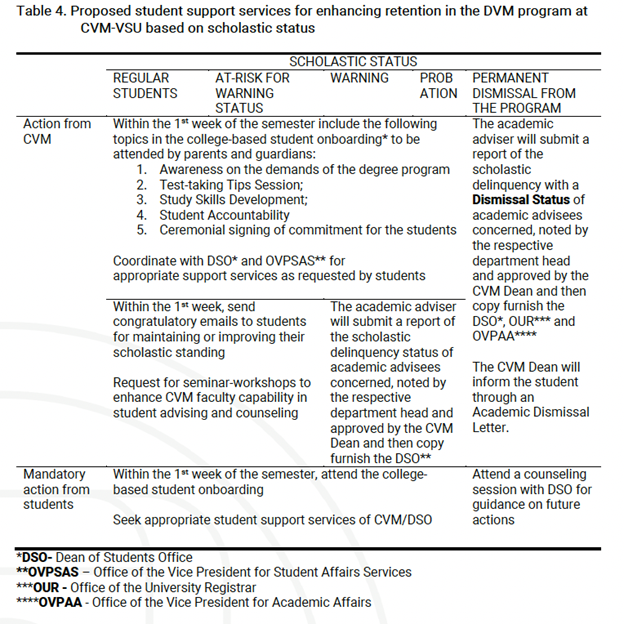
The policy guidelines being proposed provide for planned student support services specifically tailored to address DVM students’ needs to enhance student retention, on-time graduation rates, and VLE passing rates and the 148 faculty who serve as academic advisers of DVM students who (need training) in student advising and counseling given that their academic background does not typically include training in this matter (Table 4).
 Proposed Effectivity: Upon approval of the VSU-BOR.
REFERENCES
Dagdag, J.D. 2018. Predictors of Performance in the Licensure Examination for Agriculturists: Bases for a Proposed Plan of Action Isabela State University-San Mariano Campus, Philippines. Asia Pacific Journal of Multidisciplinary Research Vol. 6 No.2, 113-120 May 2018 P-ISSN 2350-7756 E-ISSN 2350- 8442 www.apjmr.com
Declercq, K and Verboven, F. (2018). Enrollment and degree completion in higher education without admission standards, Economics of Education Review, Volume 66, 2018, Pages 223-244, ISSN 0272-7757. https://doi.org/10.1016/j.econedurev.2018.08.008.
Hudson, N.P.H., Rhind, S.M., Mellanby, R.J., Giannopoulos, G.M., Dalziel, L. & Shaw, D.J. . 2020. Success at Veterinary School: Evaluating the Influence of Intake Variables on Year-1 Examination Performance. Journal of Veterinary Medical Education Volume 47 Issue 2, April 2020, pp. 218-229 https://doi.org/10.3138/jvme.0418-042r
Muzyamba, M. C., Goode, N., Kilyon, M., & Brodbelt, D. (2012). Predictors of Success in a UK Veterinary Medical Undergraduate Course. Journal of Veterinary Medical Education, 39(4), 380– 388. DOI: 10.3138/jvme.1011.103r1
Sawey-Ognayon, G.B. and Afalla, B.T. (2022). Admission Criteria as Predictors of Licensure Performances among Graduates of a State University in the Philippine Cordillera Administrative Region. DOI: https://doi.org/10.36941/ajis-2022-0157