

#GoingGlobal: VSU-FME dean among five PH reps in agriculture productivity mission in Nepal
- Details
- Written by Victor S. Neri
-
Published: 22 January 2026
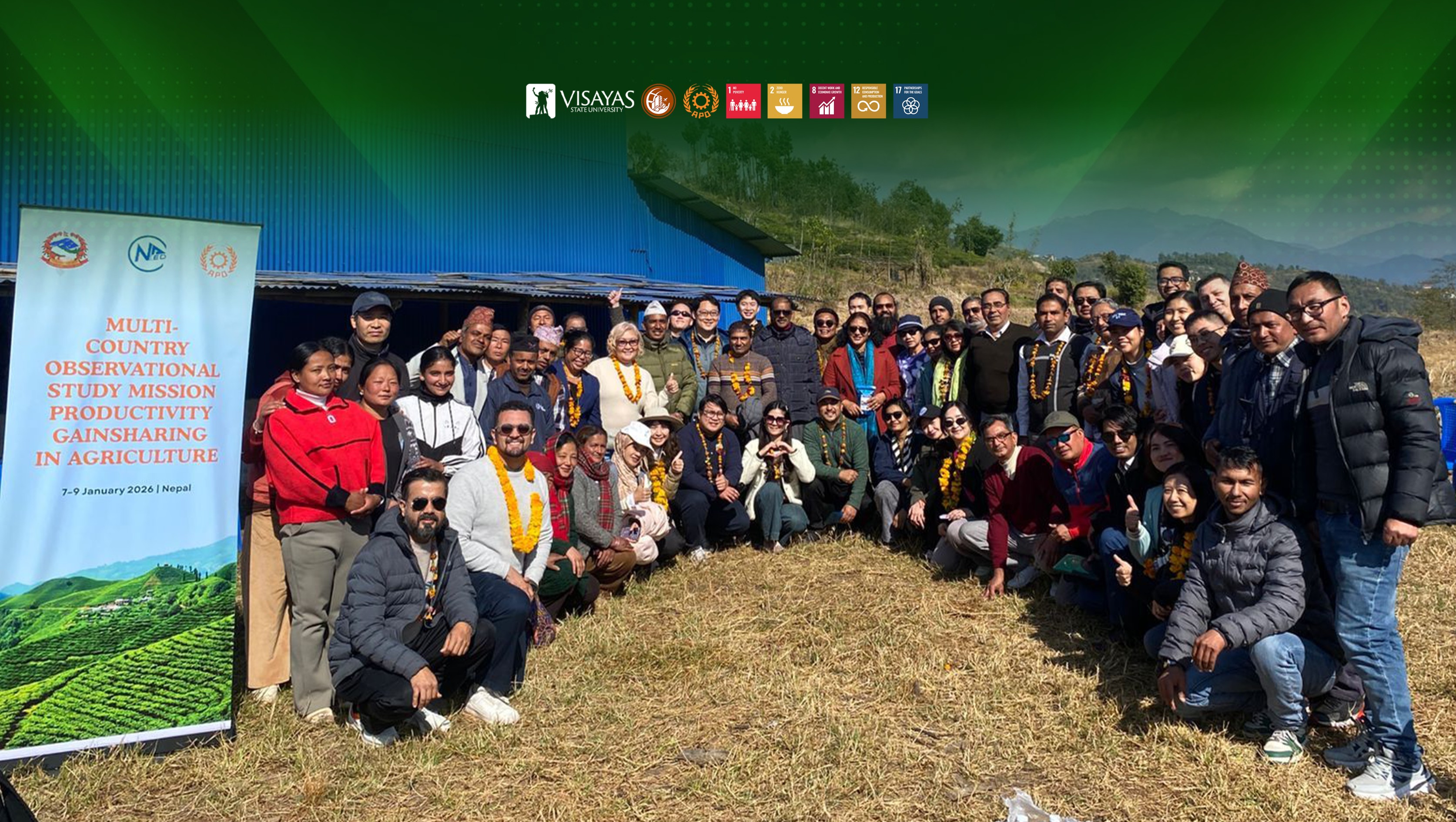
Visayas State University (VSU) continues to build its international connections as Dr. Mark C. Ratilla, Dean of the Faculty of Management and Economics (FME), represented the Philippines in the Multi-country Observational Study Mission on Productivity Gainsharing in Agriculture on January 7-9, 2026, in Ilam, Nepal.
Organized by the Asian Productivity Organization (APO), Dr. Ratilla was among the only five Filipino delegates in the study mission which brought together participants from various APO member countries to explore how farmers and agricultural enterprises can enhance productivity while ensuring that they directly benefit from the gains.
Understanding Productivity Gainsharing
During the mission, participants were introduced to productivity gainsharing, a performance-based approach where financial gains resulting from improved productivity, efficiency, or cost savings are equitably shared between the enterprise and its workers or members.
In agriculture, particularly within the cooperative and farmers’ organizations, productivity gainsharing promotes teamwork, trust, and innovation. The mission demonstrated how farmer cooperatives in Ilam successfully applied this approach in practice despite facing challenges similar to those encountered by Philippine agriculture. These challenges include market access limitations, certification requirements, and high production costs, which affected agricultural productivity.
In Nepal, several farmer organizations have achieved growth and access to international markets by ensuring that farmers directly benefit from collective success.
Lessons from Farmer-Led Enterprises
The delegation visited a range of farmer-led enterprises and community initiatives that clearly showed how cooperation works in practice and how its benefits are shared.
Cooperatives of the tea and dairy sectors in Ilam play a crucial role by allowing farmers to combine their production, invest collectively in processing facilities, and add more value to what they produce. Tea farmers particularly benefit from organic certification and improved access to premium export markets.
Meanwhile, dairy farmers enjoy more stable prices and reliable buyers, as milk is processed into higher-value products for local and international markets.
Aside from traditional farming, the study mission also showcased efforts to diversify income through agritourism, homestays, and organized cardamom production. These initiatives create employment, promote local products, and strengthen cooperation within communities. Further, cooperative marketing helps farmers respond to global market demand and achieve more stable prices.
One of the key lessons from the mission was the use of the Market Systems Development (MSD) approach. In Ilam, agricultural development efforts addressed the entire value, rather than focus solely on production. Farmers were not treated simply as suppliers but as partners in market-oriented enterprises.
Bringing Lessons Back to VSU
Reflecting on this mission, Dr. Ratilla plans to apply all the lessons he learned in Nepal to VSU’s teaching, research, and extension work, especially by integrating productivity gainsharing concepts into agribusiness and management courses.
The VSU-FME dean also sees strong potential in promoting the development of agritourism and value-added enterprises as inclusive and sustainable livelihood strategies for rural communities.
Through this international mission, VSU continues to bridge global best practices and local action, reinforcing its commitment to inclusive, sustainable, and competitive agricultural development in the country.
This article is aligned with Sustainable Development Goals (SDGs) 2: Zero Hunger, SDG 8: Decent Work and Economic Growth, and SDG 17: Partnerships for the Goals.