
VSU seals MOA with DOST-PCAARRD to explore South Sibuyan Sea
- Details
- Written by Claudette Meli Hoff E. Garduce and Riza Mae L. Maningo
-
Published: 09 March 2026
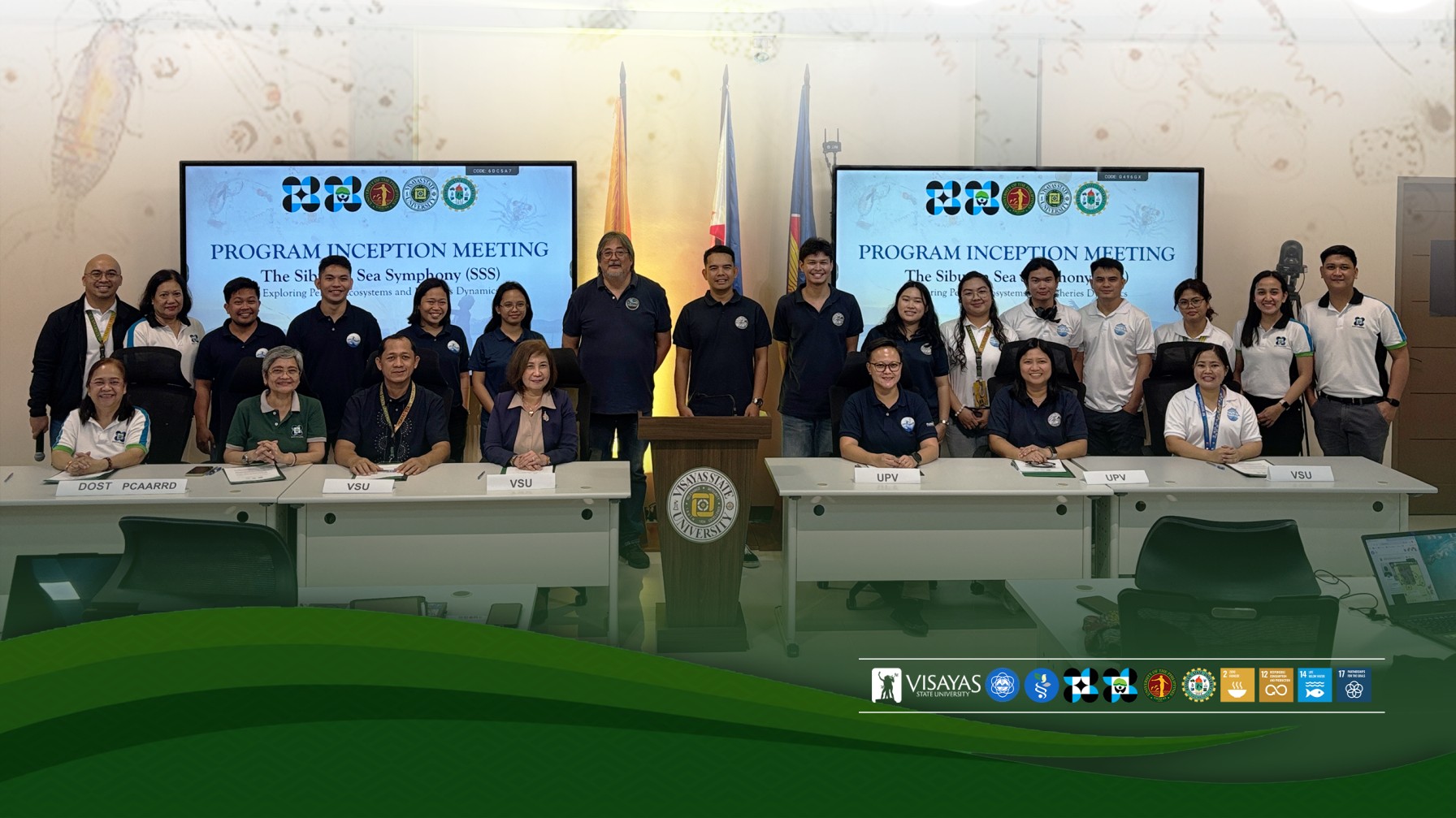
The Visayas State University boosts its conservation efforts by entering into a Memorandum of Agreement (MOA) with the DOST-PCAARRD to explore pelagic ecosystems and fisheries dynamics in the South Sibuyan Sea.
The project entitled “FiFE” or Fisheries and Feeding Ecology of the Pelagic Resources in the Sibuyan Sea was signed on February 5, 2026 at the VSU Smart Classroom between VSU President, Prose Ivy G. Yepes, PCAARRD Executive Director, Reynaldo V. Ebora, and DOST Undersecretary for Research and Development, Leah J. Buendia.
Project FiFE, led by Dr. Donna M. Guarte-Valida, a long-term DOST Balik Scientist and faculty member of the VSU Department of Biological Sciences, aims to identify important pelagic fisheries and fishing grounds in the South Sibuyan Sea. The project will also investigate the feeding ecology of pelagic fishes to assess their overall condition
When asked how the project can help locals, Dr. Guarte-Valida replied, “The project can prepare a visual fishing calendar showing peak seasons, lean months, and recommended rest periods for key species—something that can be posted in barangay halls or shared during community meetings. Further, the project can also prepare easy‑to‑read infographics showing which gears work best at certain times of the year, helping fishers plan their trips and reduce costs.”
Secrets of the Sibuyan Sea
Cradled between Luzon and Visayas, the South Sibuyan Sea is nestled within the Romblon Island Group. Along with the other main islands, Tablas and Romblon, Sibuyan is nicknamed the “Galapagos of Asia,” due to its phenomenal biodiversity and isolation from the rest of the archipelago.
The South Sibuyan Sea features a unique, pristine flora and fauna, and rich biodiversity. It has abundant marine life inhabited by endangered species such as sea turtles, whale sharks, hammerhead sharks, and sea cows or “dugong.”
Dr. Guarte-Valida emphasized that their technical findings will be translated into accessible toolkits or guidelines that local fisherfolk can use to self-regulate and protect their communal resources.
“Findings from the feeding ecology study—such as prey availability and fish condition—will be simplified into practical recommendations, including avoiding fishing during spawning peaks, protecting areas rich in prey organisms, and recognizing signs of stressed fish stocks,” she said.
VSU’s scientific future
Beyond scholarly pursuit, this agreement would also safeguard the South Sibuyan Sea and the livelihoods of residents among the islands.
The two-year project, with a total grant of more than 11 million from the DOST, has already provided VSU with roughly 7 million in its first year to initiate the project.
The university will provide the intellectual horsepower to execute the research, advancing new technologies and discoveries among VSU faculty and students. Laboratories and field resources will also be handed to the university upon project completion.
This project will propel VSU to the forefront of Philippine marine science, positioning the university as the strategic hub for research in the South Sibuyan Sea.
This article is aligned with the Sustainable Development Goals (SDG) No. 2: Zero Hunger; SDG 12: Responsible Consumption and Production; SDG 14: Life below Water, and; SDG 17: Partnerships for the Goals.