

#GoingGlobal: VSU-Louisiana State University linkage makes headways in climate-resilient rice production
- Details
- Written by ViSERDAC and Michael Carlo C. Villas
-
Published: 28 August 2026
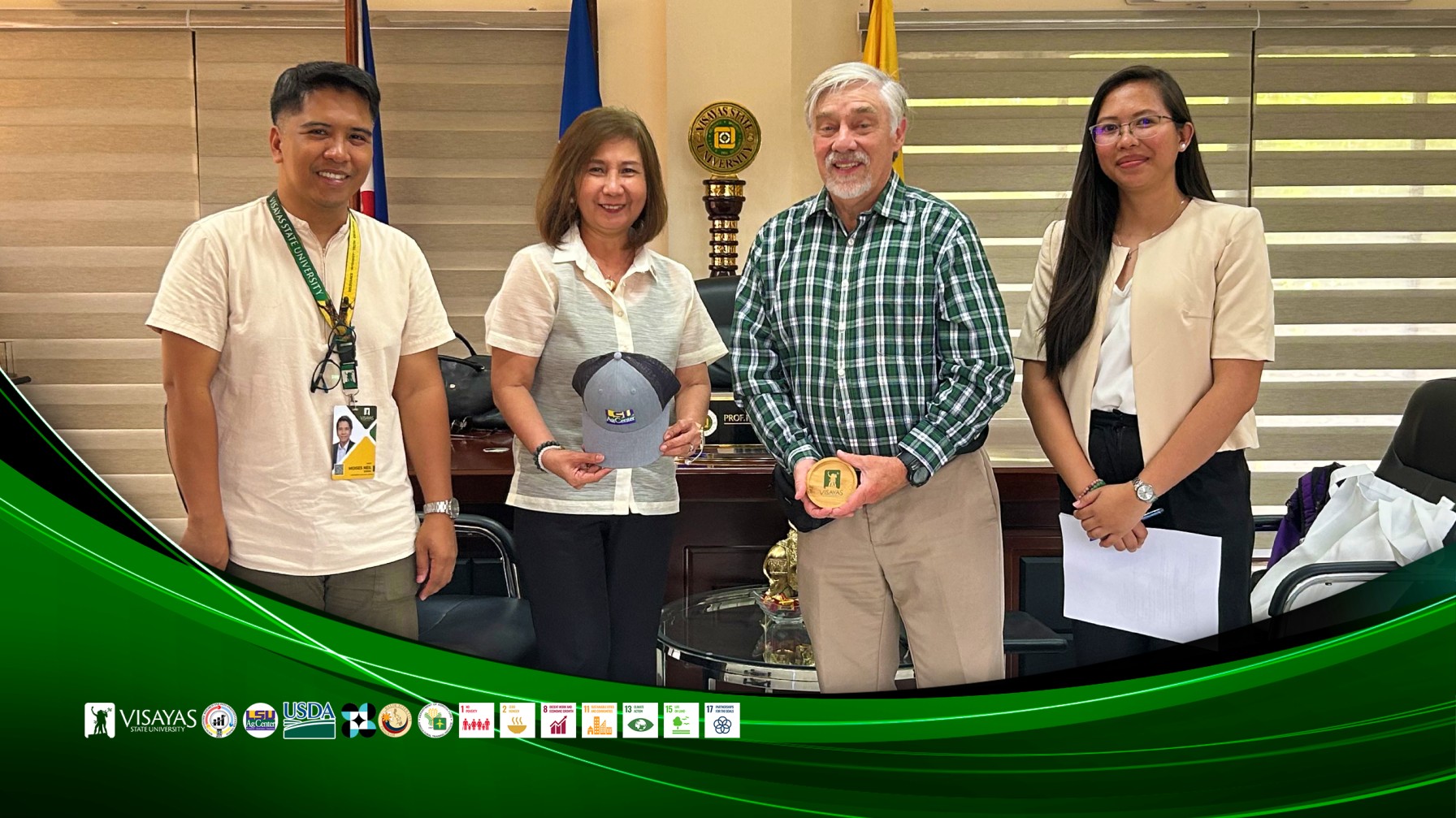
Linkage between the Visayas Socio-Economic Research and Data Analytics Center (ViSERDAC) of the Visayas State University (VSU) and the Louisiana State University (LSU) AgCenter recently made headways in research on climate-resilient rice production through a series of exchanges, capacity-building, and fieldwork in farming communities in Leyte.
Approved and funded by the United States Department of Agriculture (USDA) under its Scientific Cooperative Research Program in 2024, the joint project on “strengthening climate resilience in leveraging US Agricultural Research and Extension strategies for advancing climate smart agriculture adoption among Filipino rice producers” saw initial gains in the adoption of climate-resilient farming practices.
"The impact analysis showed that those farmers who attended training and adopted climate-resilient practices posted higher production and income during the dry season but no difference was observed during the rainy season," Dr. Moises Neil V. Seriño, project leader, said in an interview.
"This suggested that capacity-building activites and production intervention can also be looked into during the dry season. We will link with agronomy experts and consider how to increase production during the wet season," he continued.
Dr. Seriño explained that simply transferring lessons from United States production to the Philippines poses a great challenge, the foremost being that small-scale production in both countries mean two different things.
In the United States, particularly in Louisiana, a small-scale farm ranges from 40 to 50 hectares. In the Philippines, on the other hand, small-scale farms span one to three hectares.
Another stark contrast between the US and Philippine production is that the former is more mechanized than the latter, with Philippine farms still being labor-intensive.
While Dr. Seriño admitted that more work still needs to be done, he emphasized that efforts are underway for another proposal, an expansion in partnership opportunities, and a potential hosting of a Balik Scientist Program for experts on conservation farming.
Project members from the LSU Department of Agricultural Economics and Agribusiness are to include Dr. Naveen Adusumilli, Dr. Jonathan Hubchen, and Dr. Raghav Goyal.
Dr. Moises Neil V. Seriño, who leads the group, is joined in VSU by Dr. Christopher Llones, Charmagne Faith Capuno, Jessa Ruales, Reyvin Sabanal, and Ana Liza Recto.
Dr. Adusumilli of LSU served as mentor and research collaborator to Dr. Seriño during his three-month stint at Louisiana State University under the United States Department of Agriculture Scientific Exchange Program Fellowship (USDA-SEP) in 2023.
It was with the USDA-SEP where the current project was hatched and sealed.
Research Mobilities
The Visayas State University (VSU) Visayas Socio-Economic Research and Data Analytics Center (ViSERDAC) hosted Dr. Jonathan Hubchen of the Louisiana State University (LSU) AgCenter last June 15 to 24, 2026.
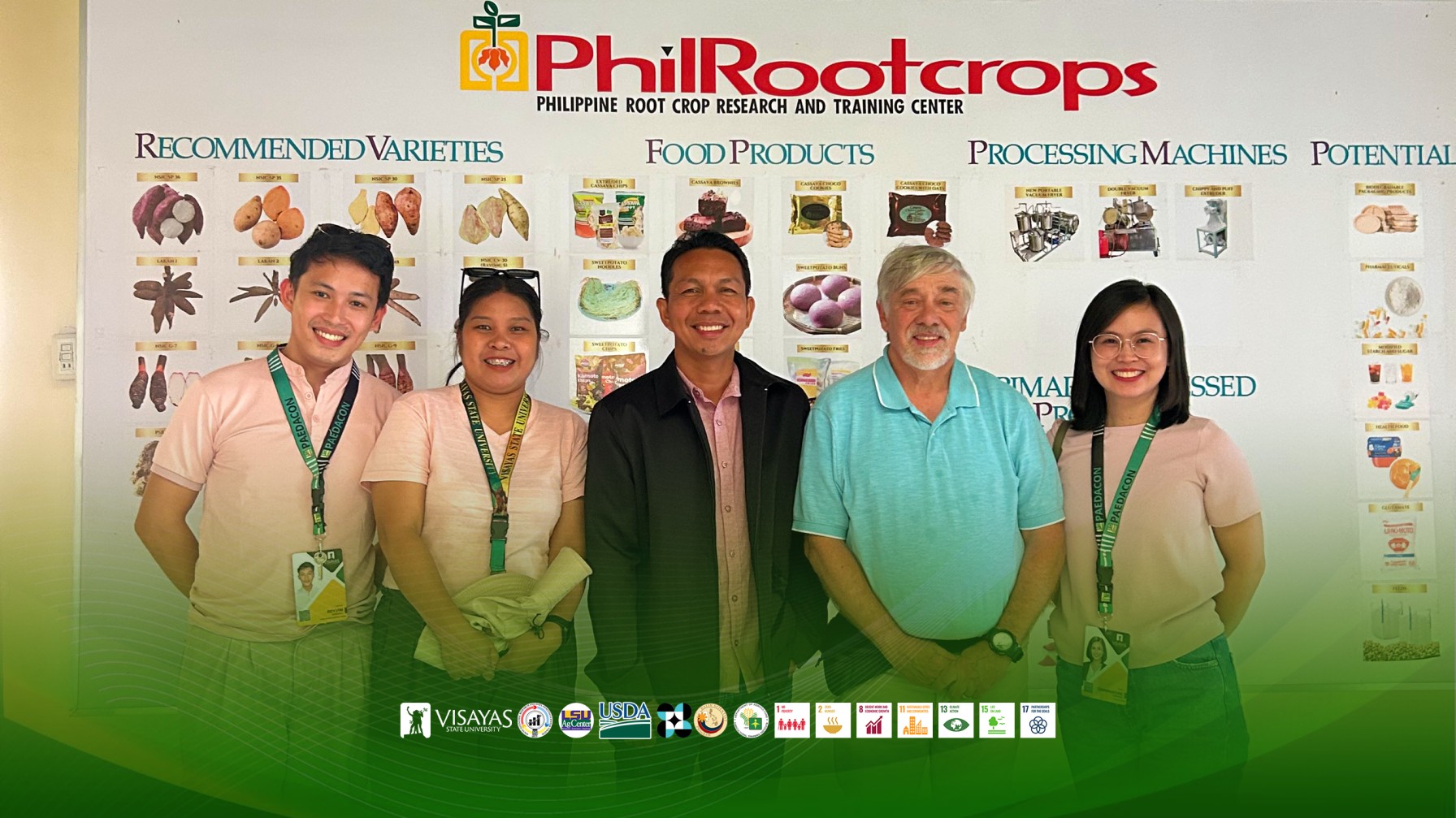
Aimed at enhancing the climate resilience of rice farmers, a sector vital to the Philippines' food security and rural livelihoods, the two-week engagement included a courtesy call with VSU President Dr. Prose Ivy G. Yepes, a meeting at the Office of the Vice President for Administration and Finance (OVPAF) headed by Vice President, Dr. Seriño, a presentation of academic and other opportunities at LSU to graduating students in Economics and Agricultural Economics, visits at the Philippine Root Crop Research and Training Center (PhilRootcrops) with Director Marlon Tambis and the Agricultural Training Institute-Regional Training Center VIII (ATI-RTC VIII) with Regional Director Hazel Grace Taganas, and fieldwork in rice farms in Hilongos and Ormoc City, Leyte.
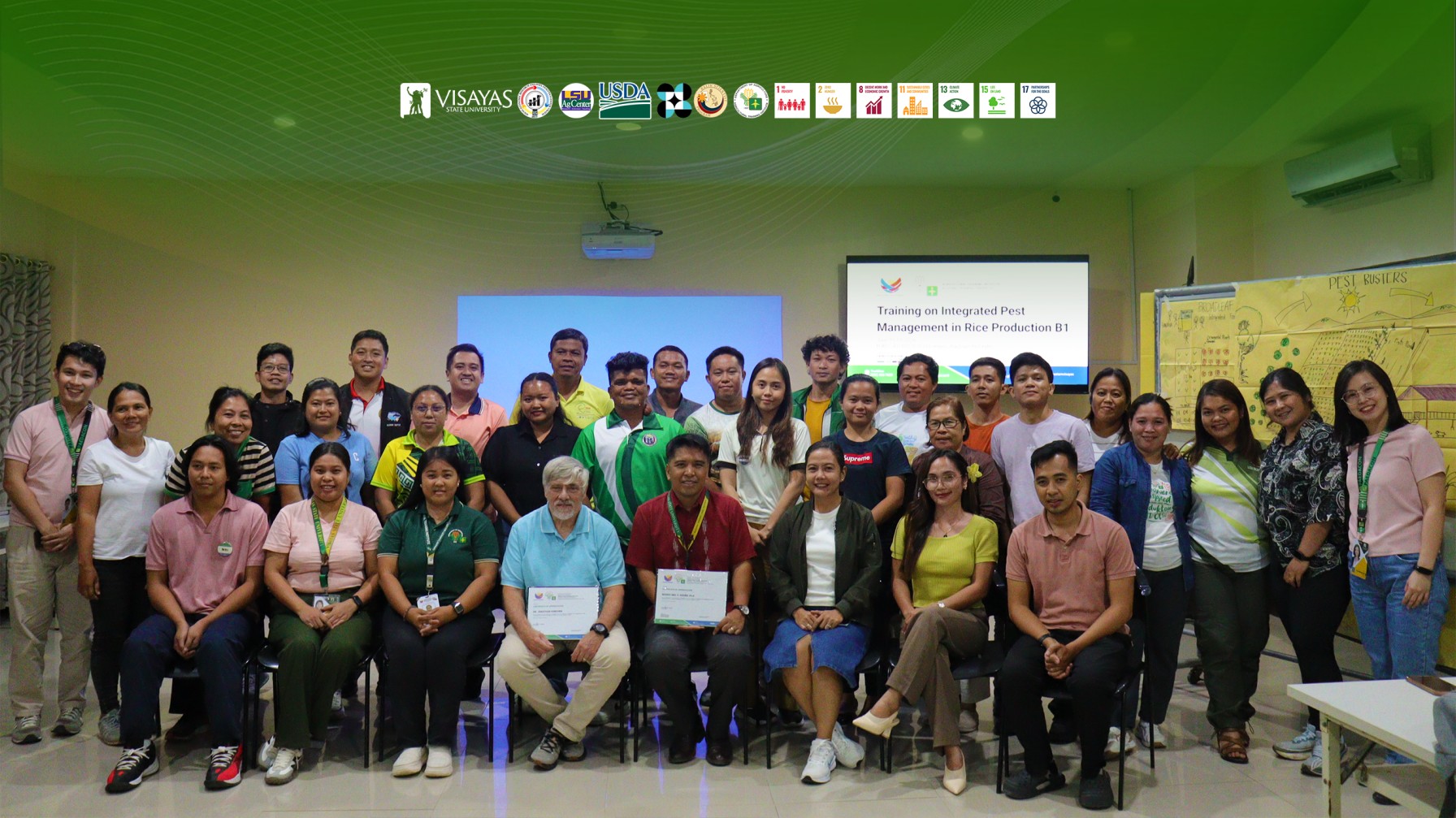
In his visit to ATI-RTC VIII, Dr. Hubchen served as resource person in a training program, while Dr. Seriño presented research findings from his LSU fellowship in 2023.
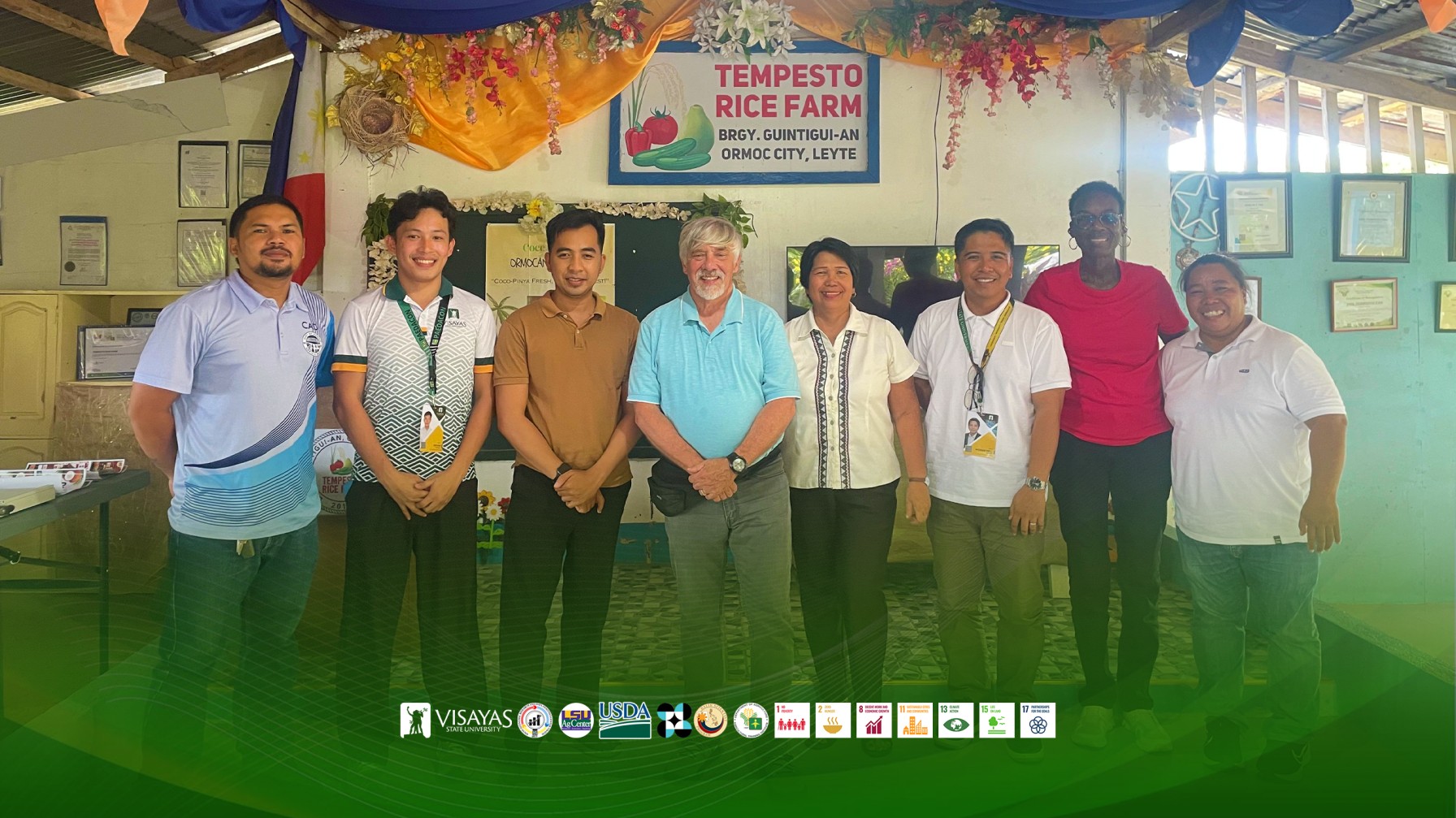
In Hilongos, he met with farm association leaders to discuss operational challenges and adaptive strategies and visited rice farms in Brgy. Tabunok to observe local agricultural practices firsthand.
In Ormoc City, Dr. Hubchen met with the City Agriculture Office and visited the Tempesto Integrated Farm in Brgy. Monterico to observe local innovations.
The engagement concluded with a trip to Lake Danao, a site significant to Dr. Hubchen from his time as a US Peace Corps volunteer, which provided a reflective personal touch to the professional visit, and a final meeting with the ViSERDAC team to discuss future research directions and strategies for translating current initiatives into long-term institutional linkages.
The current visit of Dr. Hubchen reciprocates a visit of Dr. Seriño made at the Louisiana State University in February of this year, yielding opportunities for collaboration with the US Embassy in the Philippines.
In a meeting with representatives from the US Embassy on August 12, 2026, VSU was invited to pursue research on ube.
"We said that ube research and production is a priority of the university. This can be a potential way to move forward in our partnership," Dr. Seriño said.
Climate-resilient Rice Production
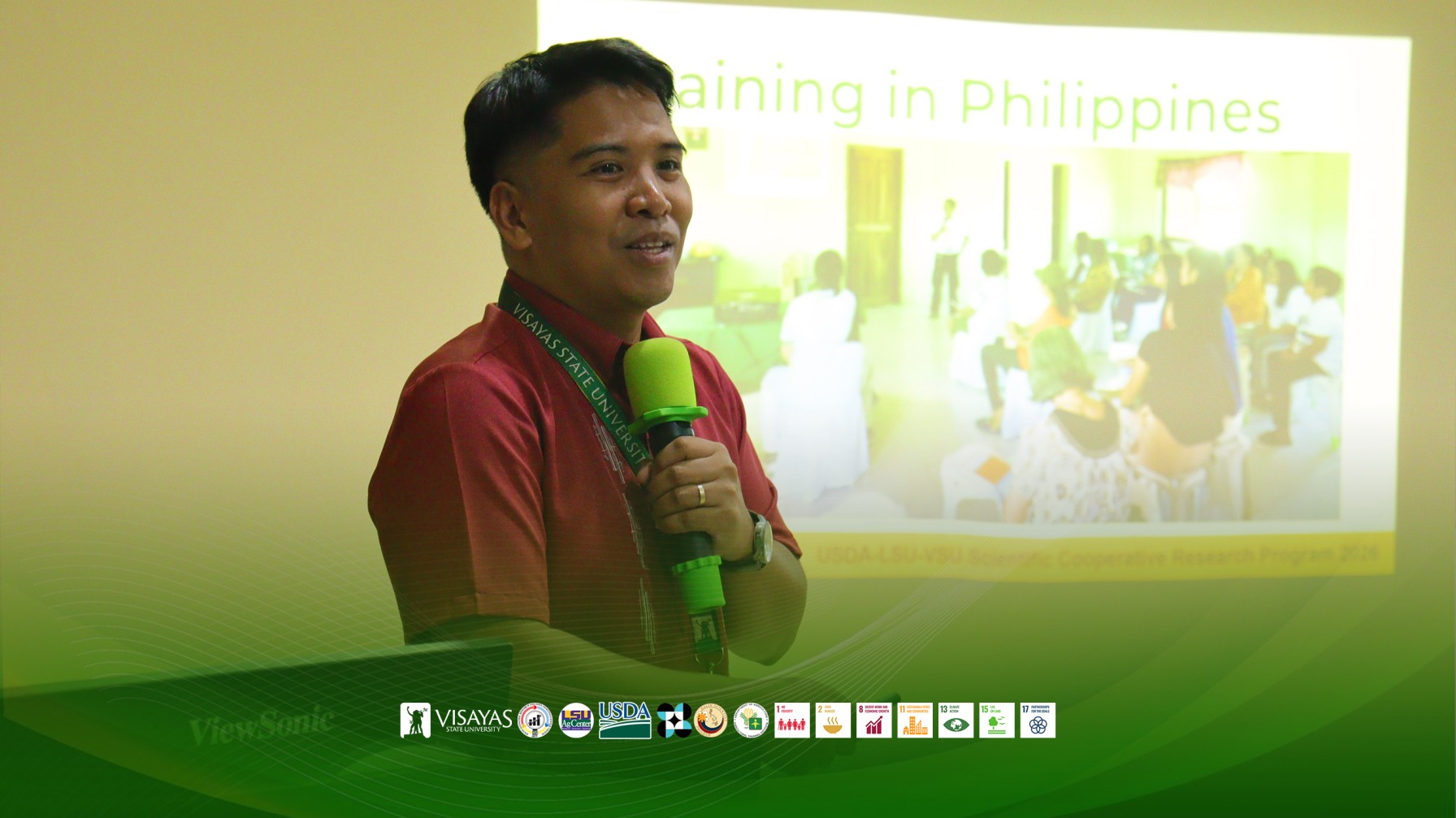
Dr. Seriño stressed that collaborative research among agricultural organizations, research institutions, government agencies, and private sector stakeholders in the United States and the Philippines have become even more significant in a time of climate crisis where climate-smart agricultural practices in the Philippine setting are no longer an option.
"Our farmers are facing unprecedented challenges during production. One of the potential approaches to increase production is the adoption of climate-resilient practices. But very few farmers are doing this," he added.
The VSU ViSERDAC and LSU AgCenter linkage seeks to bring research toward resolving rice production problems by generating information that will be useful for farmers, policymakers, and other stakeholders.
With a previous research project on small-scale vegetable production, Dr. Seriño shifted his focus to rice production, as advised by the USDA, because this still presents a pressing concern in Philippine agriculture.
"These collaborative research efforts with Louisiana State University can also facilitate knowledge transfer, enhance information dissemination strategies, and market access initiatives focused on climate resilience and sustainable agriculture, thereby improving resilience to climate change and natural disasters," Dr. Seriño said.
The VSU ViSERDAC-LSU AgCenter partnership is only one among many linkages of the Visayas State University with promises of expansion in the years to come.
This article aligns with United Nations Sustainable Development Goal (SDG) No. 1: No Poverty; SDG No. 2: Zero Hunger; SDG No. 8: Decent Work and Economic Growth; SDG No. 11: Sustainable Cities and Communities; SDG No. 13: Climate Action; SDG No. 15: Life on Land, and; SDG No. 17: Partnership for the Goals.