

#DiscoverWithVSU: Unlocking Agritourism Potential in Baybay City, Leyte
- Details
- Written by Mike Laurence V. Lumen
-
Published: 05 June 2026
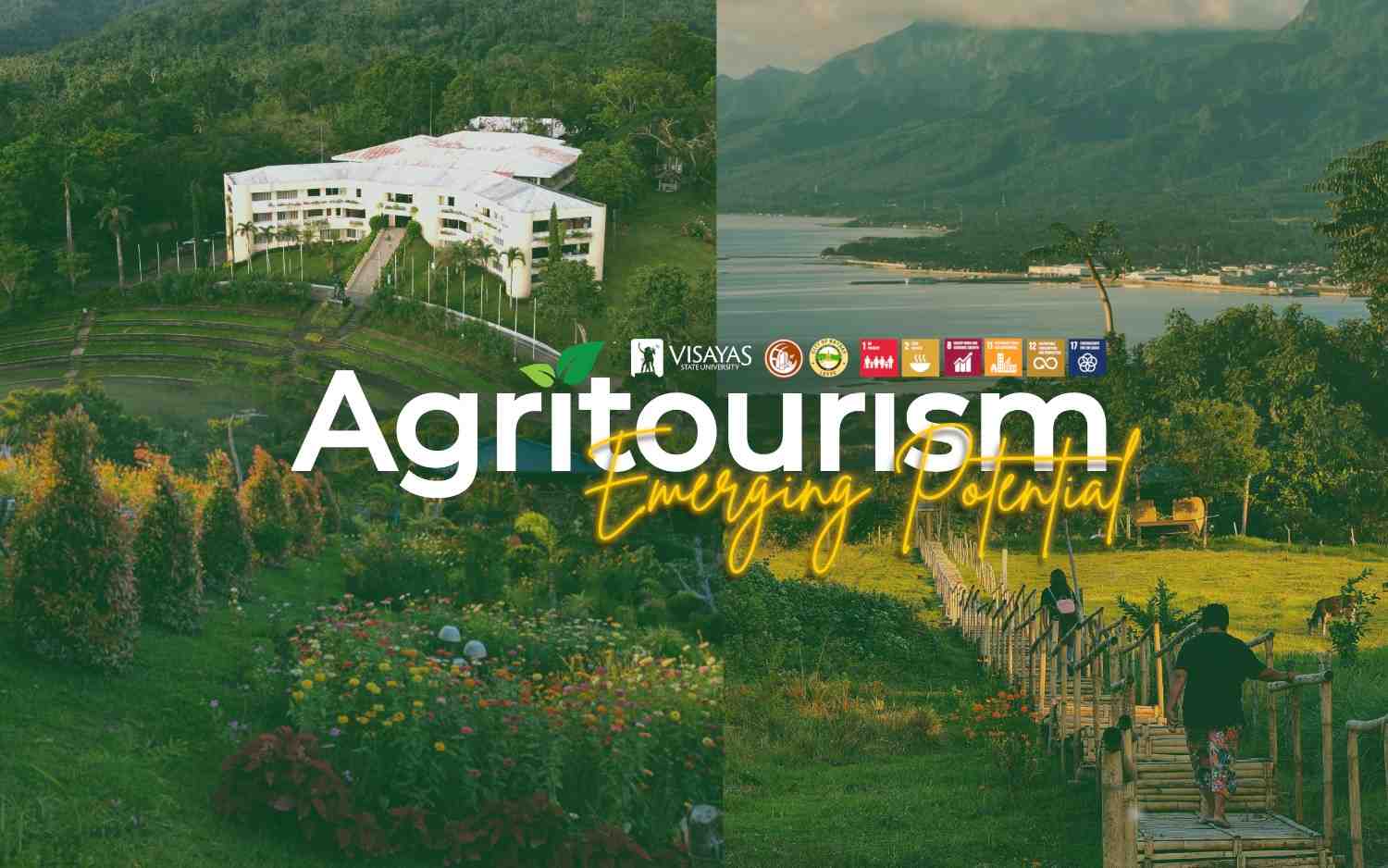
What if the farms of Baybay City could become not just sites of production, but destinations of experience?
A recent study by Elfe Jane L. Orge, Randy G. Omega, Elvira E. Ongy, and April Gayle V. Calunangan from the Visayas State University Faculty of Management and Economics (VSUFME) takes a closer look at this question, and the answer is both promising and sobering.
Published in the International Journal of Tourism Research (2025), the study entitled “Farmers' Intention to Establish an Agritourism Farm: The Case of Baybay City, Leyte, Philippines” explores why, despite strong agricultural resources, agritourism in Baybay has yet to take off.
At its core, agritourism offers a practical pathway for rural development, linking farming with tourism through activities such as farm visits, harvesting experiences, and local food demonstrations. It opens doors to additional income, stronger local economies, and renewed appreciation for agricultural heritage.
But the study reveals that potential alone is not enough.
Using data from over 400 respondents, both individual farmers and organized farmer groups, the researchers found that the biggest barrier to agritourism is not lack of interest, but lack of capacity. Challenges such as limited access to skilled labor, difficulty in managing operations, insufficient training, and weak institutional support significantly reduce the willingness of the farmers to venture into agritourism.
Interestingly, even when farmers recognize the benefits of agritourism, this positive attitude does not necessarily translate into action. Financial, organizational, and logistical constraints often outweigh intention.
However, one factor stands out.
Farmers who belong to groups or cooperatives show a significantly higher readiness to engage in agritourism. With shared resources, stronger networks, and collective decision-making, these groups are better positioned to overcome the same barriers that limit individual farmers.
The implication is, if agritourism is to grow in Baybay City, and across similar rural communities, efforts must go beyond awareness. What is needed is targeted support such as training programs, infrastructure development, access to financing, and stronger institutional linkages. More importantly, encouraging farmers to organize and collaborate may be the most effective step forward.
This study from VSU not only highlights the challenges but also points to a direction that agritourism is not out of reach. It simply requires the right conditions to take root.
And in a place like Baybay, where agriculture is already a way of life, those conditions are worth building.
This article is aligned with the Sustainable Development Goal (SDG) 1: No Poverty; SDG 2: Zero Hunger; SDG 8: Decent Work and Economic Growth; SDG 11: Sustainable Cities and Communities; SDG 12: Responsible Consumption and Production, and; SDG 17: Partnership for the Goals.