
VSU adopts a one-copy manuscript submission policy to reduce costs, paper use
- Details
- Written by Mike Laurence V. Lumen
-
Published: 15 June 2026
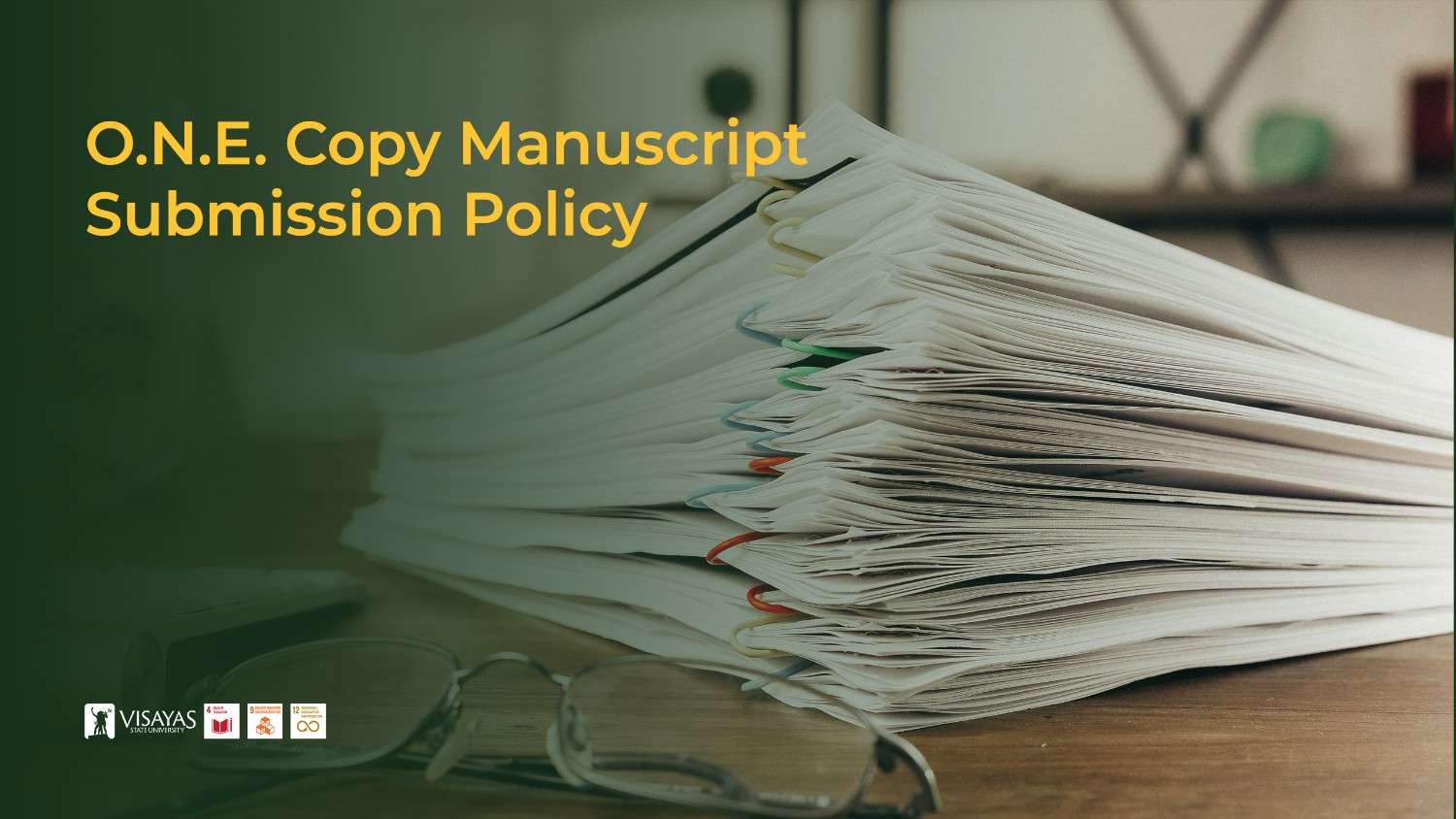
For generations of VSU students, completing a thesis or dissertation often meant preparing several hardbound copies before graduation. Aside from the academic work itself, students had to spend thousands of pesos on printing and binding, often at a time when they were already managing graduation expenses, job applications, board examination preparations, and other end-of-program requirements.
Beginning Academic Year 2025–2026, that practice will change.
The VSU Board of Regents has approved the O.N.E. (Optimized Number for Efficient) Copy Manuscript Submission Policy through BOR Resolution No. 37, as. of 2026, reducing the submission requirement to one hardbound copy, accompanied by an electronic copy for digital archiving.
The policy covers theses, dissertations, capstone projects, special problems, case studies, and other scholarly manuscripts submitted by students across the University.
Printing multiple copies has long been one of the final expenses before graduation. Depending on the length of the manuscript and the number of copies required, costs can easily run into several thousand pesos.
Under the new policy, students will only need to prepare one official hardbound copy for the University Learning Commons (University Library) while submitting a digital version for institutional archiving.
The shift is expected to lessen expenses for graduating students while making the management of academic manuscripts more practical for the university.
The policy also addresses another concern on space that has grown over the years. Libraries and offices accumulate hundreds of bound manuscripts annually. While these documents contain important scholarly work, storing multiple physical copies requires considerable shelf space and long-term maintenance.
The move also reduces paper consumption. Every year, thousands of pages are printed solely to meet manuscript submission requirements. With only one hardbound copy required, the number of printed pages, binding materials, and storage boxes needed by the University is expected to decrease substantially.
At the same time, digital archiving allows student research to be organized, preserved, and retrieved more efficiently. Future students, faculty members, and researchers can access academic outputs without having to search through multiple physical repositories.
VSU President, Dr. Prose Ivy G. Yepes, described the policy as a practical change that directly benefits students.
“Many of our students already carry significant expenses as they complete their degree programs. If there is a way for the university to reduce those costs without compromising academic standards, then we should pursue it. The O.N.E. Copy Policy is a simple adjustment, but for our students and their families, it can make a real difference,” President Yepes said.
With the policy now approved, VSU joins a growing number of higher education institutions that are rethinking traditional processes and making better use of digital technologies.
This article is aligned with SDG 4: Quality Education; SDG 9: Industry, Innovation, and Infrastructure, and; SDG 12: Responsible Consumption and Production.