
VSU pursues public service continuity plan, refines disaster resilience strategies
- Details
- Written by Claudette Meli Hoff E. Garduce
-
Published: 02 July 2026
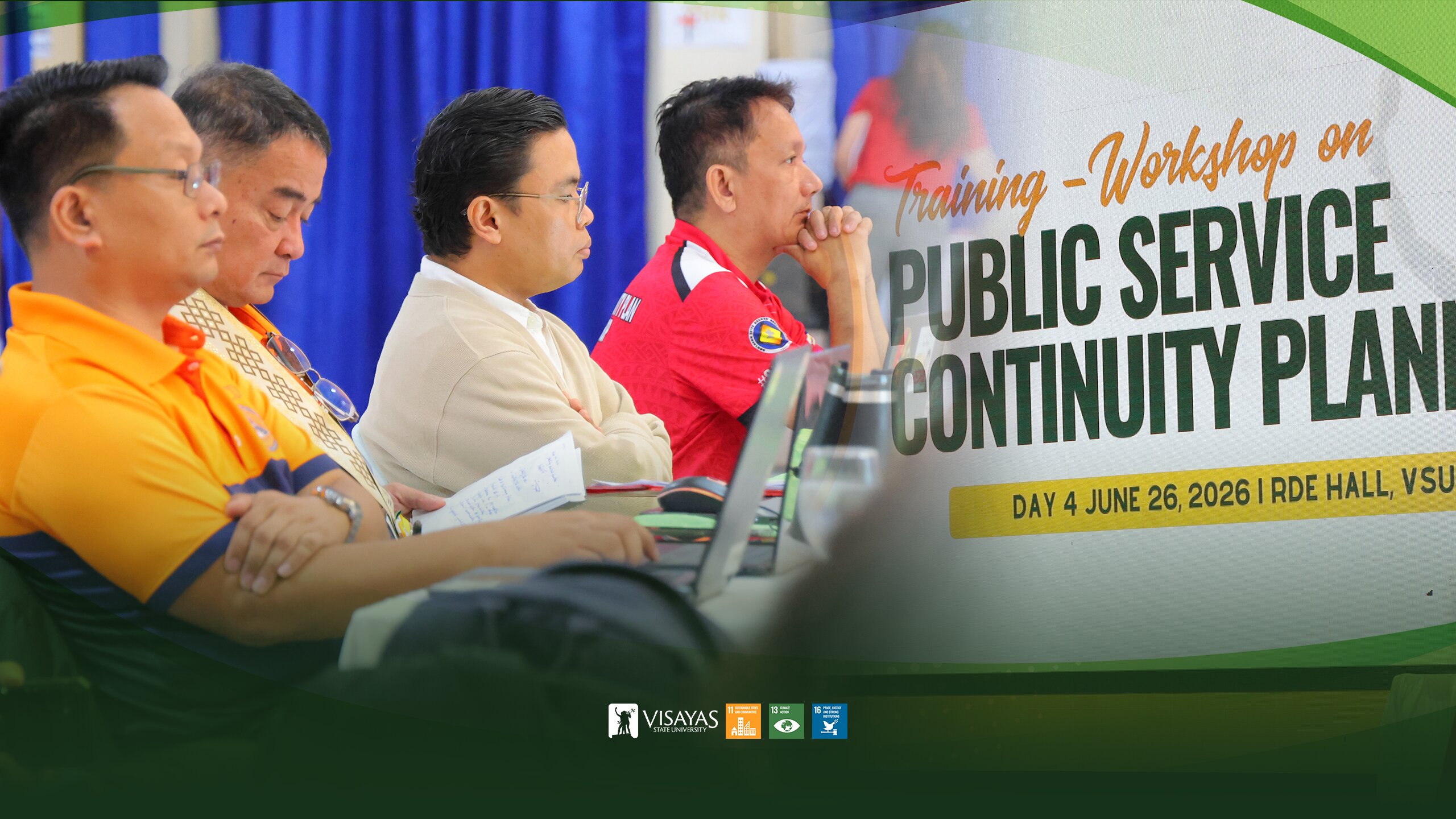
Visayas State University (VSU) key officials, together with the University Administrative Council (UADCO), pursued a continuity framework for public service and refined the disaster resilience strategies of the university during the comprehensive four-day Public Service Continuity Plan Training Workshop on June 23-26, 2026 at the RDE hall.
A first of its kind in VSU, this specialized technical course, aligned with the national mandates of the Office of Civil Defense (OCD), aimed to strengthen the university’s resilience and ensure uninterrupted delivery of essential public services during emergency, disaster, or unexpected disruptions in operations.
The thirty-two hours of technical training enabled university key officials and personnel to develop a more strategic and systematic approach to reduce risk and effectively handle crisis impact.
The capacity-building plan is based on the 2nd edition of the Public Service Continuity Planning Guidebook that reflects valuable administrative lessons learned and best practices in response to public health crises.
The overall goal of the intensive workshop was to help participants fully grasp the internal capacities, recovery needs, and frameworks that will ensure the continuity of quality public services under extreme circumstances.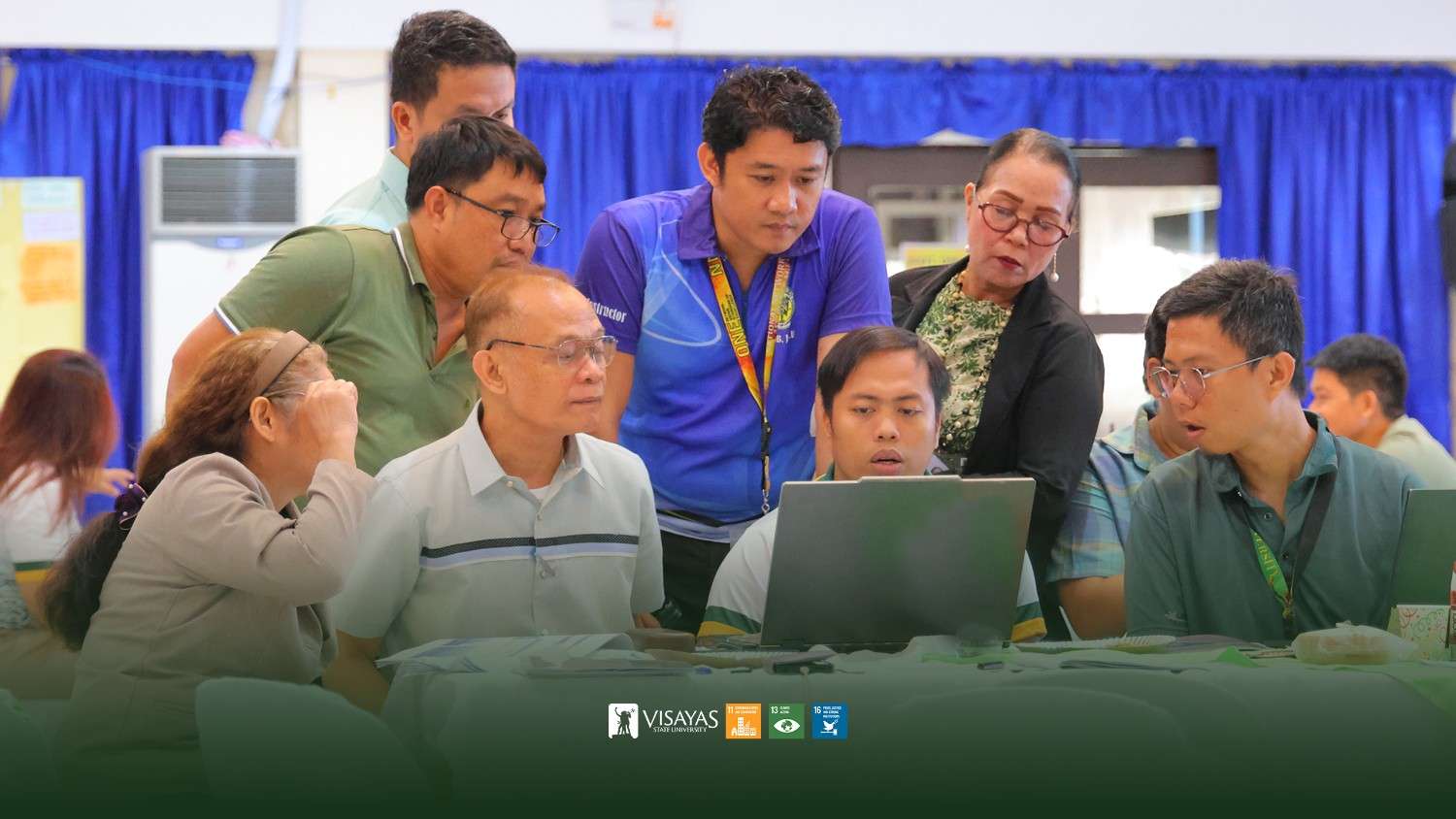
During the training, participants underwent eight in-depth sessions, beginning with an overview of public service continuity management and the laws and regulations that provide the foundation for national disaster reduction programs.
The preparatory work before the start of disaster reduction programs was explored, zeroing in on the institutional continuity core team, scope of operations, and development of a formal public service continuity policy statement.
The subsequent sessions led participants in thorough risk assessment processes with the aim to develop an institutional risk register and to assess the likelihood and organizational impact of hazards.
Trainees gained a new understanding of the multiple-step process of defining and prioritizing missions-essential functions, the differentiation between public facing (frontend) missions, and internal, essential supporting missions.
The importance of clearly defining recovery time objectives, dependency interrelationships, and critical recovery needs including succession, delegation, and alternate continuity facilities were also emphasized.
The workshop involved a progressive building block methodology using a blend of interactive lecture-discussions, audiovisual presentation, and structured learning activities to enable institutions to learn how to test, maintain, and exercise their continuity blueprints.
Participants, who completed all the instructional modules, receive a certificate of completion and are considered to have met the national guidelines for public service continuity planning. They have also attained a passing grade in the comprehensive post-test and have met other stringent course evaluation requirements.
The university plans to use the structured action planning framework developed during the session to complete the detailed drafting, updating, and implementation of the localized Public Service Continuity Plan within a targeted six-month timeframe moving forward.
University President, Dr. Prose Ivy G. Yepes reiterated the university’s commitment to sustainable governance and sustained support of the community and to continuity in its operations, both before and after any disaster, in service of its stakeholders.
"Through this initiative, we seek to establish continuity plans across all our functional units, so that every office, college, or faculty, campus and administrative units understand how to sustain critical operations during emergencies and operations," she said in a statement.
This article is aligned with the Sustainable Development Goal (SDG) 11: Sustainable Cities and Communities; SDG 13: Climate Action, and; SDG 16: Peace, Justice and Strong Institution.