
#DiscoverWithVSU: What the fish of the Agno River are telling us about the health of our waters
- Details
- Written by Mike Laurence V. Lumen
-
Published: 07 August 2026
For generations, rivers have fed families, supplied farms, supported local fisheries, and served as lifelines for communities. Yet many of the country's freshwater ecosystems continue to face pressure from human activities such as mining, agriculture, urban development, and changes in land use.
A newly published study involving researchers from Visayas State University (VSU) offers a closer look at what is happening beneath the surface of one of the Philippines' largest river systems.
The study, entitled “Diversity and Distribution of Freshwater Fish in Mineralized Watersheds of the Agno River Basin, Northern Philippines,” was published in the international journal, Watershed Ecology and the Environment, in June 2026.
The research was led by Mr. Kit Felian C. Tenio of the VSU-Institute of Tropical Ecology and Environmental Science (VSU-ITEES). Co-authors include Dr. Loucel E. Cui, Dr. Decibel V. Faustino-Eslava, Dr. Juan Miguel R. Guotana, Manilyn Casa, Francis Ian P. Gonzalvo, Earvin Jon Guevarra, Rosemarie Laila D. Areglado, and Maria Regina V. Regalado from the UPLB School of Environmental Science and Management; Dr. Jenielyn T. Padrones from the UPLB-Institute of Renewable Natural Resources; Kennethjer G. Alejo from the Graduate School of Engineering Science, Akita University, Japan; Dr. Patrick Byrne from Liverpool John Moores University, United Kingdom; and Dr. Richard Williams and Emma Biles from the University of Glasgow, United Kingdom, with Dr. Williams also affiliated with Earth Sciences New Zealand.
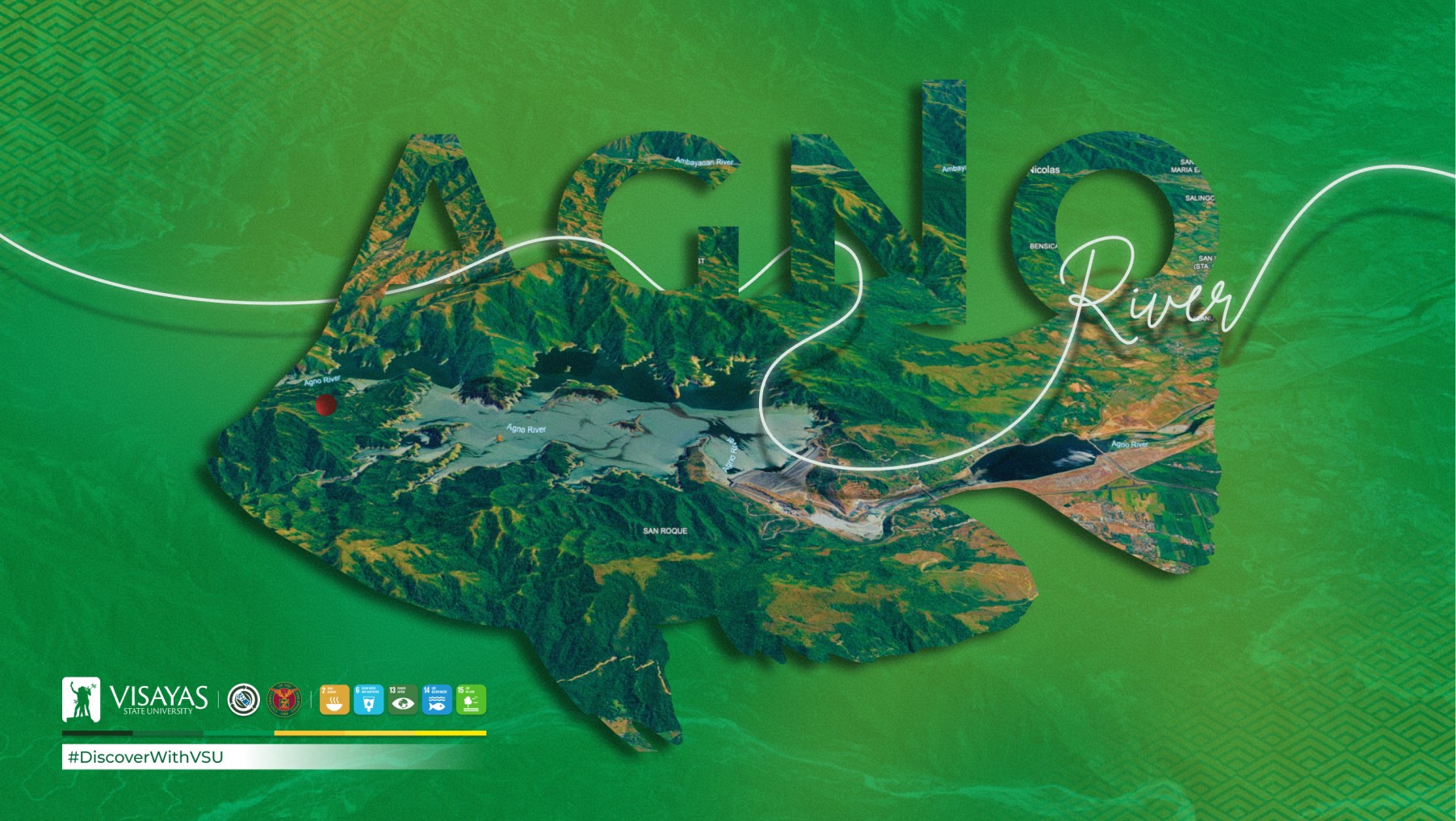
The Agno River Basin stretches across Benguet, Pangasinan, and Tarlac and is considered one of the country's major river systems. Its waters support agriculture, fisheries, recreation, and the daily needs of thousands of residents. Despite its importance, information on the river's freshwater fish and their distribution has remained limited.
To help fill this gap, the research team surveyed eight locations across the upper and lower sections of the river basin during both wet and dry seasons. They examined water quality and documented the fish species found in different parts of the river.
The study recorded 23 fish species belonging to 13 families. Among them were gobies, catfish, mullets, tilapia, carp, and other freshwater species commonly found in Philippine rivers.
Gobies, locally known in many areas as "biya," were by far the most abundant group, accounting for most of the fish collected during the survey. Two goby species, Pseudogobius javanicus and Rhinogobius bucculentus, were particularly common throughout the basin.
One encouraging finding was that native fish species still dominated the river system. About 87 percent of the fish recorded were native species, while introduced species such as tilapia, carp, guppies, and janitor fish made up the remaining portion. The researchers noted that introduced species became more common in downstream areas, particularly near locations influenced by aquaculture activities.
The study also documented species that deserve attention from conservation groups. Among these were the silver perch (Leiopotherapon plumbeus) and Rhinogobius bucculentus, both classified as vulnerable. Their presence suggests that parts of the river continue to provide habitat for species that may be under pressure elsewhere.
One of the most striking observations came from a sampling station located downstream of an active mining area in Benguet.
During the survey, researchers did not record a single fish at that site. While the study does not conclude that mining alone caused the absence of fish, the finding raises important questions that warrant further investigation.
Water quality measurements provided additional clues about conditions in different parts of the basin. Most water quality indicators remained within acceptable standards. However, researchers detected unusually high conductivity levels, a measure often associated with dissolved minerals and salts, in areas influenced by mining activities. Agricultural areas, meanwhile, tended to have warmer water and lower dissolved oxygen levels.
Why does this matter?
Fish are often described as natural indicators of river health. When water conditions change, fish communities are usually among the first to respond. A river with a healthy mix of native species generally reflects a healthier ecosystem, while the disappearance of sensitive species can signal environmental stress.
The researchers found that temperature appeared to have the strongest connection with differences in fish communities across the river basin. Warmer waters in downstream agricultural areas and cooler waters in higher-elevation sections of the basin appeared to influence which species were present in different locations.
The findings also point to the importance of continued monitoring of major river systems. As agriculture expands, mining activities continue, and landscapes change, regular assessments can help identify emerging threats before they become larger environmental problems.
For communities that depend on rivers for food, livelihoods, and water resources, understanding the condition of freshwater ecosystems is closely tied to food security, biodiversity conservation, and the long-term sustainability of local economies.
The researchers hope that the baseline information generated through the study can support future conservation efforts and guide river basin management decisions in the Agno River Basin and other freshwater systems across the country.
The study provides a clearer picture of the state of one of Northern Luzon's most important river systems by documenting what species remain, where they occur, and how environmental conditions vary across the watershed.
As pressures on freshwater ecosystems continue to grow, studies like this remind us that rivers tell stories not only through the water that flows through them, but also through the fish that call them home.
This article is aligned with the Sustainable Development Goal (SDG) 2: Zero Hunger; SDG 6: Clean Water and Sanitation SDG 13: Climate Action; SDG 14: Life Below Water, and; SDG 15: Life on Land.