Approved-Policy
Proposed Amendments to the VSU Publication/Policy/Patent Assistance and Collaboration for Emerging Researchers (PACER) Grant
Proposed Amendments to the VSU Publication/Policy/Patent Assistance and Collaboration for Emerging Researchers (PACER) Grant
(BOR Resolution No. 147, s. 2025)
Introduction
Following the approval of the VSU PACER Grant (BOR Referendum No. 22, s. 2025) and the constitution of the PACER Grant TWG (OP Memorandum # 1111, series of 2025), the OVPREI through the Scientific Publication section has formally announced a call for applications for the VSU PACER Grant CY 2025. Applications may be submitted online via https://ovprei.vsu.edu.ph/pacer-grant, with the deadline set for September 11, 2025. The PACER Grant aims to pair a complementary ally to collaborate with an emerging researcher through a buddy system where a young/early career researcher (‘ECR’) collaborates one-on-one with a senior/experienced researcher (‘PACER’) until completion of the required outputs.
Upon further review by the PACER Grant TWG, however, it has become evident that some specific portions of the guidelines require amendments to 1) make the grant more competitive as with other similar grants, 2) improve the application rate, 3) simplify the approval process, and 4) increase the budget utilization rate.
Proposed Amendments
|
APPROVED PROVISIONS PER BOR REFERENDUM NO. 22 S. 2025 |
PROPOSED AMENDMENTS AND JUSTIFICATION |
|
Upon approval, the ECR works one-on-one with the PACER until approval/publication (for manuscripts/UMs/IDs), issuance of eCertificate of Copyright (for copyright), or Certificate of Registration (for patents). |
Upon approval, the ECR works closely with the PACER until the manuscript is submitted to a Scopus-indexed journal/publisher or other outputs (UMs/IDs/copyright/patents/ other IPs) via IPOPHIL1. A list of Scopus documents eligible for the PACER Grant can be found using the Scopus Content Coverage Guide2 The ECR must include the VSU PACER Grant in the acknowledgment section of the submitted manuscript or other outputs as relevant.
|
|
The PACER-ECR is given a maximum of six months from the time of approval to submission to a Scopusindexed journal or other appropriate bodies for other outputs. Failure to meet the six-month submission time will result in the disqualification of the grant. |
The PACER-ECR is given a maximum of three months from the time of approval to submission to a Scopus-indexed journal or other appropriate bodies for other outputs. Failure to meet the three-month submission time will result in the disqualification of the grant.
|
|
PACERs with approved grant shall be entitled to ₱15,000.00/output with a maximum of two grants/engagements at a time. |
PACERs with approved grant shall be entitled to ₱10,000.00/output with a maximum of two grants/engagements at a time. The ECR shall submit a copy of the manuscript and relevant documents as proof of the required output, while the PACER shall provide a one-page summary of mentoring activities and support rendered.
|
Policy on Tree Management in Visayas State University Baybay Campus (BOR Resolution No. 146, Series of 2025)
Policy on Tree Management in Visayas State University Baybay Campus
(BOR Resolution No. 146, Series of 2025)
Proponents: VSU Tree Management Committee
Dr. Renezita S. Come - Chair; Dean, FFES
Dr. Moises Neil V. Seriño - Co-chair; VP for Administration and Finance
Members
For. Samuel O. Bernaldez - Lead, DFS - Forest Conservation Unit
Dr. Angelica P. Baldos - Head, DFS
Assoc. Prof. Roden Troyo - Head, Grounds and Landscape Maintenance
Engr. Marlon Burlas - Director, GENSO
Dr. Dennis P. Peque - Director, FPITC
Rationale
Current Tree Planting Practices and Growing Challenges
Visayas State University has maintained a longstanding commitment to environmental stewardship through its tree planting initiatives, most notably the annual tree planting activity required for graduation. As VSU's student population continues to expand, the scale of these plantings has increased correspondingly, creating both opportunities and challenges that necessitate systematic policy guidance.
Currently, all plantings take the form of enrichment activities, with species selection dependent upon availability at the Department of Forest Science (DFS) Nursery. The Forest Conservation Unit (FCU) strategically targets areas experiencing significant disturbance that require rehabilitation. However, the current operational framework presents notable safety and coordination concerns, particularly during large-scale enrichment plantings in areas such as MPTS and Kanagahan, where up to 100 students participate simultaneously under the supervision of only three Forest Guards, with unclear role definitions between Forest Guards and Tree Planting Coordinators.
Safety and Resource Management Imperatives
The university faces mounting safety risks as tree planting activities frequently occur near campus structures and along roadways, creating potential hazards to both human safety and university property. The Department of Forest Science routinely receives requests for tree inventory and assessment of trees planted in proximity to buildings and roads, often resulting in costly regular pruning or complete removal—expenses that could be minimized through strategic advance planning and optimal resource allocation. On average, VSU spends close to half a million pesos annually on labor, fuel, and equipment maintenance for pruning and cutting of trees assessed to pose risks to people and property (Table 1).
Table 1 Cost accruing to pruning and cutting of trees within the VSU Baybay Campus in the last five years
|
YEAR |
LABOR1 |
FUEL FOR CHAINSAW2 |
EQUIPMENT MAINTENANCE COST3 |
ANNUAL TOTAL |
|
2024 |
Php 432, 000.00 |
Php 36, 000.00 |
Php 12, 000.00 |
Php 480, 000.00 |
|
2023 |
Php 432, 000.00 |
Php 36, 000.00 |
Php 12, 000.00 |
Php 480, 000.00 |
|
2022 |
Php 432, 000.00 |
Php 36, 000.00 |
Php 12, 000.00 |
Php 480, 000.00 |
|
2021 |
Php 432, 000.00 |
Php 36, 000.00 |
Php 12, 000.00 |
Php 480, 000.00 |
|
2020 |
Php 432, 000.00 |
Php 36, 000.00 |
Php 12, 000.00 |
Php 480, 000.00 |
1chainsaw operator, field assistants; 22 days each
2average of 30 liters per month
32T, other spare parts, repair costs
If we compare the costs of pruning and cutting against the peso value of the timber that is gained after, it is several times higher since most of the trees cut are species that produce low-quality wood and are not even recommended for construction or furniture purposes (Table 2).
Table 2 Volume and peso value of usable wood obtained from cutting in the last five years
|
YEAR |
VOLUME (in boardfeet)1 |
VALUE (in Php) |
|
2024 |
187.50 |
15,000.00 |
|
2023 |
150.00 |
12,000.00 |
|
2022 |
212.50 |
17,000.00 |
|
2021 |
137.50 |
11,000.00 |
|
2020 |
175.00 |
14,000.00 |
1 all commercially available species commonly sold in local lumberyards
2 average price per boardfoot, Php 80
In addition, the potential and/or actual value of the damage caused by trees to people and property is even more difficult to estimate. For example, roots of some trees planted close to some buildings have already blocked canals running beside it. Widow-makers have fallen on vehicles and motorists inside the campus. The majority of pruning and cutting requests are for trees that have either been planted or growing close to buildings and other structures in the campus.
Strategic Opportunities for Policy Development
The creation of the Land Use Development and Infrastructure Plan (LUDIP) presents a timely opportunity to formalize and refine tree planting policies across VSU's jurisdiction. This policy framework would enable the university to expand beyond traditional protection and conservation objectives to encompass sustainable production of essential forest resources, including timber, bamboo, rattan, and fuelwood.
Institutional Necessity
Given VSU's trajectory of growth—characterized by increasing population density, expanding infrastructure development, and evolving forest conservation priorities—the implementation of a comprehensive Tree Management Policy has become imperative. Such a policy would provide essential guidance for the strategic planning and systematic execution of all planting activities, ensuring that the university's environmental initiatives align with institutional development goals while maximizing safety, efficiency, and long-term sustainability.
With the above in mind, the following policies in relation to the management of tree resources within VSU are proposed:
A. Budget Allotment to the Tree Management Committee
The Tree Management Committee, the advisory body to the Office of the President on matters relating to the management of trees inside the VSU Baybay campus, not only focuses on advising the President but a team is hired to act on approved requests like pruning, cutting, processing of cut stems, tree planting, and other tree management activities. TMC expenses listed in Table 1 have no clear allotment of funds. The usual practice is that labor and other operating expenses are charged to the OVPAF. In some instances, the DFS and FFES already shoulder some of the expense when the funds are not sufficient.
It is proposed that funds for the expenses related to labor and maintenance be specifically allotted for the operation of the TMC.
B. Identification And Delineation Of Tree Planting Areas For Specific Purposes
The DFS - Forest Conservation Unit (DFS - FCU) will lead in the identification and delineation of tree planting areas for the following purposes:
- Protection (enrichment plantings, restoration of degraded areas)
- Production (timber species)
- Production (non-timber species; e.g. bamboo and rattan), and
- Woodlots (fuelwood production).
The maps and other relevant information will be relayed to the TMC for deliberation, in view of the VSU LUDIP and other university planning documents.
Periodic review by TMC and DFS - FCU of the maps and the sites will be done based on needs of the university.
- Tree Planting As A Graduation Requirement
The DFS - FCU will prepare the tree planting calendar which will include the following information:
- Date of planting
- Degree program
- Tree planting area to be used, which may not be limited to areas under VSU jurisdiction but can include areas within Baybay as part of the extension activity of the university.
- Tree species to be planted.
The calendar will be disseminated to all Tree Planting Coordinators.
The DFS - FCU is responsible for the following tasks:
- Prepare the area for planting, e.g. staking, brushing, visible markers on the trail to the tree planting site.
- Conduct a pre-activity orientation with the TPC and students.
- Guide the TPC and students to the designated tree planting area.
- Demonstrate the proper way to plant. and the disposal of the polybag after removal.
- Check if the seedlings have been planted correctly.
- For validation in the Tree Planting Masterlist, sign the space in the attendance sheet corresponding to the name of the student who successfully and correctly completed the tree planting.
- Prepare the Tree Planting Masterlist and forward a signed copy to the TPC.
- Coordinate with the DFS Nursery In-charge on the tree species to be raised based on needs of the different tree plantation areas.
- Arrange with the Security Office and other relevant agencies in securing clearance for entry to the planting sites to ensure safety of the participants.
The Tree Planting Coordinators (TPC) are responsible for the following tasks:
- Attend the required orientation for TPCs conducted by the DFS - FCU at the start of every semester.
- Organize students assigned under her/him including the bulk procurement of seedlings to be planted.
- Arrange with USHER the necessary preparation for first aid provision (e.g. stand-by medics at the drop-off point) to ensure safety of the participants.
- Ensure that the students are informed of and are following the requirements before joining the activity: wearing proper field attire (long sleeves, pants, shoes/rubber boots, bolo(sundang), and bag to carry the seedlings. No student will be allowed to join if any one of these are missing/not followed.
- Accompany the Forest Guards on a pre-activity inspection visit of the assigned tree planting area.
- Provide a list of participants with the following information: names, degree program enrolled in, sex, age, and special requirements (for provision of alternatives in case of health issues, valid proof is needed).
- Accompany and supervise the students throughout the whole duration of the tree planting activity. The tree planting activity will not proceed without the participation of the TPC.
- Prepare the necessary documentation for issuance and validation of the Tree Planting Masterlist.
- Receive and keep the validated Tree Planting Masterlist for forwarding to the Office of the University Registrar.
- Arrange for special tree planting or its alternative for students who were unable to join their scheduled date.
The students are responsible for the following:
- Signify to their TPCs their intention to comply with the requirement.
- Coordinate with TPC regarding requirements prior to, during, and after the conduct of the tree planting.
- Follow the instructions for the safe conduct of the tree planting activity.
To decongest the huge number of tree planting requests especially towards the end of the academic year, the student may participate in a calendared tree planting activity as early as during the time s/he takes her/his NSTP course. The arrangements for an NSTP-related tree planting activity will be coordinated with NSTP coordinators and the concerned TPC of the degree program where the student is enrolled in.
In the event that the student has transferred to another school and has already obtained a Tree Planting Certificate, the certificate is valid only for VSU use. It is up to the school if the VSU certificate will be accepted or not. No other certification will be issued by VSU.
The tree planting activity organized by VSU as part of graduation requirements is only for VSU students. Individual requests from students enrolled in other schools for participation in VSU’s tree planting activities as part of compliance with graduation requirements will not be accommodated.
D. Tree Planting As Part Of University Activities And Requests From Various Organizations
Requests for tree planting activities will be addressed to the Tree Management Committee through the DFS - FCU.
DFS-FCU will assess the request and if feasible will advise on which tree planting area to use, the species to plant, and other similar tasks done for a tree planting activity as a requirement for graduation.
Since this is a special purpose tree planting activity, the signatory of the request will serve as the Focal Person or the equivalent of the TPC and will perform the duties of a TPC.
E. Requests Of Organizations For Free Tree Planting Materials
Requests for provision of free tree planting materials from various VSU and non-VSU organizations will be at a maximum of 50 seedlings per request, depending on their availability. The choice of species will be decided by the DFS. In excess of 50 or if not the preferred species, the requesting party pays for the published price of the seedlings.
F. Tree Planting For Landscaping Purposes
Tree planting for landscaping purposes on areas near structures, roads, and other features whether existing or proposed will use small to medium - sized trees and will be done only upon the assessment and advice of the TMC.
E. Pruning / Cutting Of Trees Assessed To Be Hazardous to Structures and People
The TMC and DFS - FCU will conduct a semi-annual inventory of trees near structures, roads, and other features in the campus to determine the degree of risk and damage they might cause.
Based on the assessment, TMC will provide advice to the Office of the President on possible courses of action to minimize risk and damage to lives and properties of the university.
TMC will act on the decision of the Office of the President.
Cut trees will be gradually replaced with the appropriate small to medium - sized tree species following a replacement planting calendar. One cut stem will be replaced by 10 planted seedlings in areas that will be identified by the TMC.
G. Charges to Pruning / Cutting Requests
1. The fuel costs accrued by any pruning or cutting request from any office of VSU will be charged to the funds of the office of the requesting party.
Table 3 Comparison of average fees versus proposed charges for pruning or cutting
|
AVERAGE FEE, OUTSIDE SERVICE |
PROPOSED FEE |
||
|
Pruning |
Cutting |
Pruning |
Cutting |
|
1,500.00 |
2,500.00 |
500.00/stem |
750.00/stem |
The proposed fees for pruning and cutting are estimated to cover the costs of fuel and equipment maintenance costs.
In the event of cutting, the requesting party will also shoulder the payment for the procurement of the replacement seedlings (see Item G; one cut stem = 10 replacement seedlings).
2. In the case of cutting or pruning requests for residential areas within the campus, fuel costs will be shouldered by the requesting party (personal).
I. Periodic Conduct of Tree Inventory and Updating of Tree Registration Records
The TMC will conduct a periodic inventory of all trees 254 inside the campus to monitor stand development and to regularly update the tree registration records.
DFS Nursery staff will conduct a semi-annual inventory of seedling trees in the DFS Nursery.
Maps of tree planting areas will be periodically updated, and copies will be provided to the OVPPD and other relevant offices.
J. Production of Planting Materials
The DFS Nursery will produce and provide the required planting materials for various tree planting purposes.
In coordination with the DFS - FCU, the species and estimated number that will be produced will be determined based on the tree planting calendar and the replacement calendar for trees subjected to various silvicultural treatments.
K. Silvicultural Treatments in All Tree Planting Areas
DFS - FCU will assess and provide recommendations to the TMC for appropriate silvicultural treatments to all tree planting areas.
The TMC will provide advice to the Office of the President and will act based on the decision of the OP.
Such silvicultural treatments may include salvage and sanitation cuttings and thinning operations aimed at timber stand improvement.
All cut stems will be deposited in a designated secure landing area where further processing will take place.
The distribution/usage of wood produced from such cuttings will be determined by the Office of the President.
Naturally fallen timber that still has sound wood usable for furniture and/or construction purposes will also be treated under Item K of this policy.
L. Issuance of Resource Collection Permits
- Fuelwood
Application for fuelwood collection permit is done at the FCU office. Only fuelwood that can fit one 50 kg - sized sack is allowed per applicant per day. The approved permit also serves as the permit to carry the fuelwood from its point of collection.
Once the woodlots have been established 300 and are able to provide enough volume to support fuelwood requirements of neighboring barangays, all fuelwood cuttings will only be allowed within the woodlots.
The DFS - FCU will monitor and ensure that permit holders are guided on the location of the woodlots and the allowed volume per permit applicant per day.
Fuelwood collection may be allowed for fallen branches in production areas, but only under the close monitoring of the DFS - FCU.
2. Wildings
A written request will be addressed to the committee for appropriate action.
Wildling collection is only allowed for plant species identified by the FCU to be abundant after masting season and those whose conservation status is not vulnerable or higher.
Wildling collection will follow the protocol established by the FCU, e.g. only those under the canopy of the mother trees will be collected.
M. Access to the VSU Forest Reservation
- VSU Laboratory Classes and Other Academic And/Or Related Activities
Ingress to and exit from (if entering via other access points outside VSU) the reservation for all activities whether for laboratory classes, other academic and/or related activities or non-VSU activities (e.g. trekking / mountaineering groups; surveys) will only be allowed after existing security and access protocols of the university have been followed.
2. Forest Bathing
As part of the university policy on VSU’s Action on Wellness on Work and Work on Wellness (VAWOWOW), the proposed route for Forest Bathing is from the DFS Nursery Complex to the Biodiversity Research Center using the trail that passes through the “crossing/ bagras area”, every Wellness Wednesday. Coordination and registration with the DFS - FCU personnel is required before starting on a forest bathing walk. Appropriate attire is required for all participants to ensure safety during the activity.
PROPOSAL ON THE INSTITUTIONAL POLICY ON DYSMENORRHEA-RELATED ABSENCES (BOR Resolution No. 149, Series of 2025)
Proposal on the Institutional Policy on Dysmenorrhea-related Absences
(BOR Resolution No. 149, Series of 2025)
Proponent:
Sanny Jr. M. Dumpa
USSCF, Chairperson
I. Introduction
Menstrual health is a crucial yet often overlooked aspect of student well-being. For students diagnosed with dysmenorrhea, the repeated requirement of a medical certificate (medcert) for each episode can be burdensome, time-consuming, and unnecessary. This policy aims to ease that burden by allowing students with verified chronic dysmenorrhea to submit a one-time certification at the beginning of the term. By doing so, we acknowledge the recurring nature of their condition and prevent undue stress that could affect their academic performance.
This change is not about reducing accountability but rather about streamlining a process that can otherwise cause unnecessary delays and discomfort for students. It ensures that those genuinely suffering from dysmenorrhea receive the accommodation they need without having to go through the hassle of obtaining a medical certificate for a condition that is already medically documented.
II. Description of the Problem
Dysmenorrhea or menstrual pain is a widespread problem that affects more than 90% of the female VSU students who responded, with almost half feeling moderate to severe pain lasting for hours. Dysmenorrhea has a significant effect on students' ability to focus, engage in class activities, and in some instances, come to school at all. In spite of this, VSU mandates students to submit a medical certificate for the justification of absences due to dysmenorrhea.
The survey results indicate that this policy is problematic for several reasons:
- Restricted Awareness of the Policy – Over two-thirds (68.2%) of the students who responded were unaware of the medical certificate requirement, indicating absence of proper communication and transparency of the policy.
- Undue Burden to Students – Sitting for a medical certificate with every episode is time-consuming, costly, and work-consuming.
- Strong Resistance to the Requirement – The majority (81.6%) of students who responded believe the medical certificate requirement is unnecessary since dysmenorrhea is a frequent and well-documented ailment that need not be demonstrated by medical methods.
- Impact on Academic Achievement – Dysmenorrhea has a negative effect on students' concentration, cooperation during classes, and school attendance. The provision for a doctor's certificate as a prerequisite for validating excuses of absence may lead to undue hardship and punishment of a normal, recurrent condition.
Considering the opposition to the present policy and the very high support (89.7%) for dropping the medical certificate requirement, it is clear that the university has to reconsider its position. A more humane and inclusive method, like the adoption of this policy, would enable students to deal with their condition without the red tape.
This policy’s Survey elicited opinions of students from throughout Visayas State University to gauge the effect of dysmenorrhea on academic performance and student perceptions of the medical certificate for dysmenorrhea-related leaves.
Dysmenorrhea Prevalence: 91.2% of respondents experience dysmenorrhea, with 78.3% suffering from it every month.
Severity & Duration: Nearly 80% experience moderate to severe pain, and over 56% endure it for more than four hours.
Academic Impact: 67.5% struggle to concentrate, while 23.6% are unable to attend class due to pain.
Medical Certificate Awareness: 68.2% were unaware of the requirement for dysmenorrhea-related absences.
Opinion on the Medical Certificate Requirement: 81.6% believe it should be removed.
Support for the Policy: 89.7% support the removal of the medical certificate requirement.
Key Takeaways:
- Dysmenorrhea is a widespread issue affecting students' academic performance.
The medical certificate requirement for each episode is definitely burdensome.
III. Proposed Solutions
To address the unnecessary hassle brought to students with dysmenorrhea, this policy is adopted to excuse students from any academic requirements (including NSTP) during a single-day painful episode. This approach will ensure that students with severe dysmenorrhea no longer need to repeatedly acquire a medical certificate for each absence, thereby reducing stress, economic costs, and logistical problems.
This policy presents a balanced measure by:
- Promoting Medical Accountability – Students with chronic dysmenorrhea has one peak day of pain during their period. Therefore, they may be excused from any academic requirements for one day without the need for medical documentation. However, if a student wishes to be excused for more than one day, a medical certificate shall be required, as prolonged pain may indicate underlying conditions.
- Avoiding Exploitation – Students can only be accommodated by this policy for a single day per month.
- Creating an Inclusive Academic Environment – The university acknowledges menstrual health as a valid medical concern and provides necessary accommodations without unnecessary bureaucratic barriers.
By implementing this streamlined and accountable system, the university demonstrates a commitment to student well-being, gender inclusivity, and equitable academic support.
IV. Implementation Plan
Section 1. Policy Orientation for students during the Council Assembly
During the council student assembly, this policy shall be presented to the student body.
Section 2. Student Accountability and Integrity
A. If a student availing of this policy is found, with sufficient evidence (e.g. pictures, videos taken on the day of excuse), to be abusing the accommodation—such as engaging in leisure activities like partying or going out instead of resting—the privilege shall be revoked. In such cases, any granted considerations, including special quizzes, performance tasks, or excused absences, shall be rendered null and void.
B.If a student is found or reported, with sufficient evidence, to be misusing the accommodations under this policy—such as excusing themselves from academic requirements without experiencing the stated painful episodes, and instead using the period to study or avoid unpreparedness—such acts shall be deemed as academic dishonesty. The corresponding sanctions shall be equivalent to the existing penalties for academic dishonesty as prescribed by the institution.
Section 3. Compliance and Implementation
The faculty members shall not impose sanctions or demand additional evidence for absences due to the condition. The university administration shall make sure that this policy is effectively communicated and enforced according to its mission of student welfare and inclusiveness.
Section 4. Area of Effectivity
This policy will be effective to the entire VSU system. Students who are accommodated shall be marked as “excused” from any academic requirements conducted on the same day and shall be granted special quizzes, performance tasks, or exams if, at any time, their schedules coincide with quizzes and any graded assessments.
V. Safety nets to avoid abuse:
- The students can only be accommodated once every month.
- The orientation will include tips from professionals on how to prevent and aid severe. pain.
- Any forms of abused may be reported with sufficient and justifiable evidences by:
Faculties, staff, or fellow students to any concerned instructor. - Prolonged absences or any absences for two days or more will require medical certificates for any prolonged and abnormal episode may be an indication of an underlying serious medical conditions
VI. Conclusion
This Policy is a positive move towards a more empathetic and supportive learning environment for chronically dysmenorrheal students. By providing one-day per month of excuse, the policy avoids unnecessary bureaucratic hurdles while maintaining medical accountability. The student consensus at the university level, as shown in survey results, favors the reform measures to mitigate stress, financial difficulties, and academic loss due to the current medical certificate policy.
Implementing such a policy demonstrates the gravity with which the university takes the issue of safeguarding student welfare, being gender-sensitive, and providing equal opportunities in education. With the effective management of absences while infusing monitoring mechanisms into it, abuse could be prevented while incentivizing only those medical needs of deserving students. All along, this policy is visionary policy reform aimed at promoting health and scholarship and transforming Visayas State University into a model hub of student-centered policy transformation
VII. Appendices
This Policy is a major motivator driving a range of the United Nations Sustainable Development Goals (SDGs) through providing equality, good health, and inclusive education. Specifically, it aligns with:
- SDG 3: Good Health and Well-being
Ensures students with chronic menstrual pain are adequately assisted without any undue hindrances. Recognizes menstrual health as integral to overall health.
- SDG 4: Quality Education
Reduces educational interruptions due to dysmenorrhea by offering excused absences. Shields students from punishment for a normal condition of health, and therefore asserts equal opportunity to learn.
- SDG 5: Gender Equality
Identifies menstrual health as a gender concern and ensures an inclusive education environment. Eradicates inequalities in education based on gender by addressing health needs that fundamentally focus on women and people who menstruate.
- SDG 10: Reduced Inequalities
Supports nondiscriminatory policies that do not discriminate against students with chronic menstrual pain. Gives students, regardless of their medical conditions, equal access to education without bureaucratic hindrances.
By implementing this policy, Visayas State University reiterates its commitment to these global goals, fostering a more inclusive and caring learning environment.
Expansion of the Affirmative Admissions Policy for Children of Underprivileged Families, Other Disadvantaged Sectors, Student-Athletes, and Artists (BOR Resolution No. 144, s. 2025)
Expansion of the Affirmative Admissions Policy for Children of Underprivileged Families,
Other Disadvantaged Sectors, Student-Athletes, and Artists
(BOR Resolution No. 144, s. 2025)
Rationale
Republic Act No. 10931 (Universal Access to Quality Tertiary Education Act of 2017) affirms the right of all Filipinos to quality education and calls for increased participation and equal opportunities across socioeconomic classes in higher education. Consistent with this mandate and with CHED’s prioritization of academically able students from poor and disadvantaged backgrounds, Visayas State University (VSU) seeks to broaden access while upholding academic standards.
VSU currently implements BOR Resolution No. 20, s. 2019 on affirmative admissions for applicants who are: 4Ps beneficiaries, Indigenous Peoples (IP), Persons with Disabilities (PWD), and those from far-flung barangays and areas with limited ICT access. To further strengthen equity and inclusion, this proposal expands coverage to additional Equity Target Groups (ETGs) and students with exceptional talents in sports and culture and arts listed below.
By expanding affirmative admissions, the Admissions Office aims to increase fair access for academically able students from disadvantaged groups while upholding program standards.
Coverage
This policy applies to first-year applicants to all undergraduate programs of VSU, subject to university and program-specific admission requirements
Equity Target Groups (ETGs)
A.
|
Equity Target Group |
Acceptable Evidence |
Illustrative Legal/Policy Basis |
|
DSWD/4Ps ID or certification |
RA 11310 |
|
NCIP/tribal certification |
RA 8371 (IPRA) |
|
PWD ID/Philippine Registry for PWD |
RA 7277, as amended |
|
DepEd Certification |
DepEd GIDA Guidelines |
B. Existing ETGs under BOR Resolution No. 20, s. 2019
C. Proposed Additional ETGs (Expanded Coverage)
|
Equity Target Group |
Description |
Acceptable Evidence |
Illustrative Legal/Policy Basis |
|
Child/dependent of an individual certified/enrolled as a Former Rebel (FR) under the Enhanced Comprehensive Local Integration Program (ECLIP) |
1) Provincial/City ECLIP Committee or DILG certification that the parent/guardian is an enrolled FR; (2) PSA birth certificate proving relationship; (3) Government ID of the FR |
Administrative Order No. 10 (2018) creating Task Force Balik-Loob; EO 70 (2018) Whole-of- Nation/NTF-ELCAC; DILG–DND JMC 2018-01 and 2021 updated JMC implementing E-CLIP; gov’t issuances noting education assistance for FRs and dependents. |
|
Applicant whose both biological/legal parents are deceased at the time of application |
PSA Death Certificates of both parents and the applicant’s PSA Birth Certificate to establish filiation. |
PSA is the civil registry authority for death certificates (official proof of death). |
|
Individuals previously outside formal schooling who are qualified to enter college via ALS |
(a) ALS A&E Certificate of Rating (HS level) indicating eligibility to enroll in HEIs; (b) valid ID. |
RA 11510 (ALS Act) and its IRR (institutionalizes ALS and pathways to further education); DepEd Order No. 27, s. 2018 (A&E HS passers may enroll in college); CHED Memorandum, 2018 directing HEIs to accept ALS A&E HS passers (with bridging if required). |
|
Applicants aged 60 and above |
OSCA Senior Citizen ID; Philippine passport; or other government-issued ID showing Filipino citizenship and date of birth (≥60) |
RA 9994 (Expanded Senior Citizens Act of 2010) defines senior citizens and recognizes OSCA IDs and other government IDs/passport as proof |
|
Applicant is a solo parent (as defined by law) or the dependent child of a solo parent |
Solo Parent ID issued by the LGU (valid at application time) and PSA birth certificate(s) linking parent and child |
RA 8972 as amended by RA 11861 (Expanded Solo Parents Welfare Act, 2022); Revised IRR (2022) |
|
Applicant belongs to a family formally recorded as disaster-affected/ displaced (due to a declared calamity or armed conflict) within the last 3 years |
Any one of the following issued for the specific incident: (a) DSWD Disaster Assistance Family Access Card (DAFAC) or DSWD certification of disaster-affected status; (b) LGU/MSWD or Barangay certification citing the calamity/disaster declaration and dates of displacement; (c) Evacuee/IDP ID or registry entry used by LGU/DSWD during response; plus a government ID of the applicant |
RA 10121 (DRRM Act) and IRR (definitions of disaster-affected/ IDPs and DRRM system); DSWD MC 2021-013 (DAFAC use); NDRRMC National Disaster Response Plan 2024 and NDRRMC MC No. 01, s. 2025 (reporting/definitions for affected populations/IDPs); RA 10821 (children’s emergency relief & protection). |
|
Applicant is the child/dependent of an AFP/PNP member killed in action/operation or wounded in action/operation (including TPPD, if applicable) in the line of duty |
(1) AFP/PNP casualty or line-of-duty certification indicating KIA/KIPO or WIA/WIPO (and TPPD, if applicable); (2) PSA birth certificate (or legal guardianship/adoption papers) proving relationship; (3) Gov’t ID of the fallen/injured personnel; (optional, if applicable) Medal of Valor Dependent ID |
RA 6963: scholarships up to college for surviving children of police/military killed or permanently incapacitated; plus priority employment for spouses (Secs. 7–8). EO 110 (2020): institutionalizes the Comprehensive Social Benefits Program (CSBP), including scholarship/educational assistance for qualified beneficiaries of KIA/KIPO and WIA/WIPO personnel. RA 9049 IRR: privileges for Medal of Valor awardees’ dependents (where applicable). |
D. Proposed Admission Policy for Exceptional Talent Categories (Sports and Culture/Arts)
| Category | Description | Affiliated VSU Group/Team | Procedure |
|
Athletes |
Student-athletes with exceptional skill or achievement in recognized sports (e.g., regional winner, national medalist, or equivalent), endorsed by the coach and Sports Development Office. |
VSU Pythons — all varsity sports and athletics |
VSUCAT non-qualifiers may be considered for admission upon proof of exceptional skill (e.g., regional winner, national finalist, or equivalent prestigious competitions at regional/national/international levels). VSUCAT non-qualifiers shall upload scanned credentials (awards/certifications issued by school or organizers) in the VSUCAT online application under the chosen sport or arts group. Teams/coaches may scout and endorse candidates to the Admissions Office. Endorsement by Coach must be noted by the Sports Development Director or CAO Director, and approved by the VPSAS. Recruited applicants must submit documentary evidence of their sports or culture-and-arts achievements together with their GPA for Grades 9, 10, and 11. Upon acceptance, the student signs a Waiver/Undertaking/Contract to maintain no failing, incomplete, or withdrawn grade; probation or removal may be imposed for violations. |
|
Artists |
Students with exceptional talent or distinction in performing, visual, literary, media, or debate arts (e.g., regional winner, national finalist, or equivalent), endorsed by the coach/director and Culture & Arts Office. |
VSU Choral Ensemble VSU Folkloric Dance Troupe VSU Rondalla VSU Live Band VSU Visual Artists Radio Drama Literary and Theatre Arts Media Arts VSU Debaters |
Note: Evidence listed is indicative; VSU Admissions may issue detailed guidelines on document formats and validation procedures.
Eligibility and Prioritization
- Academic Minimums: Applicants must meet VSU’s general admission standards and program specific minimums (e.g., cut scores, prerequisites).
- ETG/ Exceptional Talent Category Recognition: Applicants who submit verified documentation for at least one ETG or Exceptional Talent Category qualify for affirmative consideration.
- Affirmative Admissions for 4Ps Dependents: Consistent with RA 11310 (4Ps Act) and the equity intent of RA 10931 and its IRR, the University reserves guaranteed admission slots for qualified dependents of 4Ps households, regardless of final admissions rating/cut score. Beneficiaries must still complete Senior High School, meet program-specific prerequisites, and submit documentary proof (e.g., DSWD/4Ps certification or household ID). To support readiness and success, the University, through the concerned academic unit(s), e.g., the Faculty of Education, shall implement extension/bridging programs (diagnostics, reviews, study-skills, mentoring) for DepEd learners in feeder schools.
- Affirmative Admissions for Other ETGs: Per BOR Resolution No. 20, s. 2019, up to ten percent (10%) of first-year slots per degree program may be allocated to Children of Underprivileged Families and other disadvantaged sectors (e.g., PWDs, IPs), subject to a minimum final rating of forty percent (40%), complete documentation, and compliance with program requirements.
- Non-Discrimination & Standards: These measures are remedial and inclusive; they do not lower academic standards nor authorize discriminatory practices. All beneficiaries must complete application requirements and program prerequisites, and will receive targeted academic support to promote persistence and graduation.
- Multiple ETGs/ Exceptional Talent Category: Applicants who qualify under multiple social categories or exceptional talent categories may be considered under only one category for affirmative admission. All categories are treated equally; no point system or stacking applies.
Implementation Guidelines
- Verification: The Admissions Office will validate documents or conduct spot checks with issuing agencies. Misrepresentation is grounds for disqualification or revocation of Admission.
- Data Privacy: All personal data shall be processed in compliance with RA 10173 (Data Privacy Act) and VSU policies.
- Annual Review: Admissions Office, VPSAS, and concerned colleges will submit an annual equity report (applications, admissions, and retention) and recommend policy refinements for BOR action.
Effectivity
This policy takes effect upon BOR-approval and applies to the VSUCAT 2026 admissions cycle and succeeding cycles, unless amended or repeated.
Admission and Retention Policy for the Doctor of Veterinary Medicine Program (BOR Resolution No. 117, s. 2024)
Admission and Retention Policy for the Doctor of Veterinary Medicine Program
(BOR Resolution No. 117, s. 2024)
Introduction
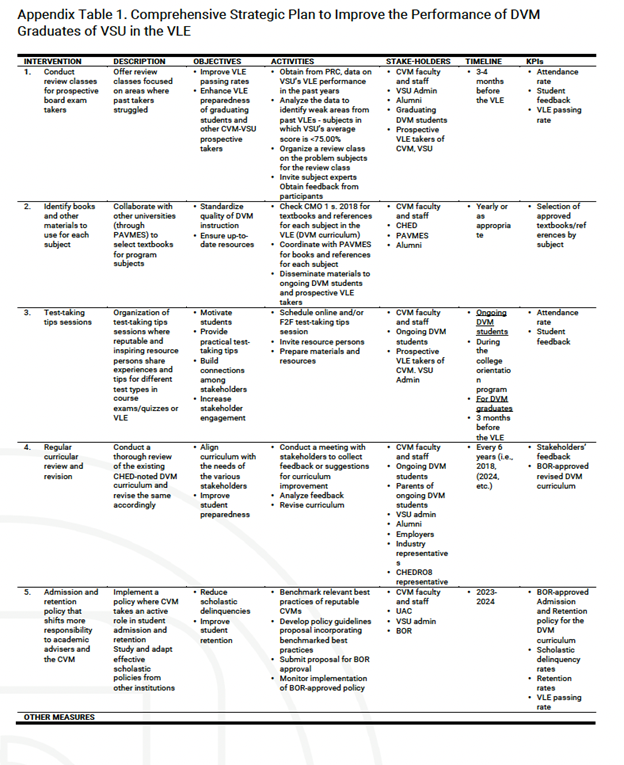
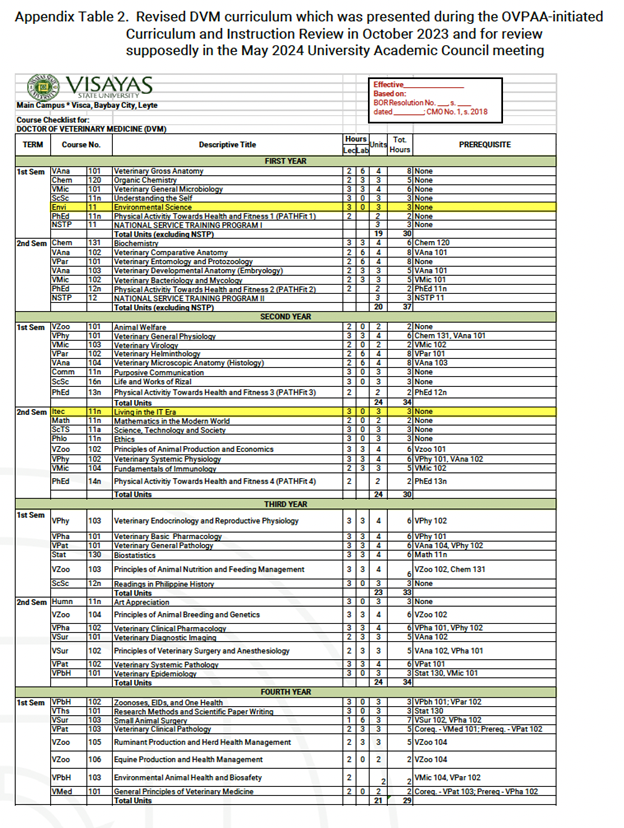
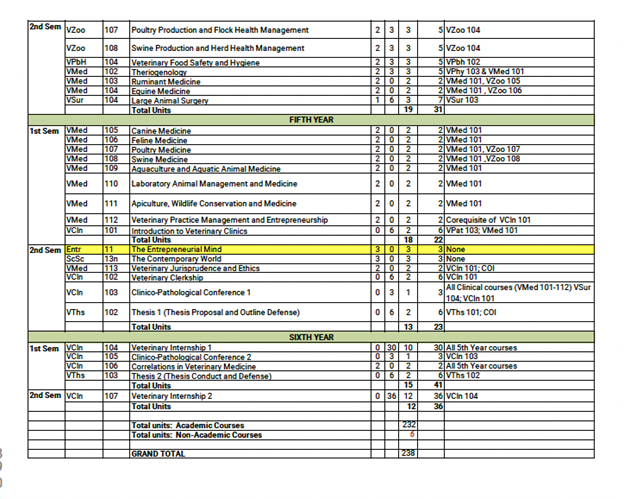
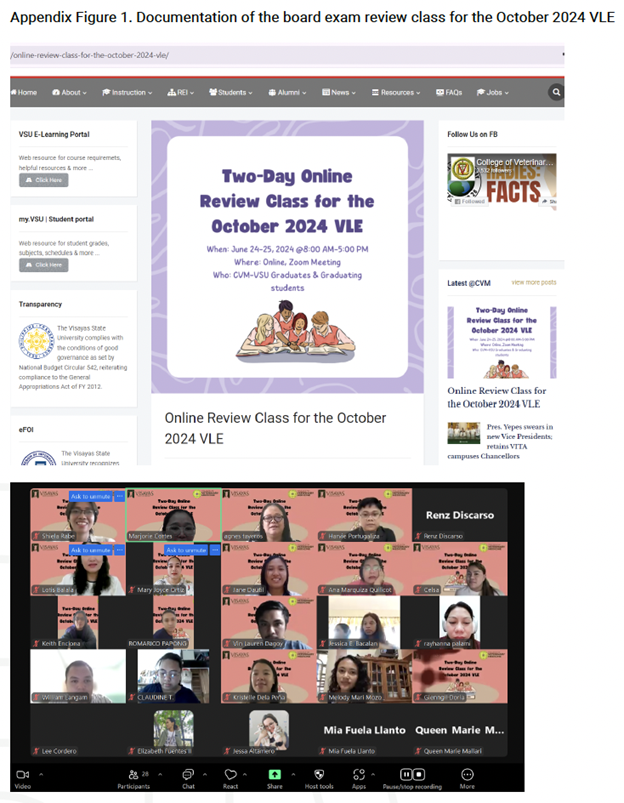
In an outcomes-based education (OBE), the quality of graduates is often measured by their success in licensure examinations. Although the CVM-VSU has generally exceeded the national passing percentage in the Veterinary Licensure Exam (VLE), it recognizes the need for sustainable measures to further and continuously improve its performance. This proposal is an integral component of CVM-VSU’s comprehensive strategic plan to improve the performance of its graduates in the VLE (Appendix Table 1), which includes revising the DVM curriculum (Appendix Table 2), pre-board test13 taking tips session (Appendix Fig. 1) and conducting in-house review classes (Appendix Fig. 2), among others. Admission and retention criteria are key predictors of success in licensure examinations for many degree programs (Sawey-Ognayon & Afalla, 2022; Dagdag 2018; Declerq & Verboven, 2018). In a developing country providing free access to higher education like the Philippines (i.e., through Republic Act No. 10931), this proposal intends to foster a culture of accountability and, mitigate the observed complacency associated with free tuition and miscellaneous fees, at least among DVM students. Corollary to this, the proposal thus aligns with section 6 of RA 10931, which stipulates that students are ineligible for free tertiary education if they fail to complete their bachelor's degree or comparable undergraduate degree within a year after the prescribed period.
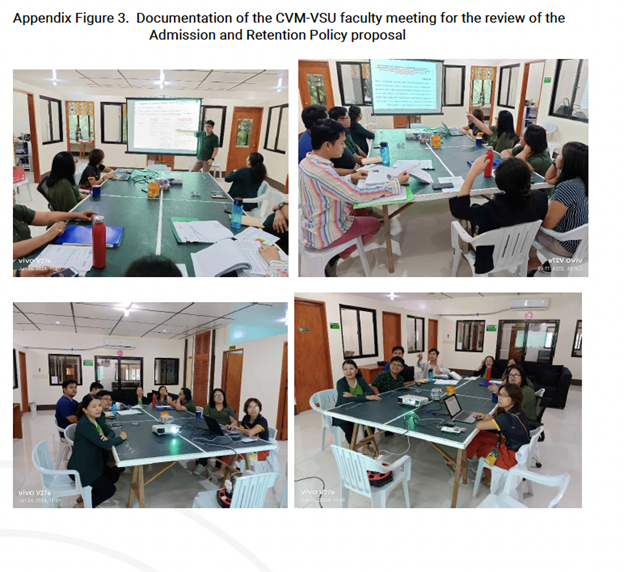
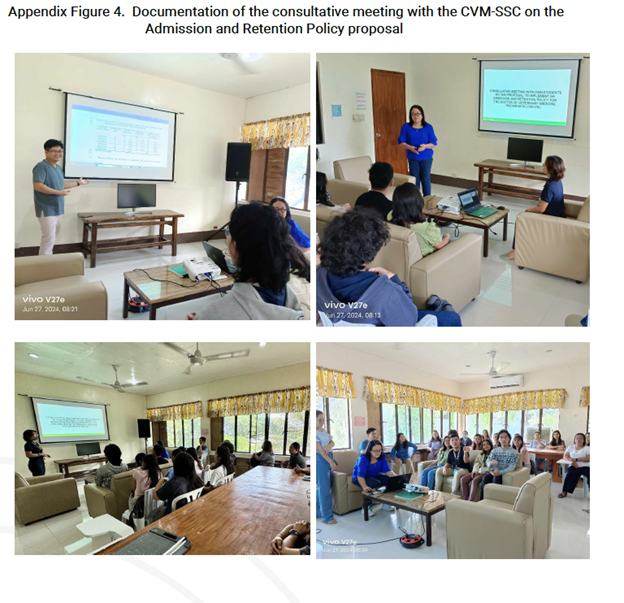
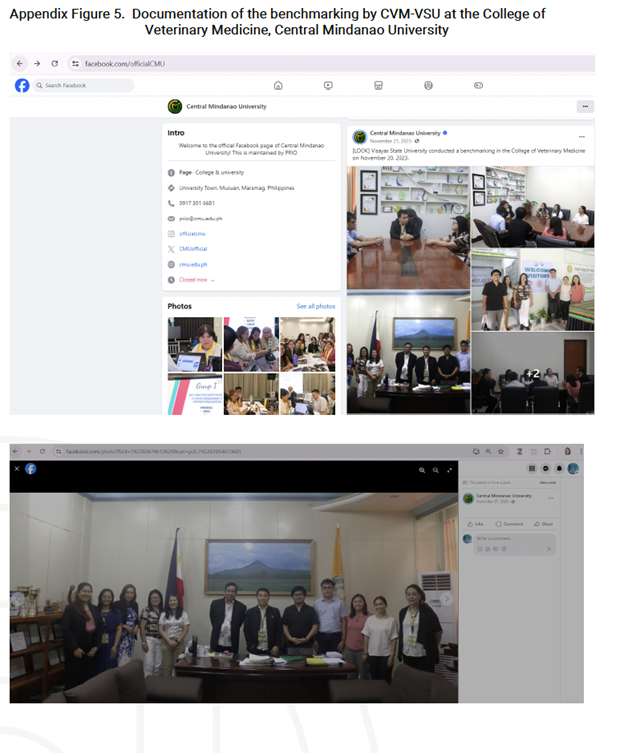
This proposal establishes guidelines for decision-making primarily at VSU-CVM regarding admission and retention to improve the performance of Doctor of Veterinary Medicine (DVM) graduates in the VLE. It has taken into account student feedback (Appendix Fig. 3), relevant VSU policies (i.e., Chapter 51 of the VSU code; PM-VPA-06),information obtained through CVM-VSU’s benchmarking activities 29 in reputable CVMs of other state universities (Appendix Figs. 4) or from their official website, and evidence-based retention measures.
A key feature of this proposal relates to its implementation, primarily assigned to the CVM-VSU. This approach is proposed to enhance the policy’s effectiveness, particularly regarding the timeliness of interventions (see Table 2) aimed at increasing retention rates. Finally, this proposal incorporates CVM-VSU faculty (Appendix Fig. 3) and DVM student feedback (Appendix Fig. 4), relevant VSU policies (e.g., Chapter 51 of the VSU Code; PM-VPA-06), data from CVM-VSU’s benchmarking activities with reputable veterinary colleges at other state universities (Appendix Fig. 5), and evidence-based retention measures.
Rationale of the Admission Policy being Proposed
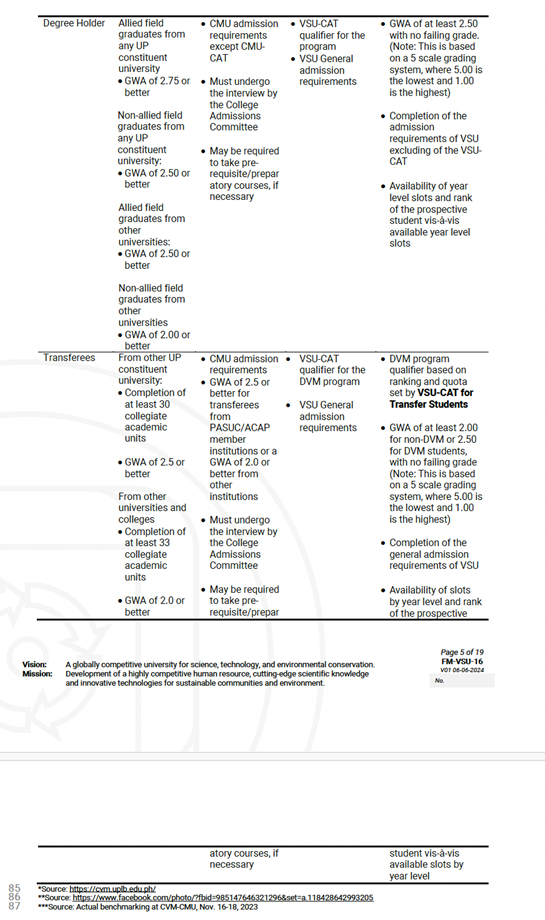
The admission policy being proposed is specifically tailored for various entrants into the DVM program, including first-time first-year students, shifters, degree holders, and transferees.
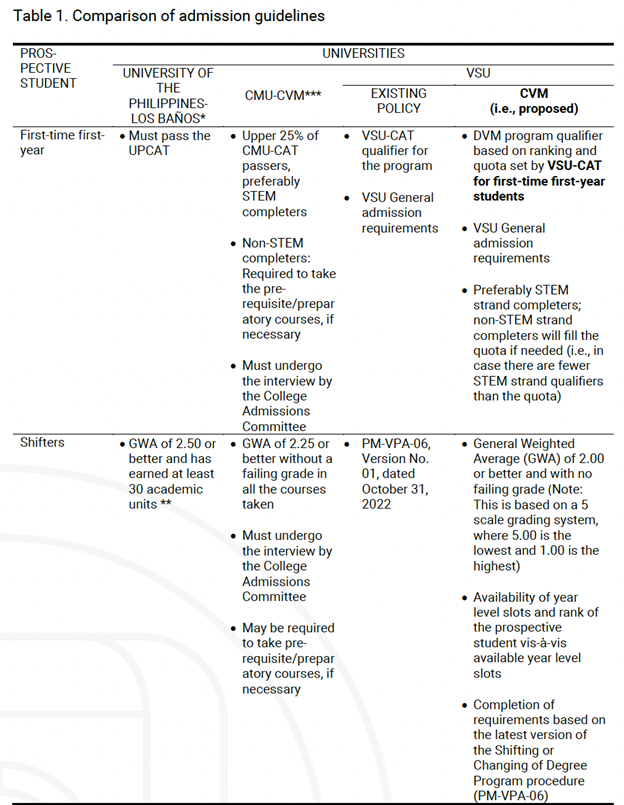
For first-time first-year students or those who after finishing senior high school move straight to the DVM program without enrollment in any college course, one criterion on top of VSU’s existing requirements is preference for graduates of the STEM strand. Veterinary medicine is fundamentally a biomedical field, and students with a background in biology courses are more likely to succeed not only in their first year but throughout the entire veterinary medicine undergraduate program (Muzyamba et al., 2012; Hudson et al., 2020).
Regarding shifters, this proposal aims to establish guidelines for students from other degree programs who fail to qualify for the DVM program based on the quota set by the CVM but are subsequently admitted into the program through the shifting process of the university. Setting guidelines for their admission is aimed to ensure that they are more likely to succeed.
For degree holder entrants with varying academic backgrounds, 56 establishing criteria for their admission will help ensure that they are adequately prepared for the program and are likely to succeed academically.
Finally, admission guidelines for transferees are crucial for the CVM-VSU, especially as their number has been increasing over the years. Benchmarking activities have revealed that the General Weighted Average (GWA) for retention in the DVM program at other universities is set at 2.50, based on a 50% passing rate. In contrast, CVM-VSU maintains a higher passing rate of 70%, which underscores the need for more stringent admission policies to maintain academic standards. Without an admission policy for transferees, our college has become a fallback option for students dismissed from other institutions. These students, having completed their general education and many professional veterinary courses, typically pass the College Admission Test (CAT), which is the only requirement for their admission into VSU and the CVM. This situation could displace more qualified first-time first-year students due to the limited slots. Once admitted, their enrollment involves validation and accreditation of their completed professional DVM courses, which merely checks for compliance with the number of units, allowing them to start their DVM journey in the 3rd, 4th, or 5th year, depending on the year level completed in their previous school.
Without stringent admission policies, there is a risk of accepting students who were deemed unfit for the DVM program elsewhere, which could exacerbate the existing problem of scholastic delinquency and affect the performance of the University in the VLE.
Proposed Admission Policies
Table 1 presents the proposed admission guidelines for prospective students of the degree program, along with a comparison of the existing university guidelines and those of other universities.
Rationale for the Retention Policy being Proposed
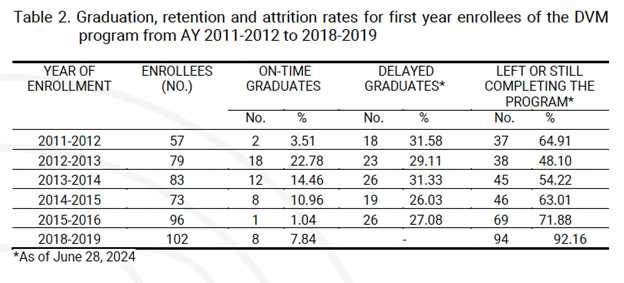
The DVM program is a six-year degree program. It is considered as a high-intensity degree program and requires substantial time commitment. In addition, even with free tuition, the program still demands considerable financial investment from students. These aspects inherent to the program may contribute to the prevalent issue of scholastic delinquency among DVM students. Since AY 2011-2012 to AY 2018-2019, on-time graduation rate and completion rate, both indicators of scholastic delinquency are generally low (Table 2).
Several factors are believed to exacerbate the issue of scholastic delinquency. Firstly, there is an apparent lack of awareness among students regarding the implications of scholastic delinquency for various stakeholders. The free tuition and miscellaneous fees law has led to an observed laxity or lack of accountability among DVM students at least, concerning their academic responsibilities, 107 with some students expressing a willingness to retake courses as early as after failing the first long exam.
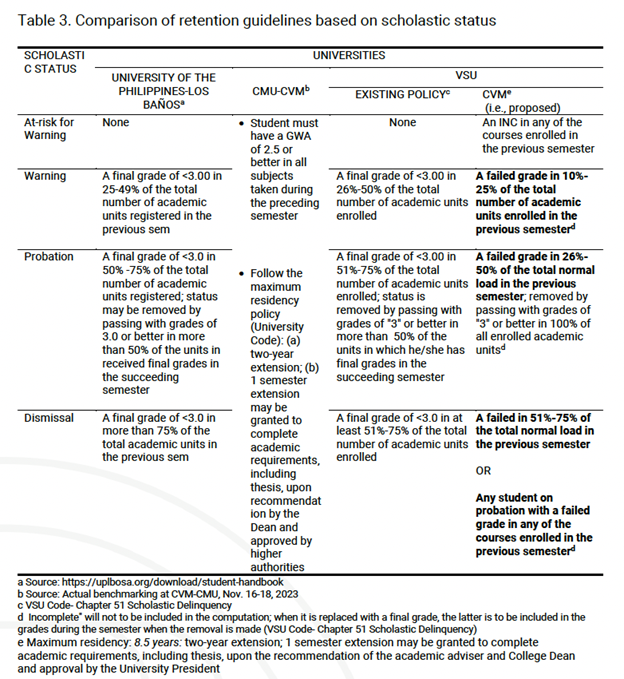
This could explain the low completion and on-time graduation rates and leads to increasing numbers of overstaying students. This, coupled with the increasing total number of students enrolling in the program is important if coupled with a high faculty turnover, resulting in heavier teaching loads which could affect the quality of education. Secondly, the apparent discontinuance of the implementation of the university's scholastic delinquency policies (Chapter 51 of the VSU code) allows students who fail up to 75% or even 100% of their subjects in the previous semester to continue their studies in the DVM curriculum. The current implementation responsibilities for these policies are also cumbersome and untimely, reducing their overall effectiveness.
Table 3 presents the proposed retention policies of the CVM-VSU, along with a comparison of the existing university guidelines and those of other universities. In this proposal, the criteria were tailored after VSU's existing policies (i.e., Chapter 51 of the VSU code), and the responsibility of implementation is primarily assigned to CVM faculty members, who serve as academic advisers and thus are more familiar with the student's scholastic performance particularly, their academic advisees.
Maximum Residency
The proposed retention policy includes a period of residency of up to eight (8) years, plus one (1) additional semester to fulfill all their academic requirements, including the completion of thesis. This extension depends upon the evaluation and subsequent recommendation by the student's academic adviser and thesis adviser, with final approval by the CVM Dean. For shifters, the time spent completing general education courses is included in the residency calculation. However, any period covered by an approved leave of absence (LOA) is excluded from this total.
Student Support
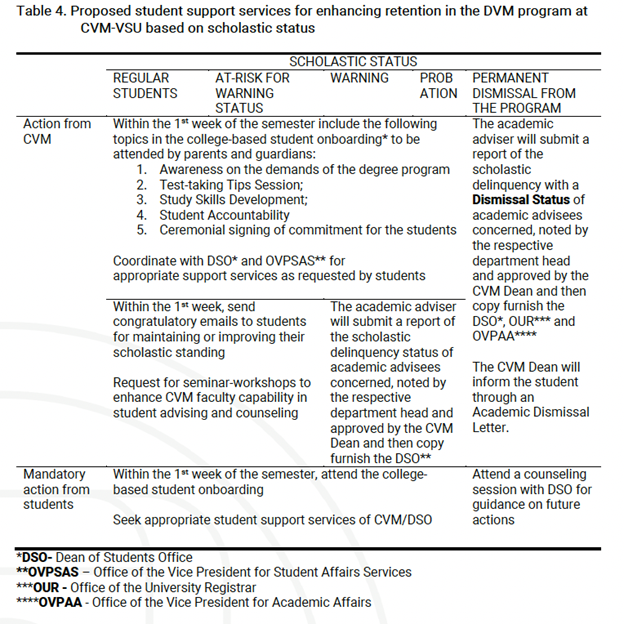
The policy guidelines being proposed provide for planned student support services specifically tailored to address DVM students’ needs to enhance student retention, on-time graduation rates, and VLE passing rates and the 148 faculty who serve as academic advisers of DVM students who (need training) in student advising and counseling given that their academic background does not typically include training in this matter (Table 4).
 Proposed Effectivity: Upon approval of the VSU-BOR.
REFERENCES
Dagdag, J.D. 2018. Predictors of Performance in the Licensure Examination for Agriculturists: Bases for a Proposed Plan of Action Isabela State University-San Mariano Campus, Philippines. Asia Pacific Journal of Multidisciplinary Research Vol. 6 No.2, 113-120 May 2018 P-ISSN 2350-7756 E-ISSN 2350- 8442 www.apjmr.com
Declercq, K and Verboven, F. (2018). Enrollment and degree completion in higher education without admission standards, Economics of Education Review, Volume 66, 2018, Pages 223-244, ISSN 0272-7757. https://doi.org/10.1016/j.econedurev.2018.08.008.
Hudson, N.P.H., Rhind, S.M., Mellanby, R.J., Giannopoulos, G.M., Dalziel, L. & Shaw, D.J. . 2020. Success at Veterinary School: Evaluating the Influence of Intake Variables on Year-1 Examination Performance. Journal of Veterinary Medical Education Volume 47 Issue 2, April 2020, pp. 218-229 https://doi.org/10.3138/jvme.0418-042r
Muzyamba, M. C., Goode, N., Kilyon, M., & Brodbelt, D. (2012). Predictors of Success in a UK Veterinary Medical Undergraduate Course. Journal of Veterinary Medical Education, 39(4), 380– 388. DOI: 10.3138/jvme.1011.103r1
Sawey-Ognayon, G.B. and Afalla, B.T. (2022). Admission Criteria as Predictors of Licensure Performances among Graduates of a State University in the Philippine Cordillera Administrative Region. DOI: https://doi.org/10.36941/ajis-2022-0157