
VSU student-led radio program bags Catholic Mass Media Award
- Details
- Written by Vernon Deo Albaladejo
-
Published: 12 October 2026
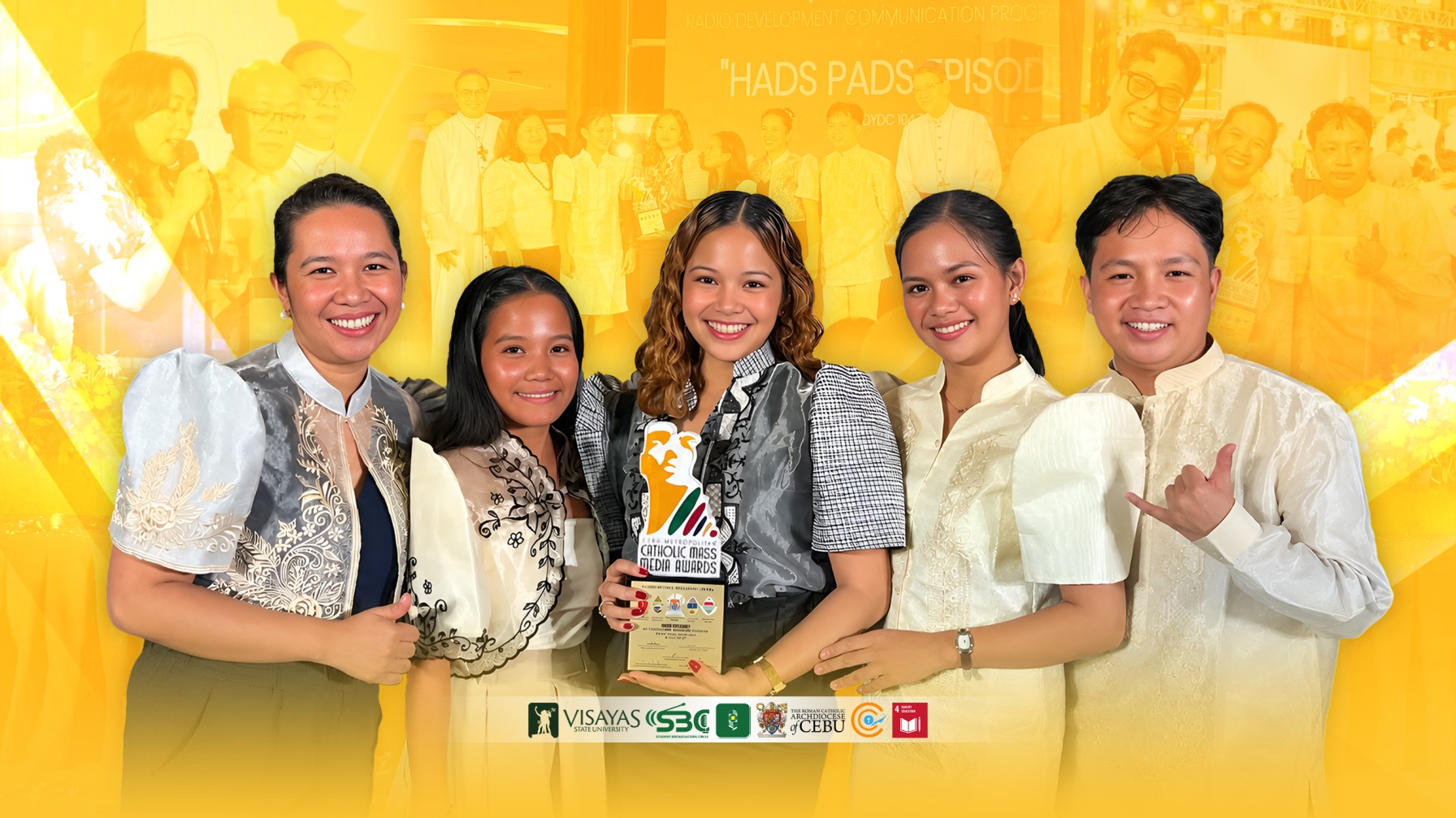
HADSPADS, the student-led radio magazine program aired on DYDC 104.7 FM, has won the Best Radio Development Communication Program (FM) award at the biennial Cebu Metropolitan Catholic Mass Media Awards (CM-CMMA) on October 4, 2026, at SM Seaside Atrium, Cebu City.
Organized by the Roman Catholic Archdiocese of Cebu through the Cebu Archdiocesan Commission on Social Communications (CACoSCo), CM-CMMA recognizes the contributions of media practitioners from Cebu and its suffragan dioceses: Dumaguete, Tagbilaran, Talibon, and Maasin.
The name HADSPADS is a play on the word “hochepot,” originating from the 15th/late 14th century Anglo-French term meaning a collection of things in a common “pot” before dividing it equally. The word later evolved into the modern word, “hodgepodge,” which hints of sundry events and variety, reflecting the program’s mix of segments and themes.
“This is a first for VSU, and we are very proud of the DYDC team and the Student Broadcasters Circle, whose work brought the University’s voice and stories to a wider audience through radio. This recognition is a proud moment for VSU and for the students, faculty, and staff behind the program. It shows what can happen when our people use their talents to tell stories that connect with and matter to our communities,” said VSU President Ivy Prose G. Yepes in a statement.
Produced by the Student Broadcasters’ Circle (SBC), HADSPADS features information, entertainment, talent, news, and stories for VSU students, by VSU students. Its second season premiered on September 28, 2026.
The recognition came as a surprise for SBC President Zoe Maureen P. Tomaub.
"Not to sugarcoat it but... The moment (that) we received the notification, even though it was not the notification that we were expecting for the day, gikabuhi gyud ko . Kay kanang, kuan man gyud siya, it was the very first recognition SBC is going to receive and also as in (like) wala gyud mi nag expect," Tomaub said.
[Not to sugarcoat it but… the moment (that) we received the notification, even though it was not the notification that we were expecting for the day, I felt overwhelmed. Because, you know, it was the very first recognition SBC is going to receive and that we really didn’t expect anything.]
Now in her second term as SBC president, Tomaub led the reintroduction of HADSPADS in academic year 2025–2026. The idea to bring the program back on air emerged during the organization’s annual planning meeting.
HADSPADS originally served as a semester-end output for the then Bachelor of Science in Development Communication students majoring in Community Broadcasting. Its radio magazine format brought together talk shows, drama, documentaries, music, and other segments.
SBC adviser, Mariane Ubay-Dela Peña, and former SBC president and founding member, Mark Clarence Gantiao, helped revive the concept and develop its segments. Under SBC, the program took on a podcast-style format featuring local Viscan talent, VSU community news, and radio drama.
"Suway-suway lang 'to. We thought of submitting the outputs of the HADSPADS aired sa DYDC for the Development Radio Category as it is designed really to tackle development concerns. We didn't even know kung ni qualify ba mi or na unsa. Na shock rapud 'mi, nalipay rapud 'mi kay 'hala, na winner man siya'," Dela Peña said.
[We were just giving it a shot. We thought of submitting the outputs of the HADSPADS aired on DYDC for the Development Radio Category as it is designed really to tackle development concerns. We didn’t even know if we qualified for the category. We went from being shocked to celebrating a win we didn’t expect.]
According to Tomaub and Dela Peña, the award strengthened SBC members’ confidence in their work and recognized their passion and dedication. It also highlighted DYDC’s commitment to serving the VSU community.
Now in its fourth year of service, SBC is an interest-based student organization whose members come from different degree programs in the university.
This article aligns with the Sustainable Development Goals (SDG) No. 4: Quality Education.