
VSU prexy joins national dialogue on bringing global Filipino expertise into local research
- Details
- Written by: Mike Laurence V. Lumen
-
Published: 25 November 2026
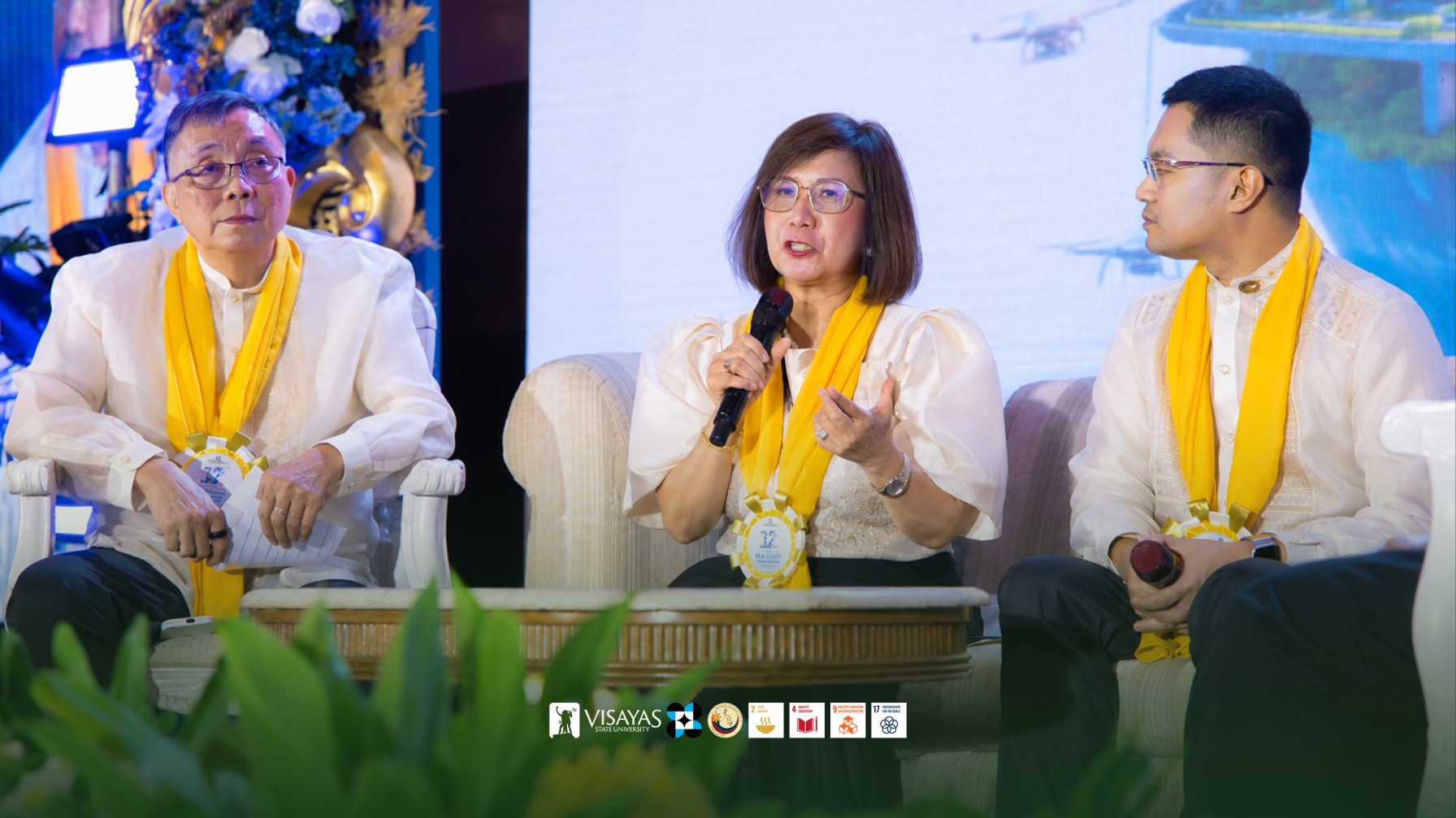
Visayas State University (VSU) President Dr. Prose Ivy G. Yepes joined university leaders, scientists, industry representatives, and government officials at the Department of Science and Technology’s (DOST) 12th Annual Balik Scientist Program (BSP) Convention on October 29, 2026, at The Manila Hotel, where she served as a panelist representing the academe and host institutions in a discussion on how Filipino scientific expertise from overseas can contribute to local research and national development.
With the theme, “Balik Agham: Siyensiyang Pandaigdig, Para sa Bayan,” the convention examined how the knowledge and experience of Filipino scientists based abroad can be put to work in Philippine institutions.
The gathering also provided a venue for host institutions, government, and industry to discuss the support needed to make these engagements productive.
Dr. Yepes joined the Ugnayan Session, entitled “UGNAYAN: Kaalamang Pandaigdig, Solusyon Para sa Bayan,” alongside Balik Scientist, Dr. Angelo B. Bañares, and industry representative, Mr. Henry Siy, of Chemrez Technologies, Inc.
The session considered how institutions can make effective use of the expertise brought by Balik Scientists, from providing the necessary research facilities and administrative support to integrating their work into existing academic and research programs.
The University President’s discussion drew from the experience of VSU as a host institution. It can be recalled that the university hosted Dr. Lemuel M. Diamante, a Food Technology expert under the DOST Balik Scientist Program, for a 180-day engagement from May 21 to November 16, 2026.
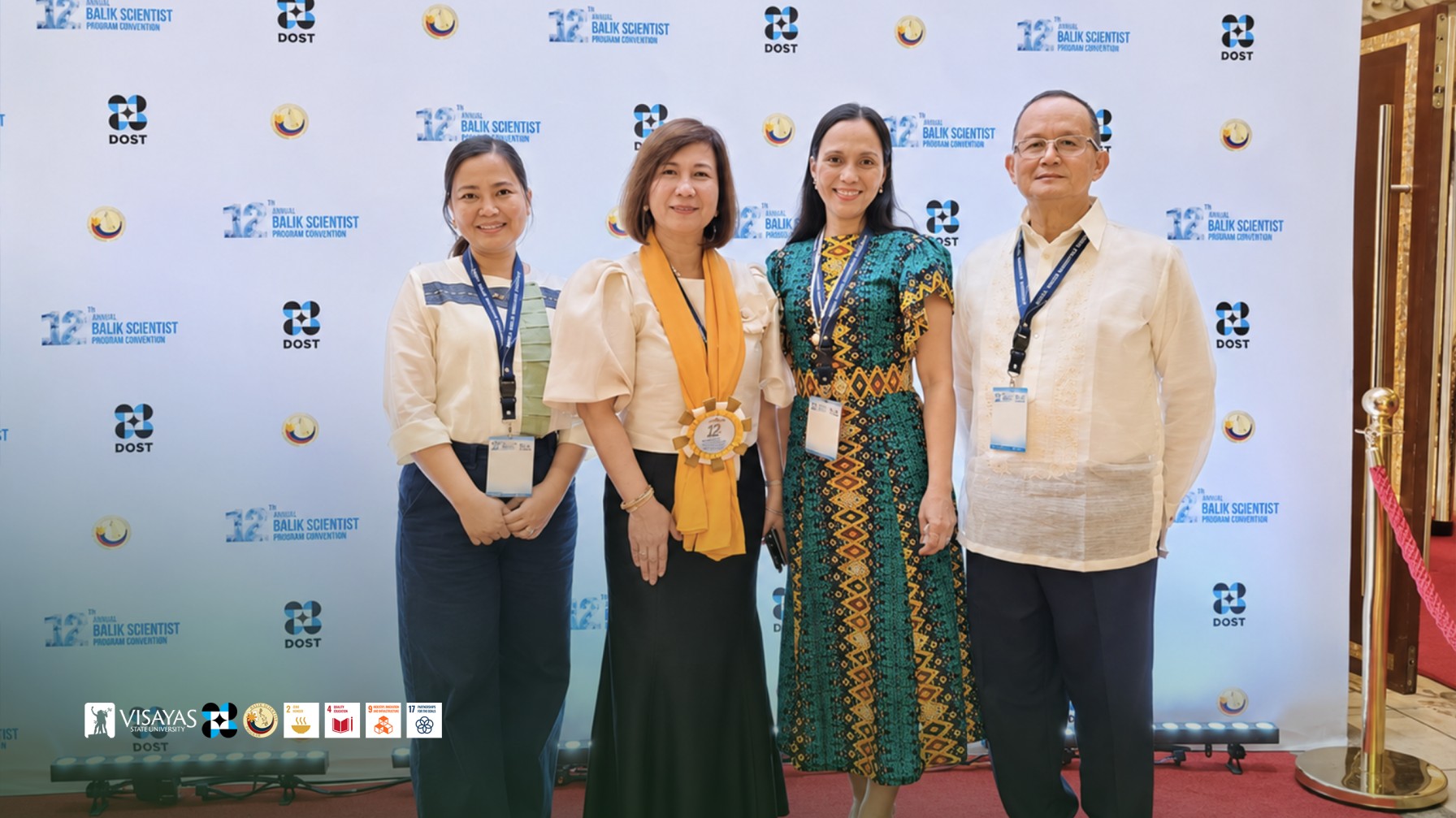
Dr. Lemuel M. Diamante (rightmost), DOST Balik Scientist hosted by VSU, poses with VSU President Dr. Prose Ivy G. Yepes (second from left), Research Director Dr. Ivy C. Emnace (third from left), and Dr. Donna M. Guarte-Valida (leftmost), a faculty member of the Department of Biological Sciences and a long-term DOST Balik Scientist whose work focuses on fisheries ecology and fish early life history.
Assigned to the Department of Food Science and Technology, Dr. Diamante worked with faculty members and students on research, instruction, food processing technologies, and technical assistance to local industry.
His work at VSU covered several areas. He conducted seminars on thin-layer drying of foods and food product and process optimization, attended by 55 faculty members, staff, and students. He also led a training-workshop on writing and publication in international refereed journals, with 62 participants from the Department of Food Science and Technology.
His research outputs included a paper on the effects of frying temperature, frying time, and post-frying centrifuge speed on the quality of vacuum-fried marinated beef, submitted to the Annals of Tropical Research. He also prepared initial drafts of utility model applications for a one-chamber vacuum fryer and a sublimation vacuum fryer.
Beyond campus, Dr. Diamante provided technical assistance to the Ormoc City Jackfruit Farmer Agriculture Cooperative (ORCIJAFACO) on vacuum frying technology and its possible application to jackfruit processing. He also prepared course syllabi for Food Engineering Applications in Fisheries and Postharvest Handling and Low Temperature Preservation. A research proposal on the development of high-protein vacuum-fried meat, fish, and seafood products was also prepared for possible DOST funding.
Drawing from this experience, Dr. Yepes emphasized that the value of hosting a Balik Scientist should not be measured solely by the outputs completed during the engagement. The knowledge introduced must find its way into the institution’s continuing work, particularly through research, instruction, and the development of local researchers.
“For universities, hosting a Balik Scientist should not end with the completion of an engagement. What matters is how the expertise brought into the institution becomes part of its research work, how faculty members and students learn from the experience, and how the knowledge gained continues to benefit the institution even after the scientist has returned abroad,” she said.
The experience offers a practical basis for improving how the University prepares for and manages future engagements. It also points to the need to carry research activities beyond the scientist’s stay, so that work initiated during the program can continue through local faculty members, students, and research teams.
Established in 1975, the DOST Balik Scientist Program brings Filipino scientists, researchers, and experts based overseas to Philippine institutions to contribute through research, technology transfer, scientific mentorship, and capacity-building activities.
Dr. Yepes’ participation in the convention brought the perspective of a host university into the national discussion. VSU’s experience with Dr. Diamante provided a concrete example of how expertise from abroad can be put to work in university research, academic training, and technical assistance for local producers.
This article is aligned with the Sustainable Development Goal (SDG) 2: Zero Hunger; SDG 4: Quality Education; SDG 9: Industry, Innovation, and Infrastructure, and; SDG 17:Partnerships for the Goals.