

VSU experts weigh in on El Niño, braces for impact
- Details
- Written by Vernon Deo Dominic Albaladejo
-
Published: 13 November 2026
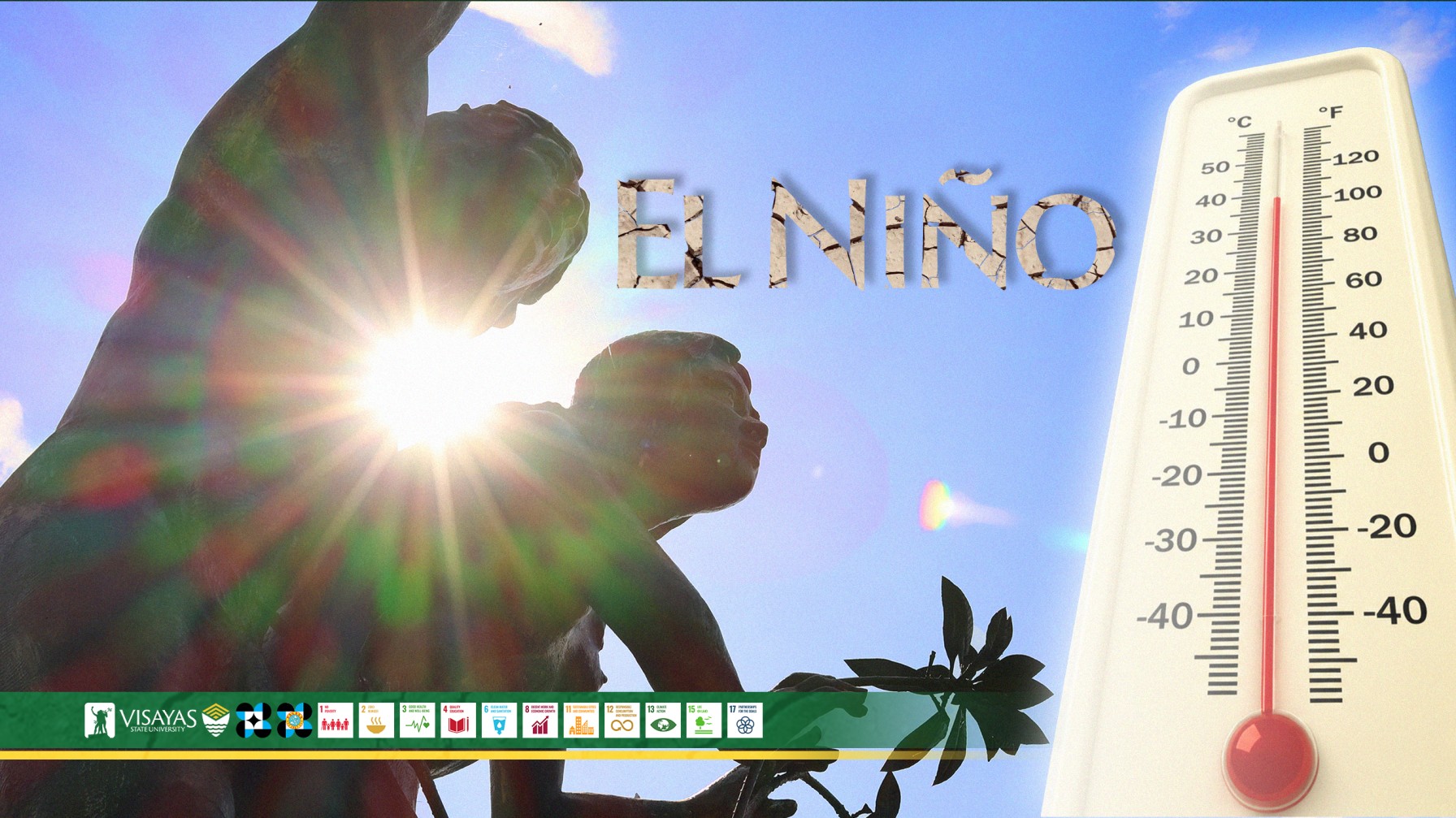
It is 10 in the morning at Visayas State University (VSU) in the middle of September. The sun feels like it has already reached its blistering peak.
Students, faculty, and staff members walk, run, or jog from one part of the campus to another. A swath of umbrellas forms part of the scene, as people flee the morning heat, a stark contrast to the frequent rain showers usually associated with this time of year.
Yet rain is scarce, the soil has caked, and temperatures are on the rise.
El Niño as a Climate Phenomenon
For students at VSU, the approaching El Niño may seem like another weather warning. But beyond the heat is a larger question: what happens when prolonged dry conditions begin affecting water resources, agriculture, health, and the livelihoods of Leyteños?
“El Niño-Southern Oscillation (ENSO) is a global climate phenomenon that emerges from variation in winds and sea surface temperatures over the tropical Pacific Ocean. It is part of a natural cycle of our ocean,” said Charlindo S. Torrion, Director of the Disaster Resilience and Management Office (DRMO).
According to Mr. Torrion, ENSO has three phases: El Niño, La Niña, and neutral. El Niño occurs when trade winds weaken, allowing warm surface waters to shift toward the central and eastern Pacific. These changes affect atmospheric circulation and rainfall patterns across the region, including the Philippines.
The effects of El Niño differ by location, with some areas experiencing drier conditions while others may receive more rainfall. In the Philippines, El Niño is generally associated with below-normal rainfall, although its effects vary across the country.
In Leyte, the dry conditions observed since July have raised concerns about how prolonged heat and insufficient rainfall could affect agriculture and water availability.
Based on data from the Philippine Atmospheric, Geophysical and Astronomical Services Administration (PAGASA), Torrion explained that El Niño is expected to peak from the last week of December 2026 to the first or second week of January 2027.
Previous El Niño events have shown how prolonged dry conditions can threaten agricultural production in the Philippines. The 2015–2016 El Niño, one of the major events in recent decades, brought drought and agricultural losses to parts of the country.
However, past experiences do not guarantee that an upcoming event will produce the same effects. Local conditions depend on rainfall patterns, water availability, the duration of dry spells, and the preparedness of affected communities.
For farmers, in particular, this uncertainty makes timely and understandable climate information especially important.
Food Security in the Time of Drought
In Baybay City, one concern is how the dry spell could affect sweet potato production.
Ricardo Jarofe Maranguit, dubbed the “Sweet Potato King” of the Philippine Root Crops Research and Training Center (PhilRootcrops), said that even a hardy crop like sweet potato is not spared from prolonged heat and insufficient rainfall.
“At this time of the year, since it is already September and we are in the last quarter of the year, we should be having ample rainfall, accompanied by some days of dry, sunny weather. This should be the best time of the year to start planting root crops, especially sweet potatoes,” he explained.
“But because we are experiencing what we call a super El Niño, our root crops, especially sweet potatoes, are being affected by the heat. There is a possibility that our harvests will decrease compared to seasons when the weather was more predictable,” he added.
“Sweet potatoes are hardy once planted and can grow well even during this dry spell, as long as they receive enough water and have established roots in the soil. Even so, the tubers may become deformed, growing long and thin, or may fail to form altogether. A sudden influx of rain after a dry spell may also cause the tubers to crack,” Maranguit told UIMPA.
Drawing on his experience as a sweet potato farmer, Maranguit estimates that Baybay City's sweet potato supply could decrease by as much as 50% by the first quarter of 2027 if dry conditions persist.
He expects commercial sweet potato production in the city to face a shortage, while the supply of sweet potatoes intended for table consumption may be less affected.
However, this estimate applies specifically to Baybay City and should not be taken as a projection for the entire province of Leyte. Sweet potato production and the effects of prolonged dry conditions may vary across municipalities depending on local rainfall, water availability, farming practices, and other growing conditions. Without data from other areas, the extent to which the overall sweet potato supply of the province may be affected remains uncertain.
While the possible decline in Baybay City's sweet potato supply remains a concern, farmers can take steps to reduce the effects of prolonged dry conditions on their crops. Water conservation, proper soil management, and adjustments to planting schedules are among the measures that may help farmers prepare for periods of limited rainfall.
The forecast discussed by Torrion provides context for the concerns surrounding sweet potato production in Baybay City.
Maranguit advised farmers to adjust their planting schedules so that their crops have enough time to establish sufficient foliage before the projected period of intense dry conditions.
The foliage helps cover the soil and regulate its moisture and temperature, while the developing tubers need sufficient water and suitable growing conditions.
Even farmers who begin planting as late as the last week of November may still be able to harvest in the following months, Maranguit said, as sweet potatoes generally take three to four months to mature. However, actual yields would depend on growing conditions, particularly water availability throughout crop development.
Aside from offering advice on crop management, PhilRootcrops also provides regular support to local farmers through the distribution of planting materials.
Maranguit related that PhilRootcrops regularly provides planting materials to members of the Baybay Rootcrop Farmers Association during their monthly meetings, held every first Thursday of the month. Through this initiative, PhilRootcrops supports local farmers by providing planting materials they can use for their crops.
Preparing the University and Its Communities
While farmers consider how to protect their crops, VSU is also preparing for the possible effects of prolonged dry conditions on its campus and the communities it serves.
University President, Dr. Ivy Prose G. Yepes, said VSU is preparing a university-wide El Niño Preparedness Plan that covers campus water security, agricultural, and research facilities, health and safety, and the continuity of essential university operations.
Among the proposed measures are the formation of an El Niño Preparedness Task Force under the Crisis Management Committee, an assessment of campus water sources and storage facilities, and contingency plans for farms, livestock, laboratories, and research projects.
According to Dr. Yepes, previous dry spells have shown how water shortages can affect several areas at once, from household needs to research activities and daily campus operations. This is why the university is prioritizing early assessments and practical contingency measures rather than waiting for shortages to become severe.
The university is also considering ways to protect the health and welfare of students, faculty, and staff members while maintaining academic continuity. These include ensuring access to drinking water and shaded or ventilated areas, managing outdoor activities during extreme heat, and preparing responses to heat-related illnesses and fire hazards.
Contingency arrangements for critical facilities, laboratories, information technology systems, and possible power interruptions are also being considered. Any adjustments to classes or work arrangements, the University President maintained, would depend on actual conditions and the guidance of relevant authorities.
Apart from its campus preparations, the VSU DRMO has also conducted public information activities on El Niño.
In the middle of this year, the office held an online forum entitled “What We Need to Know and Prepare For” in partnership with the Department of Science and Technology-Philippine Atmospheric, Geophysical and Astronomical Services Administration (DOST-PAGASA) on June 9, 2026. The forum featured Dr. John A. Manalo, a senior weather specialist from DOST-PAGASA, and was open to Viscans and interested participants across the country.
The forum aimed to deepen public understanding of El Niño, its potential effects on water resources, agriculture, health, and daily life, and the measures individuals, institutions, and communities could take to prepare.
Two days later, on June 11, the office also released a public service announcement (PSA) infographic on El Niño through its Facebook page. The release provided another avenue for communicating information about the climate phenomenon and promoting public awareness. The original Facebook post contains the information material.
VSU DRMO is planning another online forum this November in cooperation with the Office of the Vice President for Planning and Development (OVPPD). The activity is expected to involve experts from DOST-PAGASA and the Philippine Meteorological Society, Inc., who will discuss El Niño and practical measures for preparing for possible impact.
Beyond its own campus, VSU hopes to help farmers and communities prepare for the effects of El Niño through its research and extension programs. Specialists in crop science, soil and water management, animal science, and other related fields can provide technical guidance on drought-tolerant crops, water conservation, efficient irrigation, and farm management during prolonged dry conditions.
“Our research must find its way from the laboratory and research to the communities that need it,” Dr. Yepes said.
Through field demonstrations and hands-on guidance, the university hopes to help farmers apply research-based practices to their own farms. These activities can also help researchers better understand the challenges farmers face and adapt their recommendations to local conditions.
Dr. Yepes also stressed the importance of communication and partnerships with local governments and other institutions. While VSU can provide scientific and technical advice, local governments and partner agencies can help identify vulnerable communities, communicate local needs, and coordinate assistance.
By connecting climate advisories with agricultural extension, water management, and community-level planning, the university hopes to help farmers and local leaders prepare before the effects become more severe.
Beyond the approaching El Niño, VSU also aims to make climate resilience a continuing part of how it manages its campuses, conducts research, and serves communities. This includes improving water conservation, protecting research facilities, and developing farming practices suited to changing weather conditions.
Dr. Yepes encouraged Viscans and the people of Leyte to pay attention to official weather advisories, conserve water, and take practical steps to prepare for prolonged dry conditions. Early preparation, she said, gives communities more options before the effects of El Niño begin to be felt.
This article aligns with the United Nations (UN) Sustainable Development Goal (SDG) No. 1: No Poverty; SDG No. 2: Zero Hunger; SDG No. 3: Good Health and Well-being; SDG No. 4: Quality Education; SDG No. 6: Clean Water and Sanitation; SDG No. 8: Decent Work and Economic Growth; SDG No. 11: Sustainable Cities and Communities; SDG No. 12: Responsible Consumption and Production; SDG No. 13: Climate Action; SDG No. 15: Life on Land; SDG No. 17: Partnerships for the Goals.