

VSU BCAEd Art Apprenticeship features dying weaving tradition in Apid Island, Inopacan, Leyte
- Details
- Written by Christianne Mullet and Michael Carlo C. Villas
-
Published: 12 August 2026
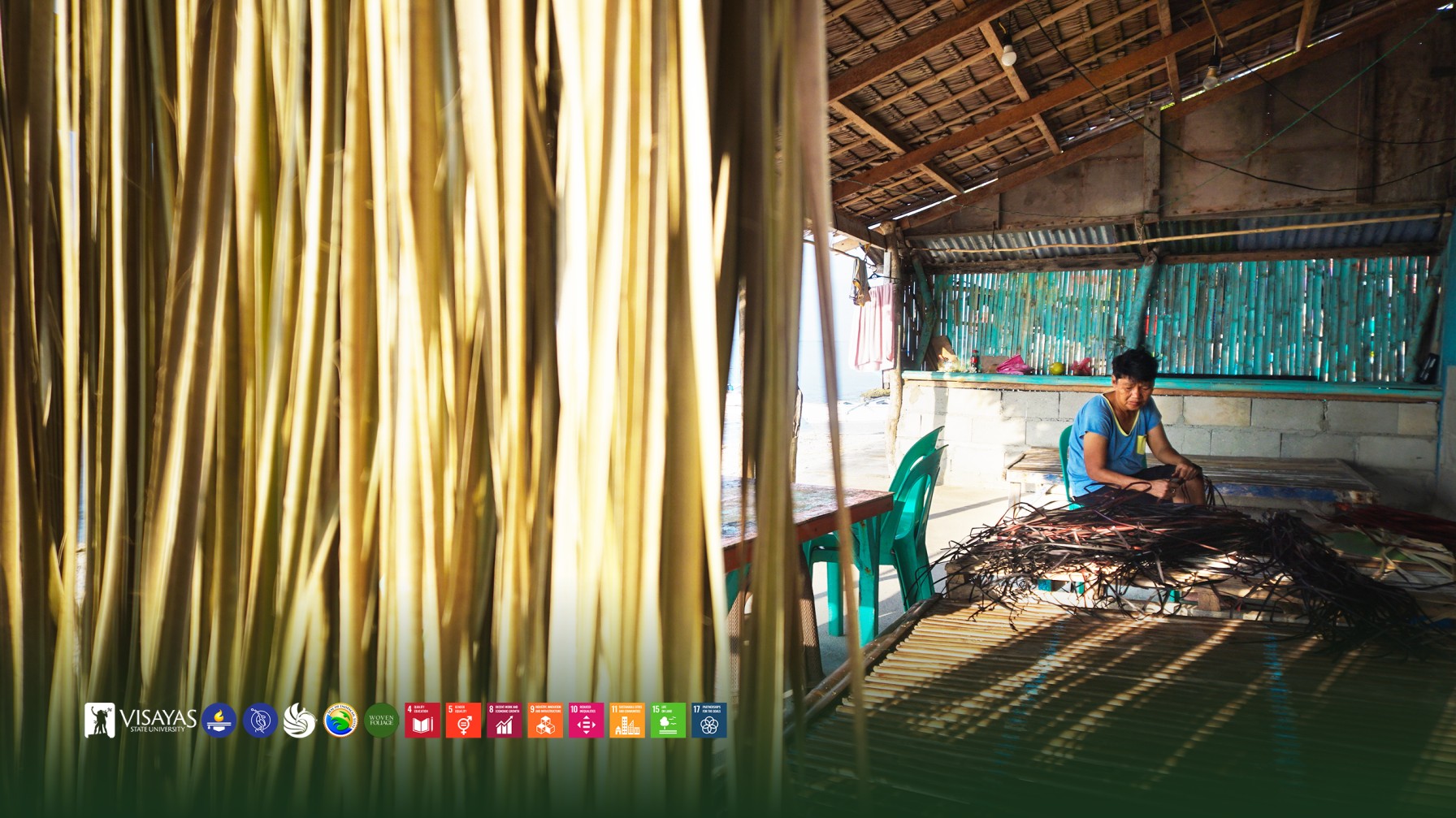
Apid Island, one among the string of islands collectively called Cuatro Islas, lies 6 to 8 kilometers or 3 to 4 nautical miles off the coast of Inopacan in the western seaboard of Leyte.
The island is home to a dying weaving tradition, with a few weavers left who continue producing the art form.
On July 6 to 22, 2026, Visayas State University Bachelor of Culture and Arts Education (VSU BCAEd) student apprentices, through Art Apprenticeship II, immersed themselves in the traditional weaving culture of Apid Island, in Inopacan, Leyte.
“We wanted the students to experience weaving not simply as a finished craft or an artistic product, but as a living cultural practice rooted in a particular place, environment, and community,” said Instructor Christian N. Bacolod of the Institute of Human Kinetics (IHK) and founder of WovenFoliage, an advocacy project that documents Visayan weaving traditions that make use of natural fibers.
The current apprenticeship was conducted under this project.
Bacolod first documented the hat weaving tradition of Apid in 2024 through #WeavingStoriesOfHope.
Apid Island provides a chance for students to see the intersection of geography, resources, communal knowledge, and artistic practice, allowing them to understand the connection of craft to the environment and everyday life.
Weaving also provides an entry point into local material culture, as it imbibes the shared values of a community such as discipline, creativity, technique, and patience and serves as a repository of ethnobotany, local knowledge, history, livelihood, and cultural memory.
The Last Master Weaver of Apid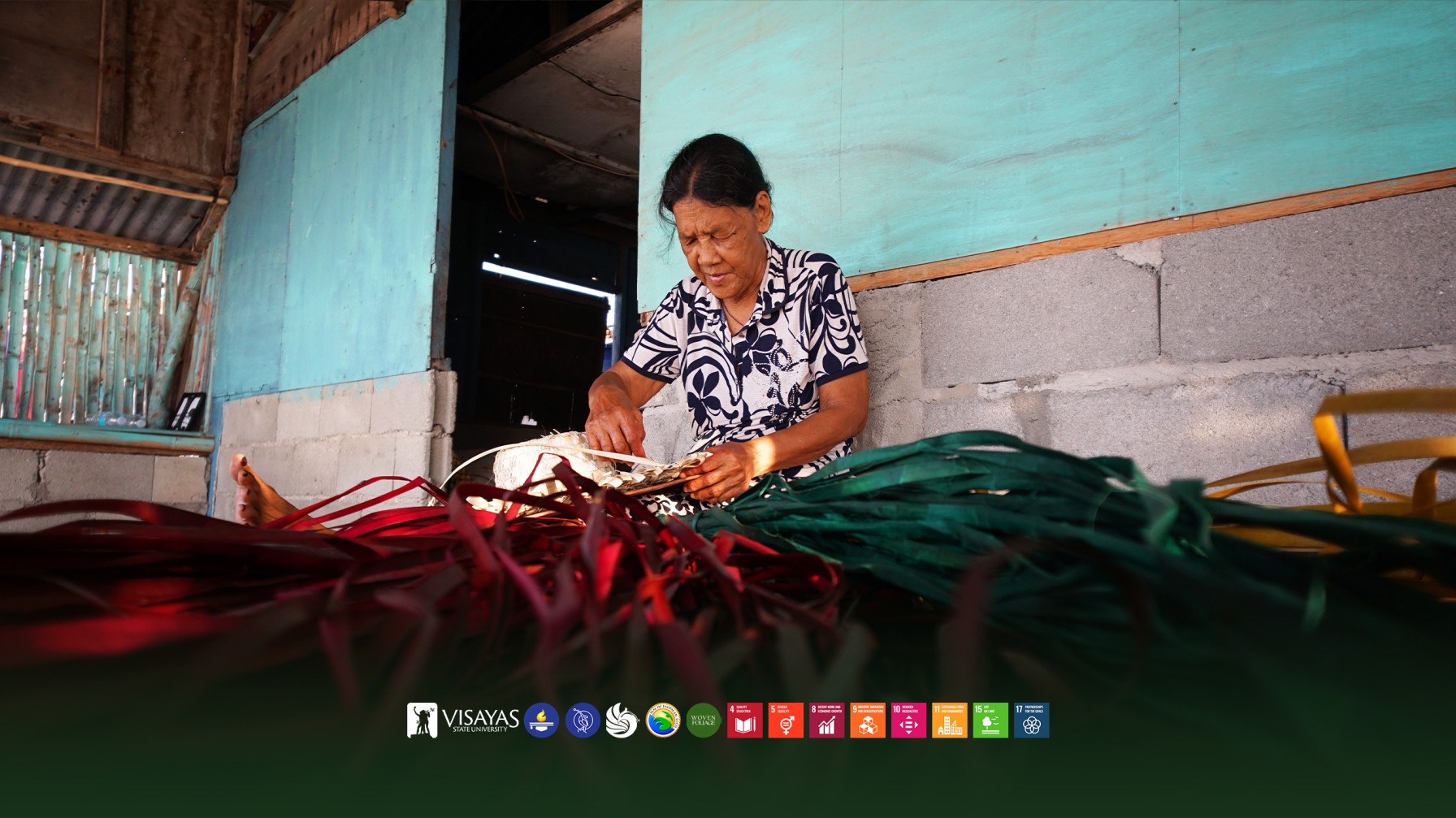
“Emiliana Galvez Rocenas is the last hat weaver of Apid, alongside her sister to assist her,” related Bacolod.
“No one on the island showed interest to continue the dying art of Romblon weaving. We firmly believe that through the Art Apprenticeship program, Nanay Emiliana can transfer her knowledge to the apprentices who will continue and sustain her craft and legacy, making her not the last hat weaver of the island,” continued Bacolod.
Rocenas, more known as “Nanay Flora” to the island community, took on the task of teaching the apprentices of the BCAEd program. Under her tutelage, student apprentices learned traditional weaving techniques and gained firsthand knowledge from a tradition bearer who continues to preserve the craft through practice and teaching.
Using Romblon (Pandanus utilis) as the primary material, apprentices learned how natural fibers are prepared and transformed into functional and creative products and developed practical weaving skills while gaining a deeper appreciation of the patience, precision, and craftsmanship required to create each piece.
For the student apprentices, the experience went beyond learning a traditional craft. It allowed them to perceive weaving as a form of living cultural knowledge, one that remains meaningful through continuous practice and transmission of skills from one generation to another.
Nanay Flora expressed her happiness in seeing young people take an interest in the craft: “Nalipay ko nga naa mo nga mikat-on ug nanghimo ani, kay wala na may interesado nga mokat-on ug magpatudlo sa paghimo ani.”
[I am happy that you came to learn and make these crafts because there are no longer many people interested in learning and being taught how to make them.]
She further underscored the importance of passing on traditional knowledge to younger generations, particularly as opportunities for young people to learn traditional craftsmanship directly from artisans become increasingly limited.
The apprenticeship program thus became part of a broader effort to keep a dying weaving tradition alive and relevant.
From field work to production: Sinapid sa Apid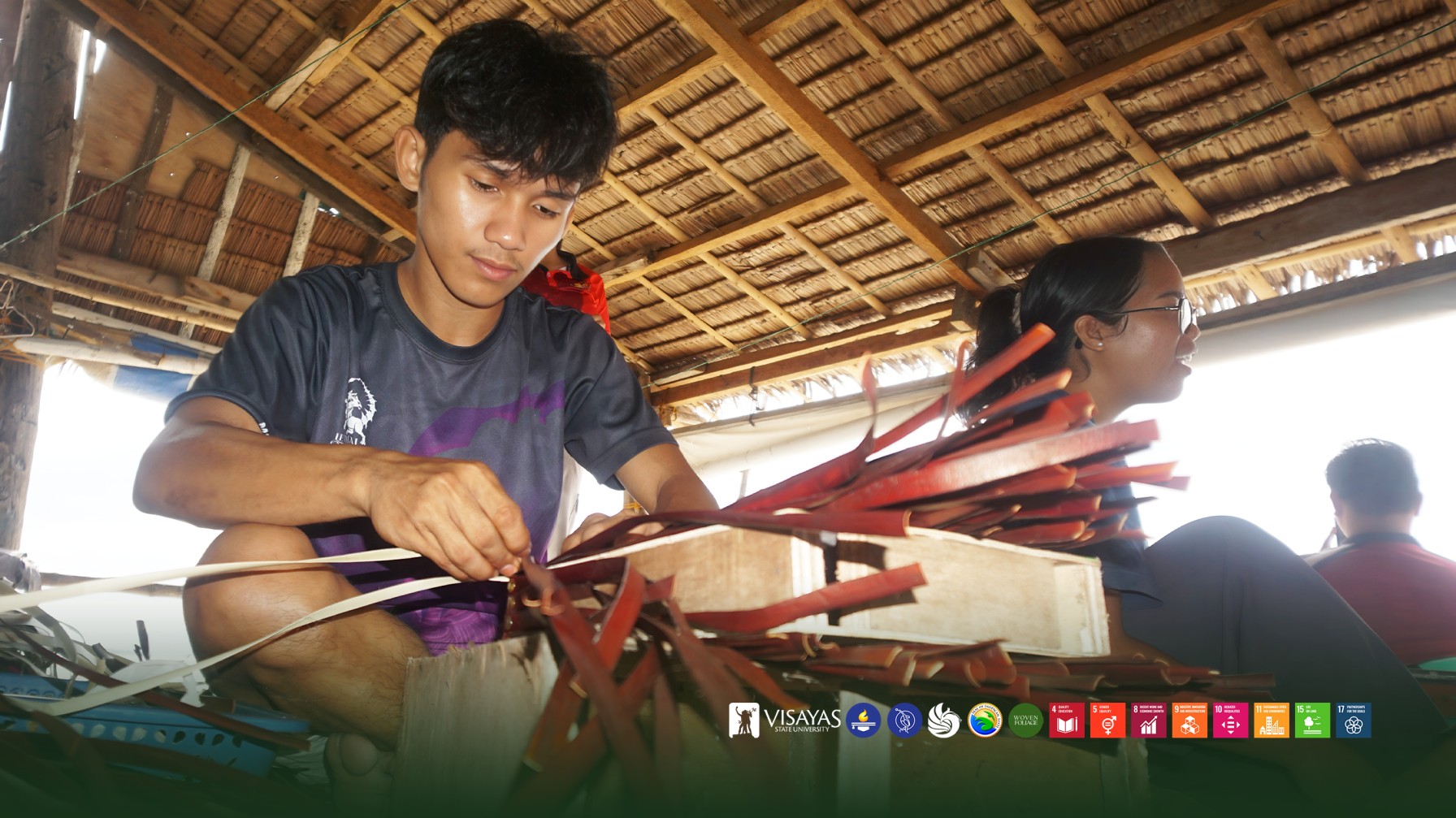 The apprenticeship culminated in an exhibit called “Sinapid sa Apid: Creativity and Knowledge Across Generations Entwined” at the Inopacan Municipal Hall.
“Sinapid” refers to the technique of braiding fibers to create design and texture.
Described as “a visual and tactile synthesis of the journey taken by the student apprentices pursuing Bachelor of Culture and Arts Education (BCAEd) at Visayas State University during their Art Apprenticeship II course,” Sinapid sa Apid highlighted the apprentices’ project development showcasing their woven creations such as bags, hats, coasters, lamp, tumbler sleeves, and laptop sleeves.
Student apprentices Jhosua Abenoja, John Patrick Brazil, Elgin Cebreros, Michelle Cinto, Erika Irene Gahit, Heartkatelyn Lina, Christianne Mullet, Mulacha Krisiel Patcho, and Henna Mae Samonte exhibited their work where they applied what they learned from the master weaver and crafted their own creations.
Inopacan Mayor, Dr. Azucena B. Mirambel, and Municipal Tourism Officer, Ms. Jeneva B. Payot, were present during the project development exhibit.
In a Facebook post of the Municipal Tourism Office of the Local Government Unit of Inopacan, the municipality extended “its appreciation to Visayas State University, Nanay Flora Rocenas, and the people of Apid Island for their continued commitment to preserving and promoting the municipality’s rich weaving heritage.”
“For our BCAEd students, learning from the local weavers is very different from simply reading about weaving in a book or discussing it inside the classroom. They get to see the patience, creativity, discipline, and dedication behind every piece. More importantly, they begin to understand the meaning of the craft to the community and why it is worth preserving,” said Dr. Charis Limbo-Rivera, Head of the Institute of Human Kinetics, in a statement.
“I also see our students as a bridge between generations. What they learn from the cultural bearers can be shared with younger generations in ways that will help keep these traditions appreciated and practiced. At the same time, the experience teaches our students to respect and value the knowledge of our local artisans who play an important role in keeping our heritage alive,” she added.
Weaving Island Futures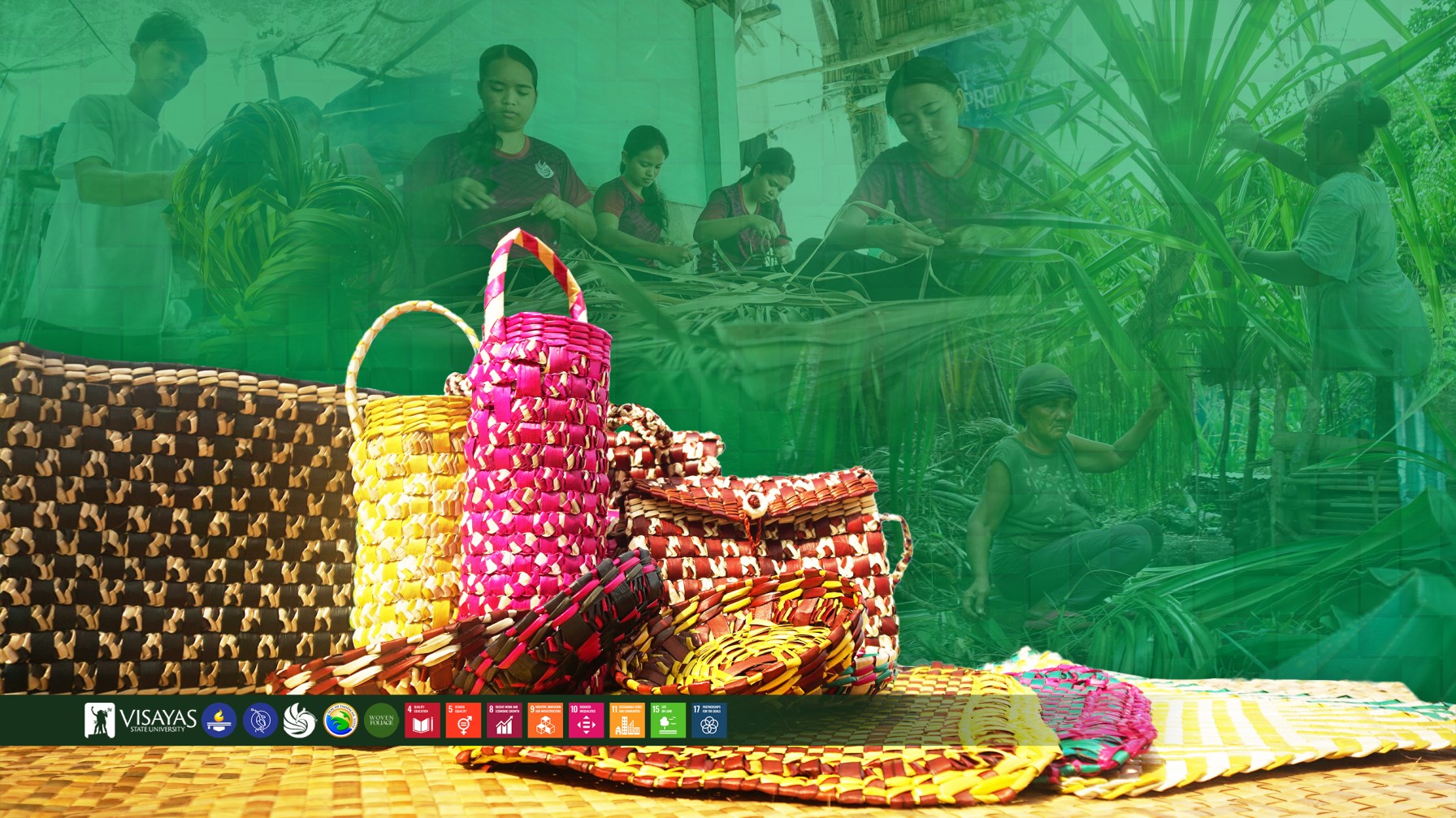
“One of the most important lessons from the fieldwork is that the future of weaving depends not only on preserving the finished products, but on sustaining the knowledge and relationships that make the practice possible,” Bacolod told UIMPA in a message over Messenger.
“The fieldwork also reminded us that cultural preservation should not be about placing traditions in a museum and leaving them there. It should be about creating opportunities for these traditions to remain relevant and alive. This is where education can play an important role,” he stressed.
It is noteworthy that VSU has been consistent in reaching out to communities in the margins.
Early this year, the VSU Admissions Office brought the VSU College Admission Test to Dawahon Island, Bato, Leyte. The Saving Minamanwa Project of the Department of Philosophy and Social Sciences also recently turned over the pioneering mini-workbook that contains stories on Minamanwa culture in their own language for the Mamanwa community of Panaon Island, Southern Leyte.
This present student apprenticeship that surfaced the dying weaving tradition of Apid Island belongs to this solid track record of the university of giving back to the community, regardless of distance.
This article aligns with United Nations Sustainable Development Goal (SDG) No. 4: Quality Education; SDG No. 5: Gender Equality; SDG No. 8: Decent Work and Economic Growth; SDG No. 9: Industry, Innovation, and Infrastructure; SDG No. 10: Reduced Inequalities; SDG No. 11: Sustainable Cities and Communities; SDG No. 15: Life on Land; SDG No. 17: Partnership for the Goals.